


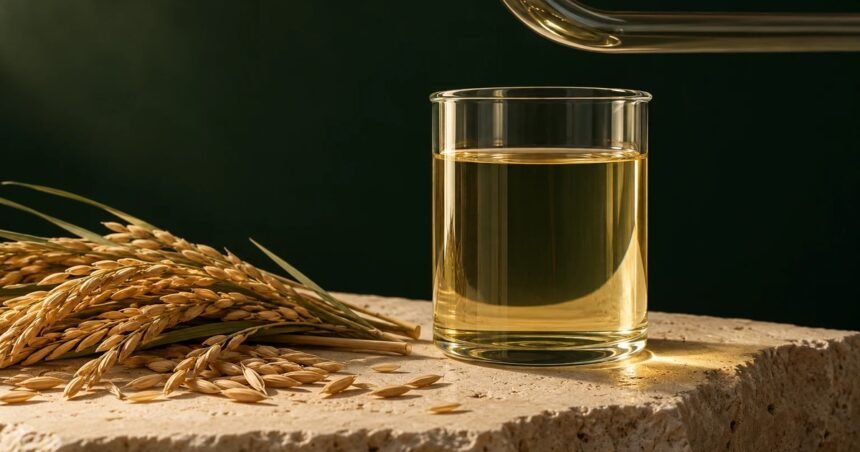
Every winter, the fields of Punjab and Haryana fill with smoke as farmers burn the paddy straw left behind after harvest — tonnes of it, with nowhere for it to go and no time to clear it any other way. In a biorefinery at Chakan, near Pune, that same straw has a very different destination. It goes into a reactor, comes out as a golden liquid, and leaves as fuel that can run a diesel engine without a single modification. The company doing it is Greenjoules, and on 11 November 2026 it announced the financing to take the idea from one working plant to the largest bio-crude facility of its kind in India.
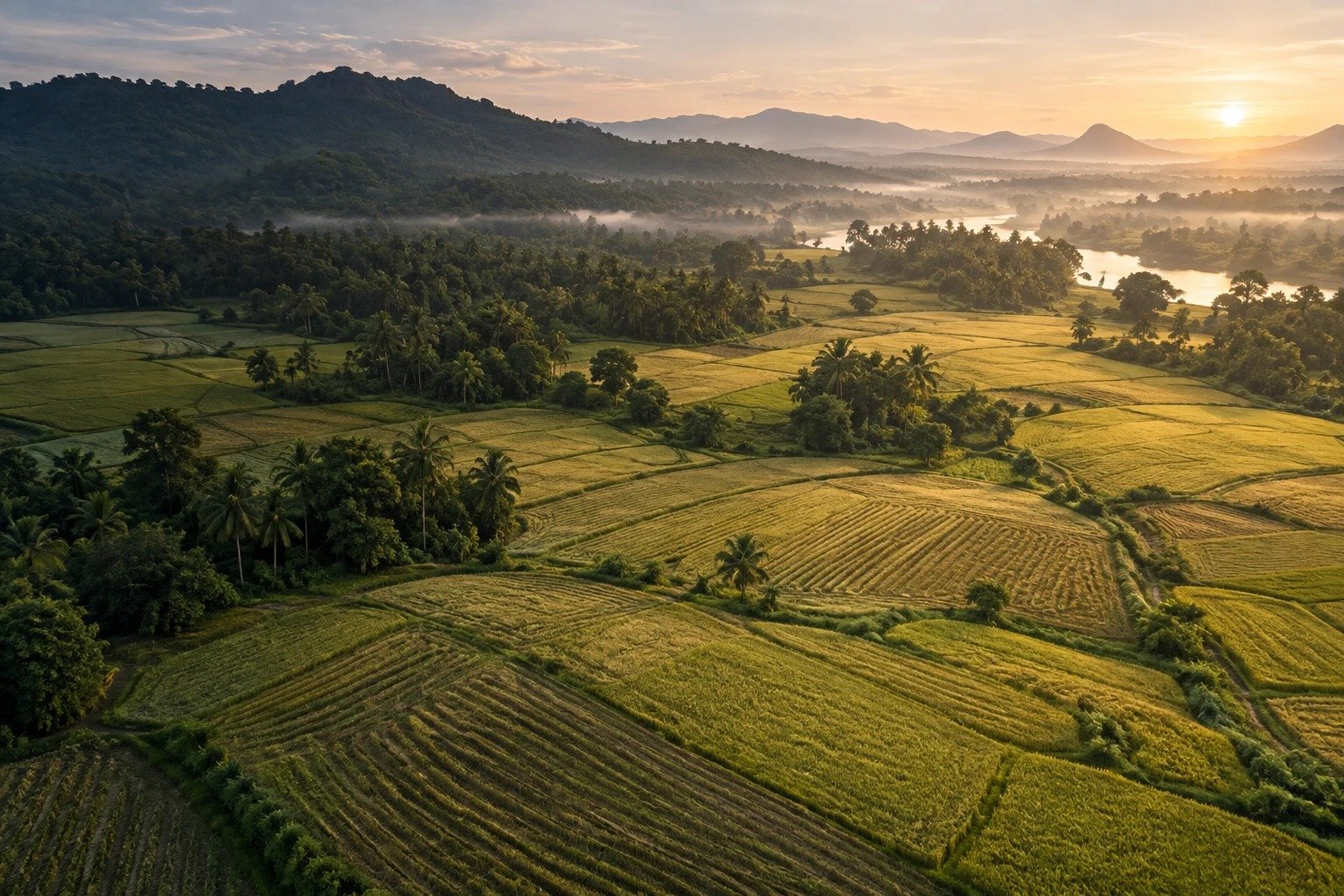
Paddy fields at sunrise — the straw left behind after harvest is Greenjoules’ feedstock. (Official photo: Greenjoules)
Six hundred degrees and a handful of catalysts
Greenjoules’ answer to the straw problem is a process it calls Integrated Catalytic Thermo Cracking, or ICTC. Agricultural waste — paddy straw and husk, groundnut and cashew shells, sugarcane bagasse — is heated to around 600 degrees Celsius in the presence of multiple catalysts, and out comes bio-crude: a dark, energy-dense liquid that ordinary refineries can turn into renewable diesel and bio-naphtha. The company says the process works on nearly 40 different kinds of biomass, which matters in a country where the waste stream changes from state to state and season to season.
The heart of the idea is that the fuel is a drop-in. Greenjoules’ flagship product, Abhilasha Liquid Fuel, meets the BIS 1460 standard that petroleum diesel is sold to, complies with Euro VI norms, and has been tested by IIT Chennai, which found its properties comparable to high-speed diesel — with ultra-low sulphur. A truck, a boiler or a genset needs no conversion to run on it. Alongside the liquid fuel, the process yields Abhilasha Biochar, a soil amendment that returns carbon to the fields, and the company is also commercialising an Abhilasha gaseous fuel with properties similar to LPG.
From 15,000 litres to 200,000 a day
Greenjoules has been running the process for real at its Chakan biorefinery, which currently produces 15,000 litres of bio-crude a day. The company says it will double that to 30,000 litres by the end of January. The bigger leap is the new greenfield plant planned at Khed City, also near Pune: 200,000 litres of bio-crude a day, built in phases from 2027, which the company says will be the largest facility of its kind in India. Its stated aim is 500,000 litres a day of total capacity by 2028.
More Read

“This would be a greenfield plant in addition to our existing 15,000-litre capacity facility at Chakan, which we will double to 30,000 litres by January-end,” said S. Viraraghavan, Greenjoules’ chief executive officer. “Our aim is to have a total bio-crude production capacity of 5,00,000 litres per day by 2028.”
The build is backed by Rs 250 crore of financing announced on 11 November 2026: a Rs 150 crore Series B round co-led by Amazon’s Smbhav Venture Fund and Climate Pledge Fund, with Zerodha’s Rainmatter and the Singularity AMC-managed Strategic Autonomy Fund participating, plus a Rs 100 crore loan from the Technology Development Board under the Department of Science and Technology, which had already backed the company’s commercial-scale biofuel project earlier in the year.
Eight years of quiet engineering
Greenjoules was founded in 2018 by S. Viraraghavan, an IIM Kolkata graduate, together with Radhika Viraraghavan, Shweta Viraraghavan and Sethunath Ramaswamy. For most of its life it has been a quiet engineering company rather than a loud one: building the reactor, proving the chemistry across dozens of feedstocks, and winning enterprise customers — the company’s site lists Amazon, Cisco, Croda, L’Oréal, Reliance and Unilever among the names it serves. An earlier $4.5 million round from Blue Ashva Capital in 2021 funded the first scale-up; the new financing is an order of magnitude larger, and it arrives with the technology already running at commercial scale.
The farmer’s side of the story is as important as the chemistry. Every tonne of straw that goes into a Greenjoules reactor is a tonne that is bought from a farmer instead of burned in a field — an extra income stream for the grower, and one less plume of smoke over north India in November. That is the loop the company is building: farm waste in, fuel out, and the carbon that would have gone up in smoke instead going into engines and back into soil as biochar.
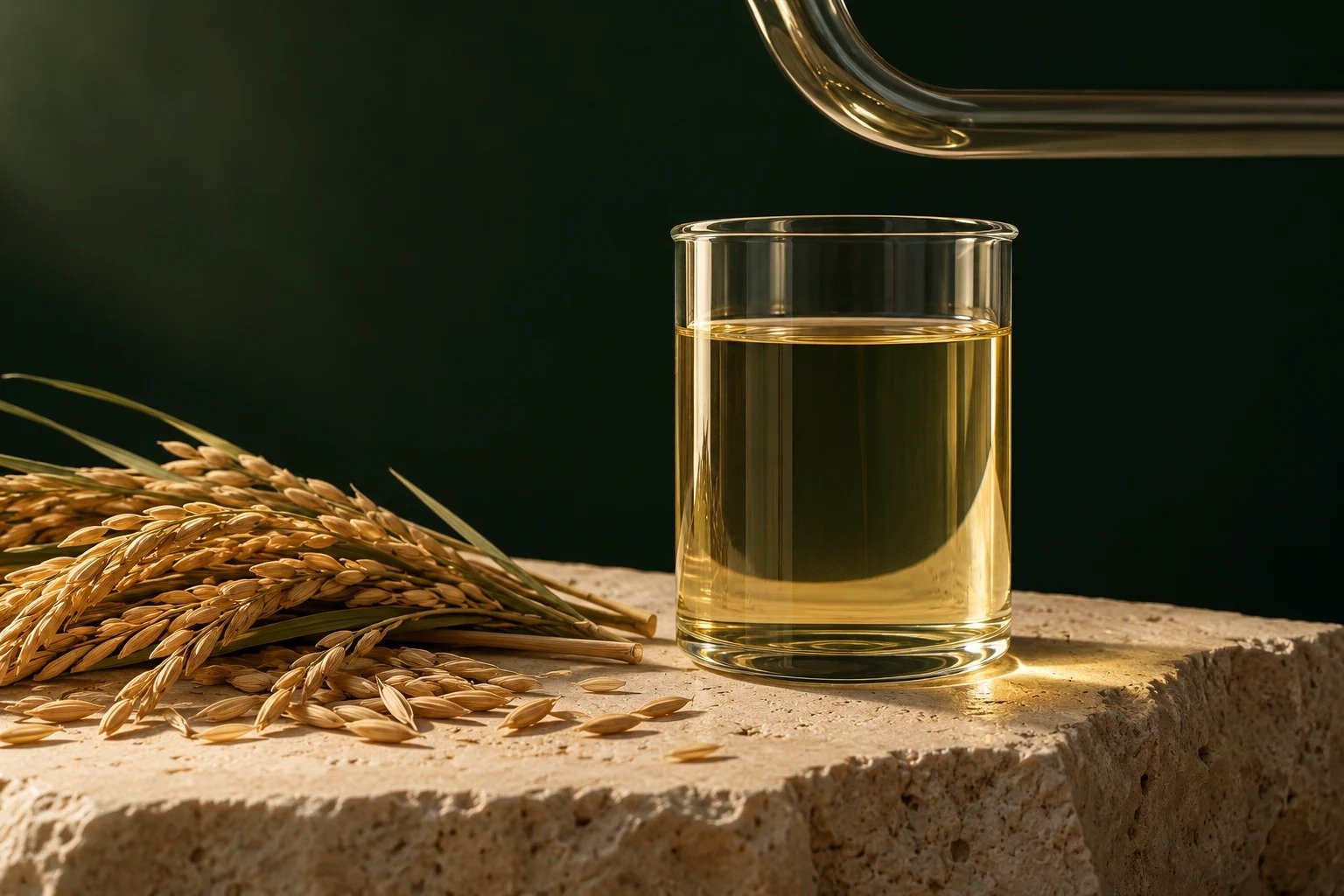
Greenjoules bio-crude, made from paddy straw and other farm waste. (Official photo: Greenjoules)
What comes next
Bio-crude is only the first product. Greenjoules says it plans to extend the same ICTC platform to sustainable aviation fuel, green hydrogen and sustainable materials — the same waste streams, refined further, reaching further up the energy ladder. For now, the Khed City plant is the milestone to watch: if it is built on schedule, India will have a homegrown, farm-waste-to-fuel industry running at a scale no other company in the country has attempted, turning the country’s most stubborn waste problem into a fuel supply.
Keep reading: The Powder That Powers Every Battery: Inside Altmin, the Hyderabad Startup Making India’s Cathodes · The Brain Behind 107 GW of Clean Power: Inside Smartgrid Analytics’ Solvyn AURA · More Energy & Power stories
Like stories like this? Add Exceptional Technology as a preferred source on Google to see more of our reporting in your search results and Discover feed.







