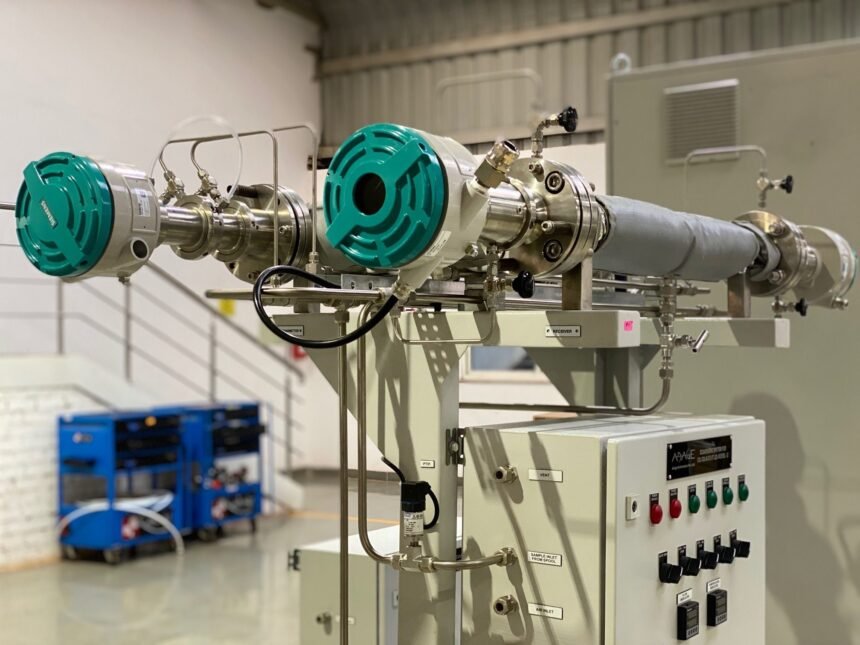
You cannot see the gases coming out of a steel plant. You cannot smell carbon monoxide building up inside a cement kiln, or watch nitrogen oxides drift from a refinery stack. But a factory lives or dies by what those invisible gases are doing — they decide how efficiently a furnace burns, whether a process is safe, and whether a plant is keeping its promise to the air around it. For 25 years, Adage Automation has built the instruments that read that invisible world — and today its gas analysers are working in refineries, steel plants and cement kilns across more than 50 countries.
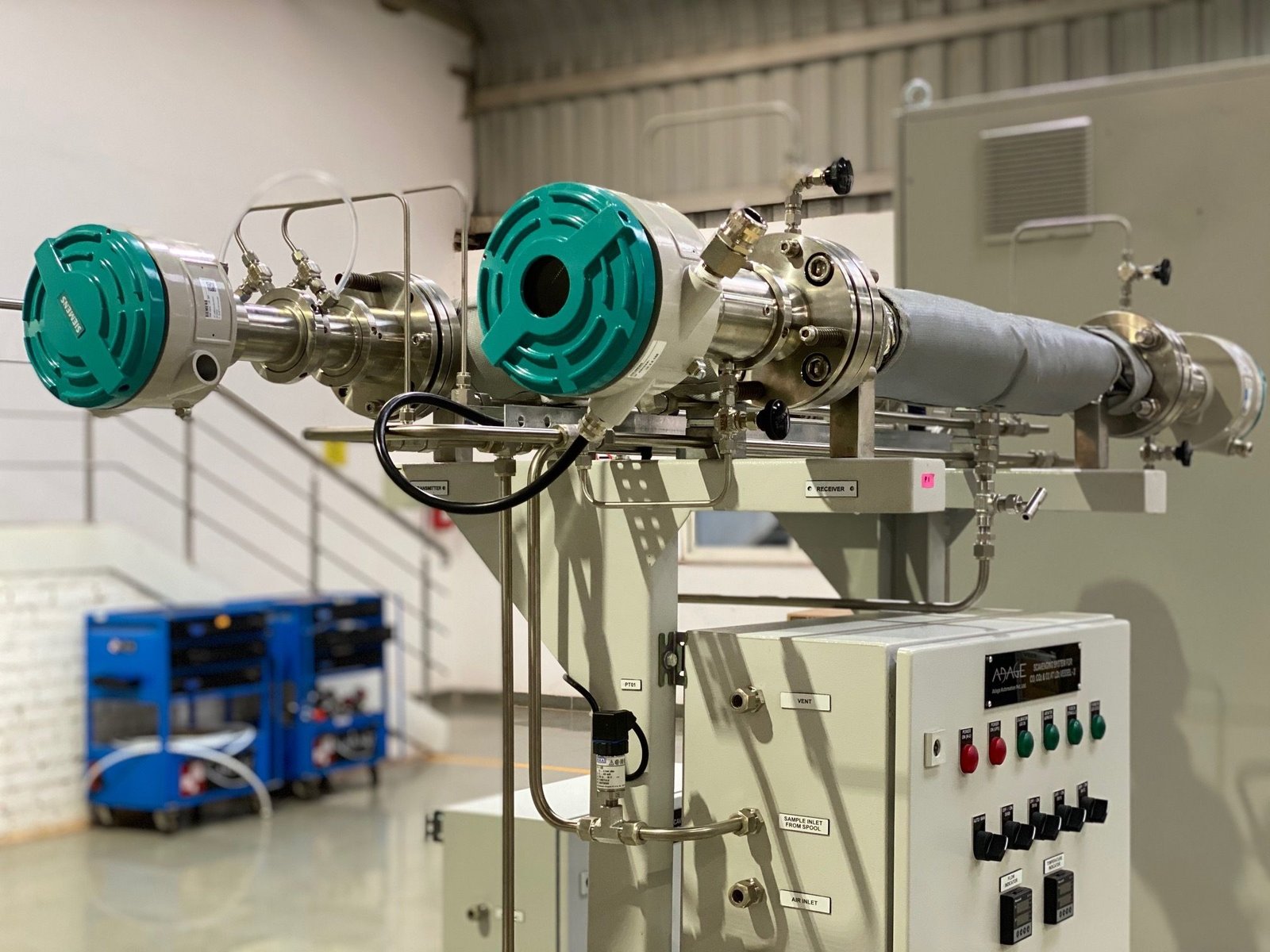
Adage’s extractive gas analytical system, built around Siemens TDLAS laser analysers. (Image: Siemens Xcelerator / Adage Automation)
The laser that reads a kiln
Adage was founded in 2001 by Dr Abhijit Chatterjee, and it has spent the quarter-century since on one problem: measuring gases accurately in the hardest places on earth. A cement kiln inlet is hot, dusty and vibrating. A steel converter shop throws off corrosive gas. Engine exhaust is a moving target. The company’s answer is laser light: tunable diode laser absorption spectroscopy, or TDLAS, which shines a laser through the gas stream and reads its composition from the light that comes out the other side — no sampling delays, no moving parts in the gas path.
The company says it was the first in India to bring laser gas analyser technology to the cement, steel and fertiliser industries, and its engineers designed one of the world’s most robust cement kiln inlet gas measurement systems. For the toughest streams, Adage pairs Siemens laser optics with its own extractive heated-cell design and sample-handling systems, built to survive tiny pipes, dusty hot flows and vibration in steel plants, engine exhausts and petrochemical complexes. A profile of the company by India’s Small Giants notes that Adage booked and executed the world’s single largest continuous emission monitoring system project in 2016.
From Goa to fifty countries
Adage is headquartered in Goa, where its factory sits, with offices across 16 Indian cities and overseas operations in the UAE, the USA and Saudi Arabia. The company says it is the largest exporter from India of integrated gas analytical solutions and services, with installations across Asia, South America, Africa, the Middle East and Europe, and an installed base spanning more than 50 countries.
More Read

Its portfolio covers the full sweep of industrial gas measurement: process analysers for refineries and oil and gas, steel and metallurgical plants, chemicals and petrochemicals, fertilisers, gas utilities and power generation, alongside continuous emission monitoring systems (CEMS) that measure what leaves the stack, and ambient air quality monitoring systems that watch the air around the plant. The company is a certified Solution Partner of Siemens AG, Germany, and the regional repair centre attached to its Goa factory is a 50:50 joint investment between Siemens and Adage.
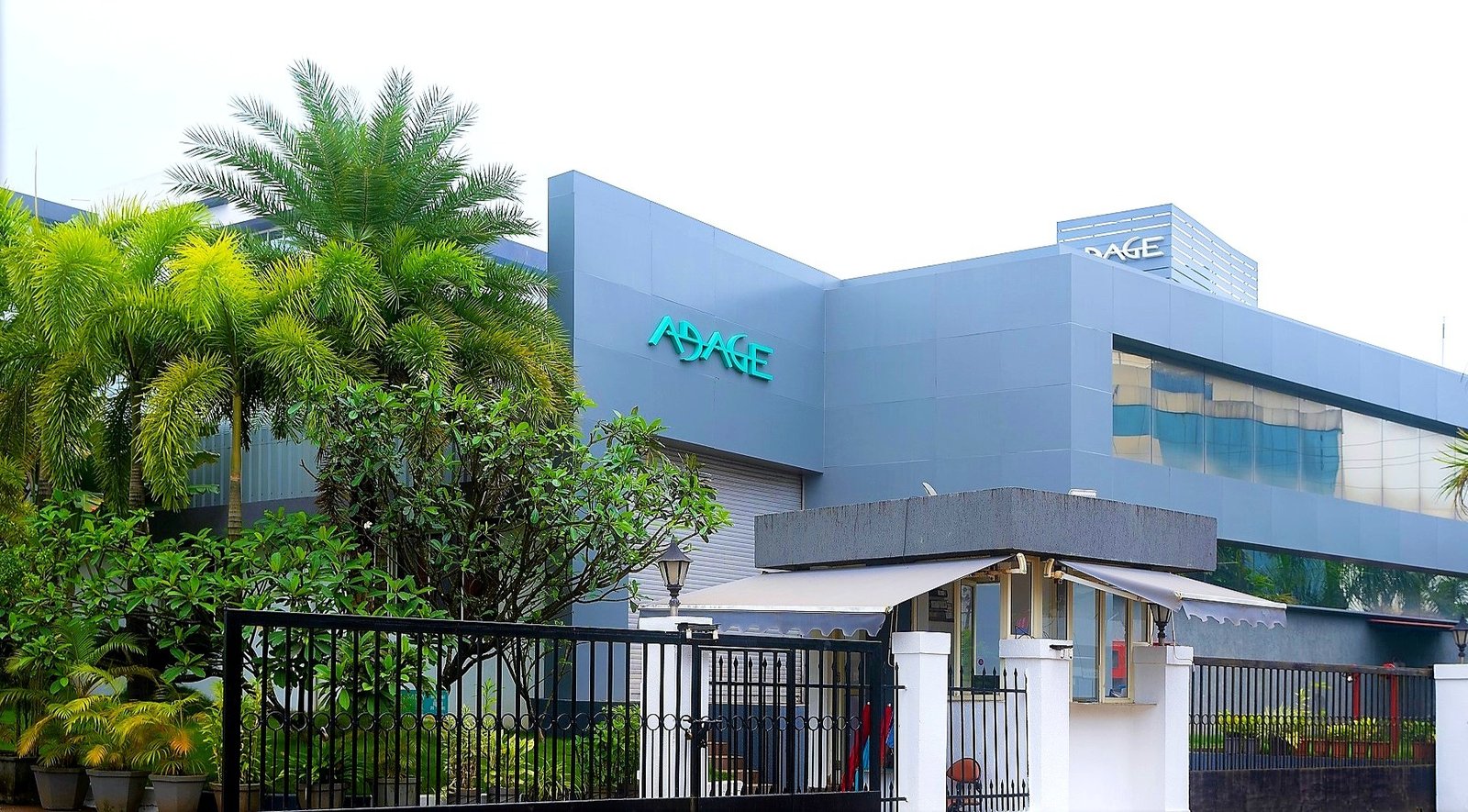
Adage’s headquarters and gas analytical factory in Goa. (Image: Adage Automation)
The next chapter: AI on the stack
In July 2026, Adage raised Rs 230 crore in a growth round led by InCred Growth Partners Fund, with Global South Capital and Prachetas Capital participating, to accelerate AI-enabled industrial software, digital monitoring platforms and manufacturing expansion, and to deepen its push across the Middle East, Africa, Europe and the United States. The company’s revenue climbed to Rs 224 crore in the year ended March 2025, with net profit of Rs 21.4 crore.
The next frontier is intelligence layered on top of measurement: AI-based predictive maintenance that reads equipment data to spot faults before they cause failures, and digital platforms that watch whole fleets of analysers in real time. In November 2024, Adage also launched a joint venture with Kanoo Energy in the UAE, Adage Kanoo Analytical Industry, with a factory and integration facility in Abu Dhabi serving the Gulf region. The company was named one of India’s Small Giants by the Ministry of Industry in 2018, and it says it has grown at a 25% compound annual rate over the last decade.
For the steelmaker tuning a furnace, the refinery proving its emissions, and the city breathing downwind of both, the gases you cannot see are finally being read — by instruments designed and built in Goa, and trusted from India to fifty countries and counting.
Keep reading: Forty Chips, One Leap: Inside L&T Semiconductor, the Fabless Arm Putting India on the Silicon Map · Every Pothole, Mapped: Inside HanuAI, the Delhi Startup Teaching AI to Read India’s Roads · More Industrial Automation & Technology stories
Like stories like this? Add Exceptional Technology as a preferred source on Google to see more of our reporting in your search results and Discover feed.