


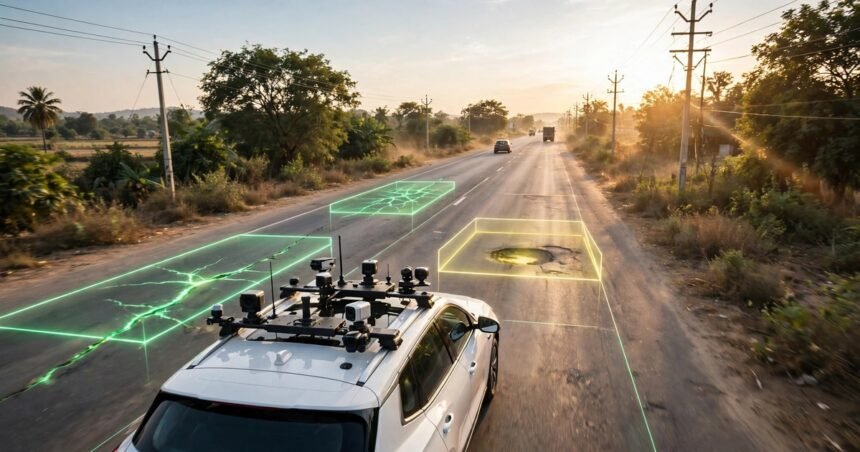
Somewhere on a highway outside Gurugram, an SUV is doing a job no team of surveyors could finish: reading every metre of the road beneath it, spotting the crack that will become a pothole by the next monsoon, and logging it all before the drive is over. The system is called Road Athena, and it comes from HanuAI, a Delhi startup that has turned road maintenance — one of India’s most unglamorous jobs — into an AI problem worth solving.
The roads nobody can survey by hand
India runs the second-largest road network in the world, and keeping it in shape has long depended on manual surveys that cannot feasibly cover thousands of kilometres. Critical data still sits in physical files, with no digital system to monitor it, and manpower shortages make it almost impossible to maintain such a vast network by hand. That is the gap HanuAI set out to close when Prerna Kalra, Manav Singal and Dr Rahul Kalra founded the company in Delhi in 2022 — three founders, none of them from a civil engineering background, who spent eighteen months researching the problem before building the technology.
Road Athena reads the road
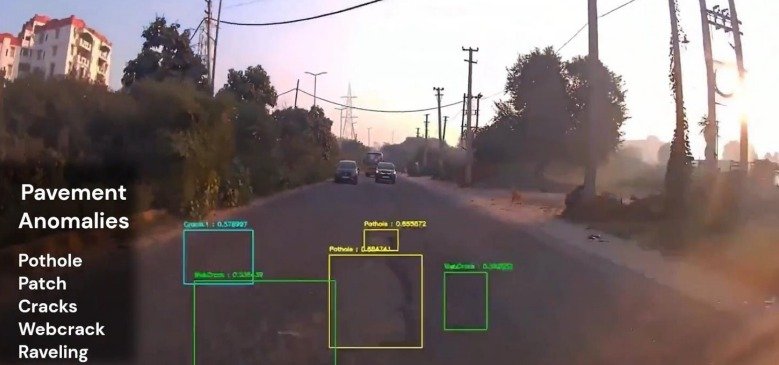
Road Athena is HanuAI’s AI and GIS-powered platform for road condition assessment. Its computer vision models watch real-time video from the road and pick out potholes, cracks and surface damage, while GIS pins every defect to its exact location. The system also reads the road’s furniture — signs, lane markers, kerbs and median vegetation — and helps pinpoint accident-prone black spots, so engineers can see where a road is becoming dangerous before it turns deadly. And it looks ahead, predicting when maintenance will be needed before a road fails.
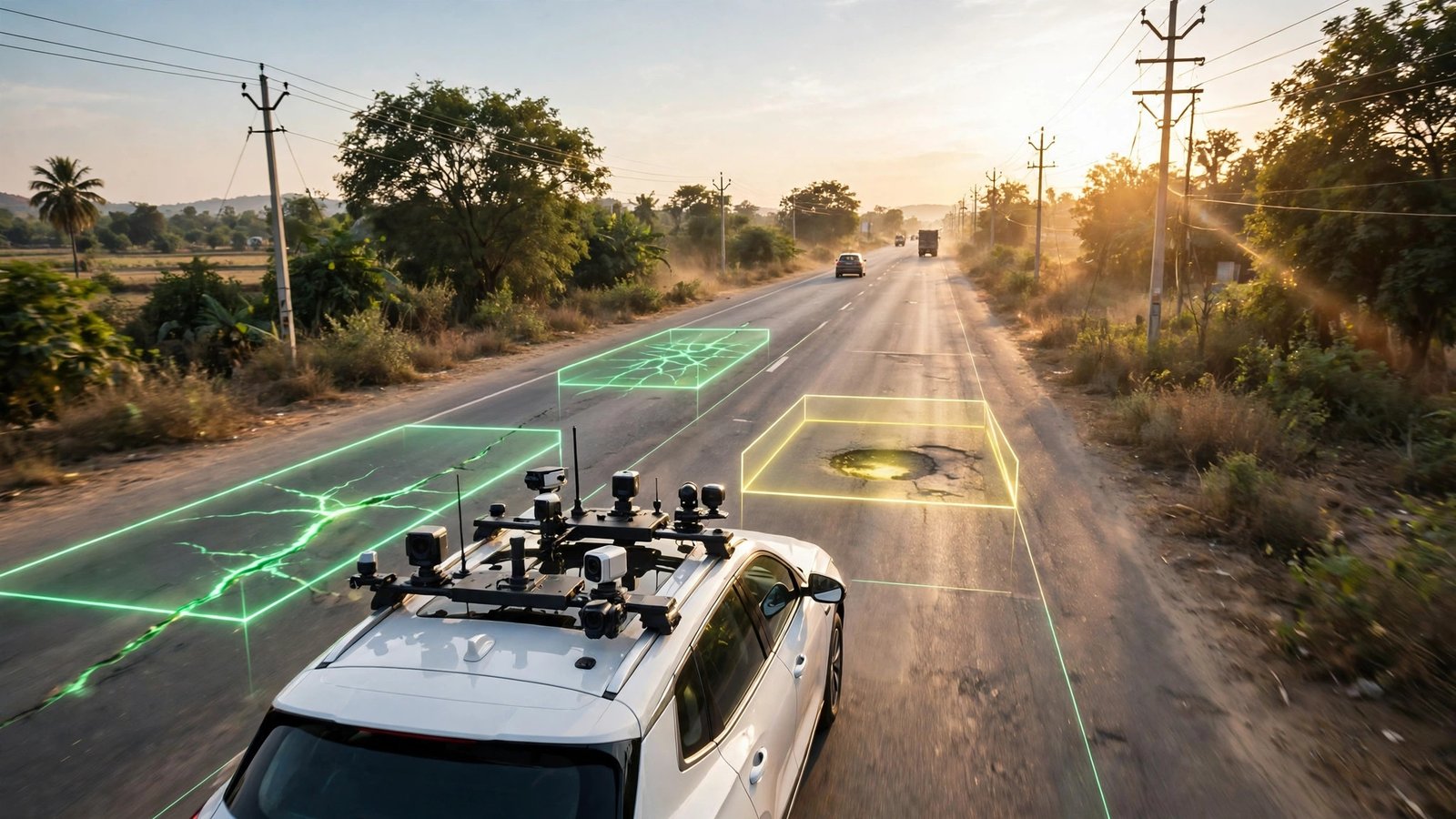
The sensing starts with hardware HanuAI built itself: backpack-mounted and SUV-mounted IoT devices that capture synchronised video and GPS data and send it to the cloud, where machine learning turns it into interactive dashboards showing road conditions, defect locations and maintenance priorities. Around that core, the platform handles budget prioritisation, road asset management, Defect Liability Period payment processing and maintenance planning within the guidelines of the Indian Roads Congress, with mobile apps for field data collection, a full Road Asset Management System, predictive analytics, natural-language report generation and OCR to digitise old paper records.
155,000 lane kilometres and counting
The numbers show how far the idea has travelled. The company says it has surveyed 155,000 lane kilometres and manages more than 13,000 unique roads, working with rural road departments, public works agencies, municipal corporations and national highway authorities across 20 Indian states, with notable projects in Punjab, Gujarat and Gurugram. It has filed two patents, and it claims the world’s largest rural road dataset — built, in the words of CEO Prerna Kalra, by tackling the toughest road conditions first, the rural roads nobody else wanted to deal with.
The work has drawn recognition along the way: a NASSCOM Emerge 50 award in 2023, the ESC Ubharte Sitare Award, an invitation to showcase at the World Bank in Washington DC, a place on Forbes’ list of India’s most promising startups and a spot in YourStory’s Tech30 cohort for 2025. HPCL backed the company with Rs 2.5 crore in seed funding. From a Delhi startup founded by outsiders to the trade, HanuAI is giving India’s roads something they have never had before — a memory, a map and a warning in time.
More Read

Keep reading: Twelve Languages, One Voice: Inside Navana.ai’s Bodhi, the Speech AI Built for Real India · Ask the Manuscripts: Inside BharatiyaGPT, the Nagpur AI Turning India’s Ancient Texts Into Conversation · More Industrial Automation & Technology stories
Like stories like this? Add Exceptional Technology as a preferred source on Google to see more of our reporting in your search results and Discover feed.







