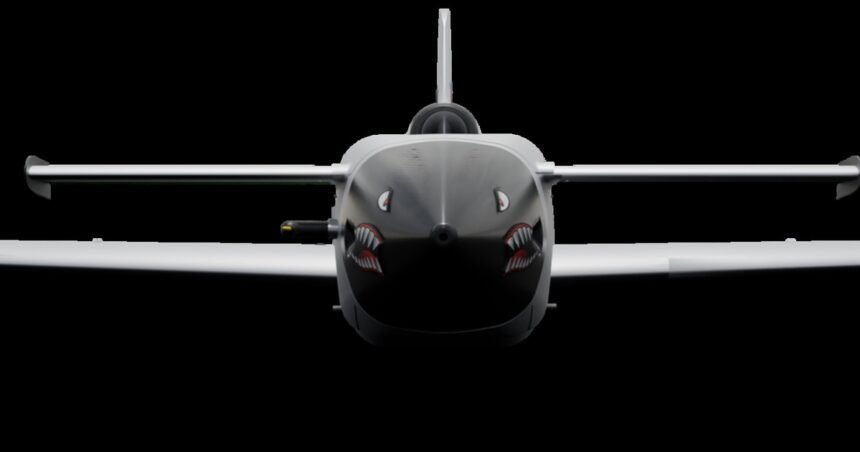
Some drones watch. Some drones strike. The hardest ones to build do both — they wait patiently over a battlefield, find their target, and only then dive in. These are loitering munitions, and a Bengaluru company called Kadet Defence Systems built India’s first. Developed with the Defence Research and Development Organisation under a Development cum Production Partner model, the systems are already under contract to the Indian Armed Forces — and more than 90% of their components are sourced in India.
A family, not a single drone
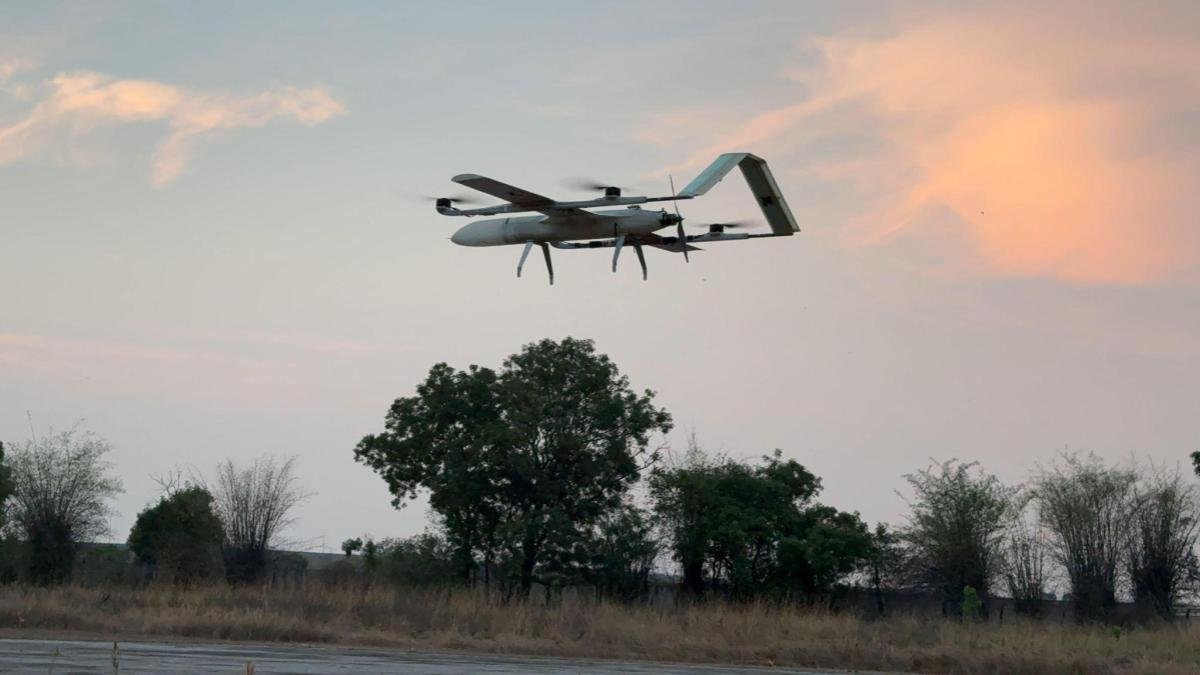
Kadet did not build one loitering munition. It built a family. Canister-launched munitions, combat UAVs that release precision weapons from a stand-off distance, and tactical VTOL aircraft that need no runway at all sit side by side in the catalogue, alongside swarming and manned-unmanned teaming capabilities that let the aircraft work together. The payloads span 50 grams to 40 kilograms, the range reaches up to 150 kilometres on radio-frequency links — and further with satellite guidance — and the systems are built to launch from altitudes above 5,000 metres, across deserts, plains and high mountain terrain.
The company designs every aircraft as a digital twin first, so one airframe can be reconfigured for a new mission instead of starting from scratch. The same family thinking runs through the whole range: an aerial target can become a loitering munition with the addition of a camera and a warhead. The company says it is scaling production towards 5,000 systems in the next few years, and it estimates the Indian market for loitering munitions at around Rs 15,000 crore.
The targets that taught the guns to shoot
Kadet’s story starts long before loitering munitions. Avdhesh Khaitan began in a garage workshop, building aerial targets for the Indian Army — the unmanned aircraft that fighter pilots and anti-aircraft gunners shoot at in training, and that radar and missile systems are tested against. Kadet became the first Indian company to win a defence ministry contract for aerial targets, and its propeller-driven JX2 and jet-powered JX3 targets have been flying for the armed forces for more than a decade.
That target business is where the company’s engineering depth shows. Its Whistler family of pilotless target aircraft flies in the 180 to 720 km per hour speed band, launches from a common catapult, recovers by parachute, and carries radar-cross-section enhancers, electronic-warfare packages, cameras and scoring systems. Off the Odisha coast, Whistler aircraft flew month-long firing trials for DRDO’s Atulya air defence fire-control radar, flying out to 25 kilometres and presenting different threat profiles — tracked and engaged successfully, with the flight data feeding straight back into the radar’s tracking algorithms.
Faster than a fighter’s shadow
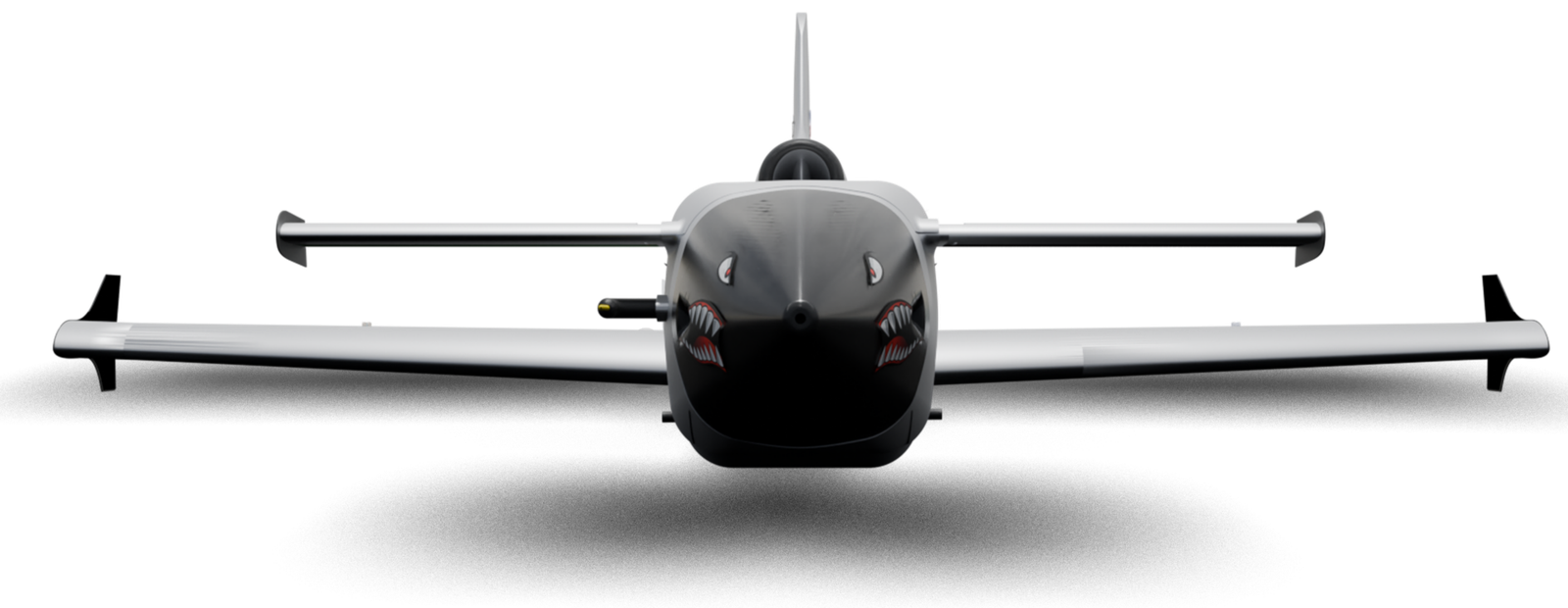
The sharpest edge of the catalogue is the Anudishya, India’s first jet-powered aerial target. It flies at more than 500 kilometres per hour, out to 300 kilometres from its launch point, and above 6,000 metres — fast enough and high enough to stand in for the threats air defences actually train against. Advanced composites give it a low-observable radar signature, and it carries swarming and manned-unmanned teaming capabilities, with an air-launched option that extends its reach further still.
More Read
The Anudishya is already an export story. Kadet has shipped the system to a friendly foreign country in Southeast Asia, where it is in active service — one of the first Indian companies to export high-performance aerial targets, and a marker of how far the country’s private defence industry has come from importing the very same equipment a decade ago.
Beyond the battlefield
The same aircraft have a second life waiting. Kadet’s platforms are dual-use by design: the company is now looking at mid-mile logistics, surveys and mapping, and even dropping seed bombs for reforestation from the same airframes that carry sensors and warheads for the armed forces. In a November 2026 interview, Khaitan said the company expects to build 3,000 systems in the coming years, with foreign markets in East Asia and Africa firmly in view.
From a garage workshop to the country’s first loitering munitions and its first jet-powered aerial targets, Kadet Defence Systems has spent two decades turning one idea into a whole family of aircraft: that India should design, build and fly its own unmanned systems — and sell them to the world.
Keep reading: The Quantum Compass That Never Needs GPS: Inside QuBeats, the Hyderabad Startup Building Navigation for the Indian Navy · The Plane That Never Lands: Inside Alteon, the Bengaluru Startup Teaching Aircraft to Fly on Wind Alone · More Aerospace & Defense stories
Like stories like this? Add Exceptional Technology as a preferred source on Google to see more of our reporting in your search results and Discover feed.