In a primary health centre in rural Odisha, a doctor looks at a small child with diarrhoea and faces a decision that has to be made right now: antibiotics, or not? The laboratory answer — a stool culture — takes 24 to 48 hours, and the child is here today. So doctors do what doctors everywhere do when they cannot wait: they prescribe broad-spectrum antibiotics, just in case. Most of the time the infection is not bacterial at all, and the medicine was never needed.
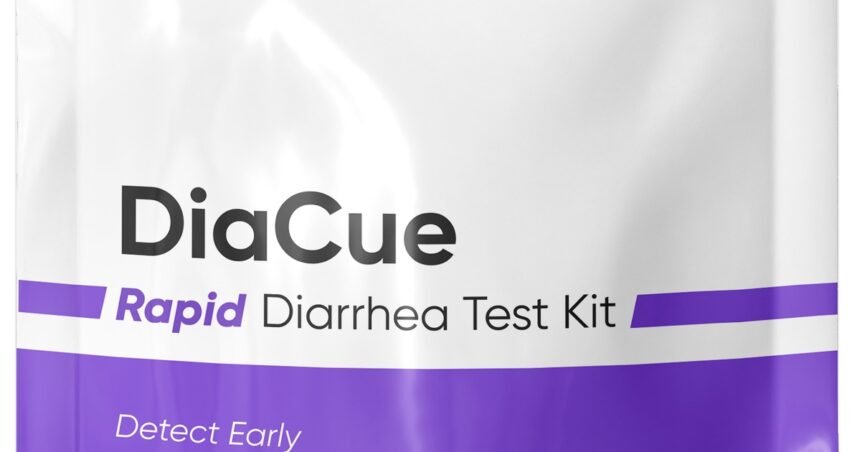
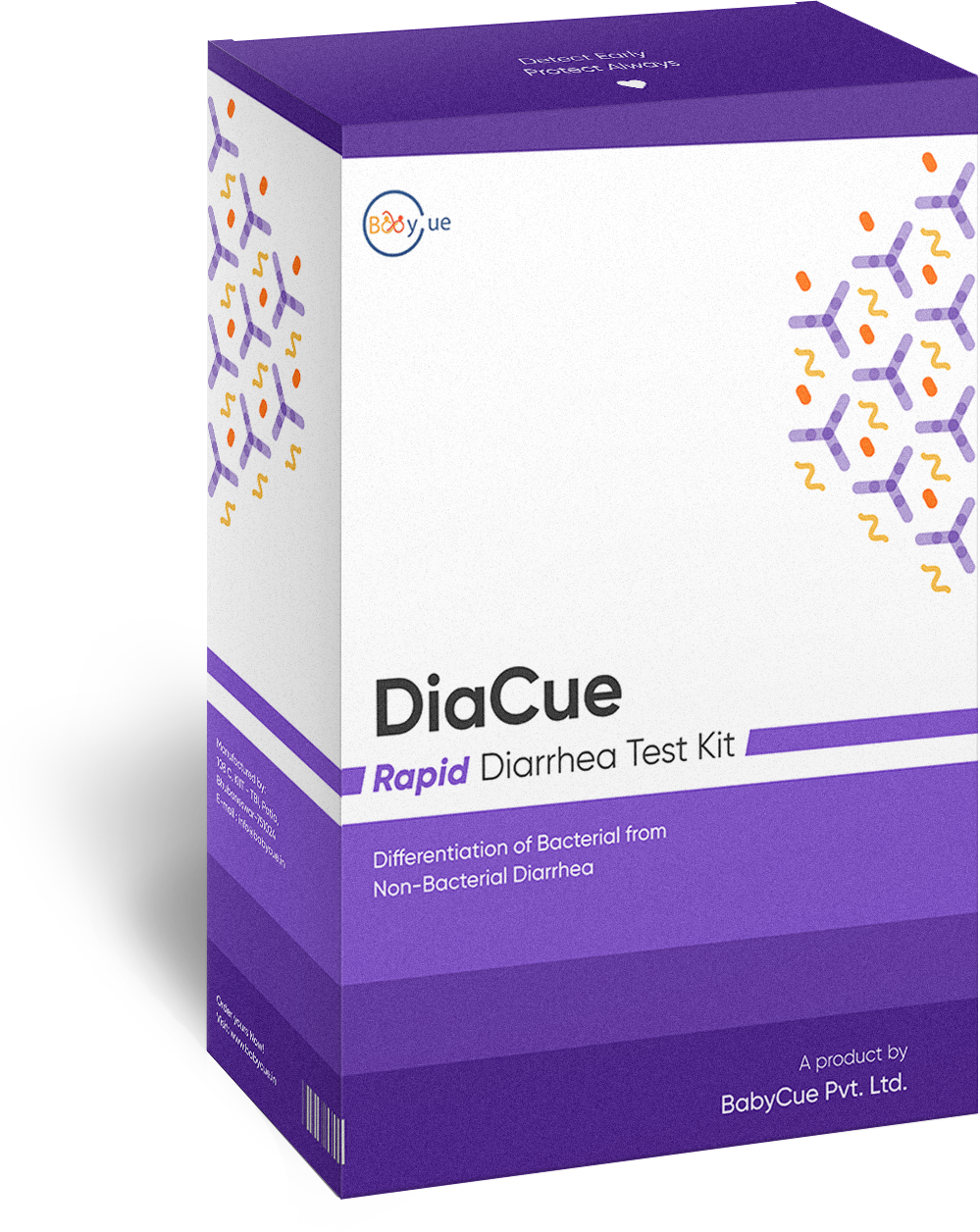
A Cuttack startup called BabyCue has built a way to end that guesswork. Its DiaCue kit is a paper-based rapid test that tells a clinician, in 15 to 20 minutes, whether a child’s diarrhoea is bacterial or not — no laboratory, no cold chain, no waiting two days for an answer.
A lab on a strip of paper
DiaCue is built on lateral flow assay technology — the same science behind rapid Covid tests and home pregnancy kits — re-engineered for one of the hardest diagnostic questions in primary care. The disposable paper platform detects disease-specific faecal biomarkers, and gold nanoparticle-based colorimetric detection turns the result into a colour change a clinician can read with the naked eye. No instrument, no electricity, no refrigerated transport.
That simplicity is the whole point. The kit is designed to work in the places where laboratories do not exist: rural primary health centres, community health centres and field clinics. The company says the test delivers its answer in 15 to 20 minutes, against 24 to 48 hours for a traditional laboratory stool culture — fast enough for the result to shape the prescription written in the same visit.
The technology was developed in collaboration with the National Institute of Pharmaceutical Education and Research (NIPER) Hyderabad, and clinically validated at ESIC Hospital Hyderabad. In the company’s multi-centre validation study, across an 847-sample cohort evaluated at sites through 2023 and 2024, DiaCue recorded 96% sensitivity in identifying bacterial infections and 94% specificity in identifying viral and non-bacterial cases. The proprietary biomarker detection method is protected under an international patent filing.
Built from months inside rural clinics
DiaCue was not designed in a laboratory and then handed to doctors. It began in 2022, when BabyCue’s founding team embedded in primary and community health centres across rural Odisha on a BIRAC SPARSH Fellowship. What they found was a tools gap, not a knowledge gap: the doctors knew exactly what they needed to know, but had no point-of-care test to tell them. BabyCue began developing DiaCue in 2024, shaped directly by that field evidence and built with clinicians at every step.
More Read

The company is led by founder Manish Kumar Swain and co-founder Saumyashree Swain, and is incubated at KIIT Technology Business Incubator in Bhubaneswar. Alongside the test kit, BabyCue is building GI Bud, an AI-powered gut health app — the same team, the same mission, carried into the phone in a parent’s pocket.
From a government grant to the President’s hands
The institutions backing DiaCue read like a roll call of Indian science. In March 2026 the Technology Development Board of the Department of Science and Technology extended financial support to BabyCue to commercialise the kit, under the project title “A Disposable Paper Analytical Platform for Rapid Differentiation of Childhood Diarrhea”. BabyCue is a participant in the global CARB-X accelerator, which backs antibacterial research against drug-resistant bacteria, and has signed a memorandum of understanding with the Odisha government’s Health and Family Welfare Department to integrate the test into primary healthcare.
Then came the moment that put the startup on the national stage. BabyCue won first prize at the Tribal Business Conclave Open Grand Challenge, organised by the Ministry of Tribal Affairs in association with Startup India and DPIIT — and founders Manish Kumar Swain and Saumyashree Swain received the award from President Droupadi Murmu at Rashtrapati Bhavan in New Delhi.
Why fifteen minutes matters
Diarrhoeal disease remains the second leading cause of death in children under five, claiming around 443,000 young lives every year, according to the World Health Organization. Behind that number sits a quieter crisis: every unnecessary antibiotic prescription nudges antimicrobial resistance further along, and the company says 64% of rural India still lacks access to basic diagnostic support.
That is what makes a fifteen-minute answer so powerful. When a clinician can see, before prescribing, that an infection is not bacterial, the antibiotic stays in the drawer — and the child’s gut microbiome is spared a drug it never needed. The company says pilot programmes using DiaCue have cut unnecessary antibiotic prescriptions by 85%, and that more than 10,000 lives have already been reached through its early screening and diagnostic support programmes.
With government backing behind it, manufacturing scale-up under way and a national award in hand, BabyCue is now taking DiaCue from Odisha’s clinics towards the rest of the country. It is a small paper strip, built by a small team, answering one of the biggest questions in Indian primary care — and it answers in the time it takes to finish a consultation.
Keep reading: The Antibiotic That Fights Back: Inside Bugworks’ BWC0977, Bengaluru’s New Weapon Against Superbugs · From Smoke to Skincare: Inside Intrinsic Foundries, the Jharkhand Startup Turning Factory Carbon Into Beauty Ingredients · More Chemicals, Materials & Life Sciences stories
Like stories like this? Add Exceptional Technology as a preferred source on Google to see more of our reporting in your search results and Discover feed.