Every chip that rolls out of a fab has been washed, etched and rinsed in chemicals so pure that a single stray particle can ruin a wafer. Hydrochloric acid, isopropyl alcohol and hydrogen peroxide — used at purities measured in parts per billion — are the invisible ingredients of the semiconductor industry. India is now building the fabs, and a 40-year-old specialty chemicals maker has decided the country should make the chemicals too.
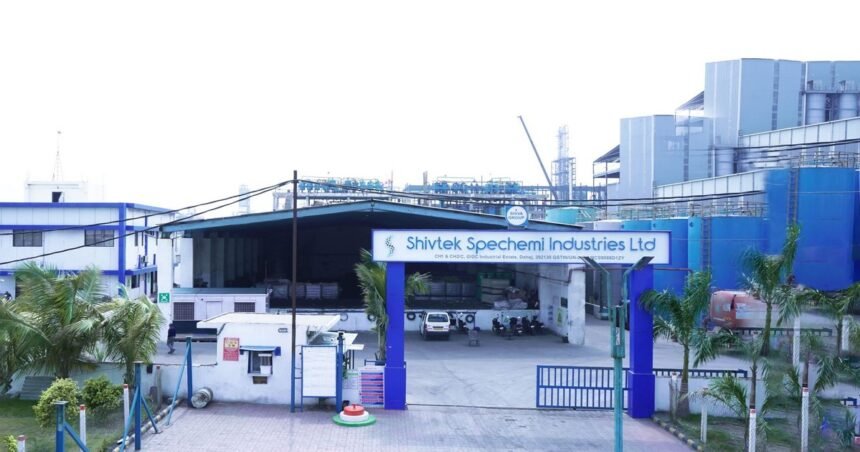
Shivtek Spechemi Industries, the flagship company of the Shiva Group of Industries, is building a dedicated electronic-grade chemicals plant at Pungam in Gujarat. The company says the facility will produce 50,000 tonnes a year of electronic-grade hydrochloric acid, 6,000 tonnes of electronic-grade isopropyl alcohol and 5,000 tonnes of electronic-grade hydrogen peroxide — three of the workhorse chemicals of chip manufacturing — with the purification technology for all three developed in-house.
The three chemicals every chip needs
The three chemicals do different jobs on the fab floor, and all three have to be extraordinarily clean. Hydrochloric acid is used in wafer cleaning and etching; isopropyl alcohol is the high-purity solvent that washes contaminants off components; hydrogen peroxide is used in cleaning and surface preparation. At electronic grade, the company is targeting 99.99% purity, and it says its products will cost 35–40% less than prevailing international prices.
The build-out is phased. The company says it will start with the 50,000-tonne electronic-grade hydrochloric acid facility in FY28, with the isopropyl alcohol and hydrogen peroxide units targeted for commissioning in 2028–29. With those capacities, Shivtek expects to meet 5–8% of India’s total demand for the three products — a measure of how large the market is, and how much of it is still served from abroad.
Forty years of chemistry, pointed at a new market
Shivtek is not a startup chasing a new sector from scratch. The company has spent four decades building a specialty chemicals business, and it already makes hydrochloric acid — just not at electronic grade. Its manufacturing units run at Kurnool, Rajpura and Dahej, its head office is in Gurugram, and it sells to customers in more than 75 countries. The electronic-grade move is, as managing director Amitt Nenwani put it, a natural extension of a portfolio built on in-house research and development.
That depth matters, because electronic-grade purity is a process achievement as much as a product. The company says it developed the technology for all three products itself, rather than licensing it from abroad, and the products will be made to the certifications and stringent quality standards semiconductor customers require. India imported chemicals and chemical products worth around ₹4.5–5 lakh crore in FY2024–25, the company notes, and closing even a slice of that gap at home is the opportunity it is chasing.
More Read
Why Pungam
The site was chosen with the semiconductor map in mind. Pungam, in Gujarat, sits close to a port with direct expressway connectivity, and the company says suppliers of the relevant raw materials are located within 60–70 km of the proposed facility. Gujarat, Nenwani said, is fast becoming the epicentre of India’s semiconductor ambitions, and the plant is positioned to serve that ecosystem as it grows.
Shivtek has also built flexibility into the plan. While semiconductor manufacturing is the primary market, any volumes the sector does not absorb will be channelled into pharmaceuticals — the next-highest purity segment after semiconductors — so the capacity stays productive while the fab ecosystem ramps up.
A bigger build-out
The electronic-grade entry is part of a larger expansion. The company is investing around ₹120 crore in plant and machinery for the electronic-grade lines, within a wider project involving expenditure of more than ₹300 crore that also covers specialty petrochemicals and specialty plasticisers. It is the latest step in a run of expansions that includes a ₹600-crore chemical manufacturing unit at Hazira in Gujarat announced in May 2025.
The company expects the electronic-grade chemicals business to generate revenue of around ₹700–800 crore in its first phase of production, and it is targeting overall revenue of ₹4,000–4,500 crore by 2030, with electronic-grade chemicals contributing around 30% of the total. From a maker of industrial chemicals to a supplier of the ultra-pure inputs a chip fab cannot run without — that is the distance Shivtek Spechemi is now trying to cover, and it is building the plant to do it at home.
Keep reading: The Urban Mine: Inside Neo Seekermetals, the Hyderabad Company Turning Dead Batteries Into Battery-Grade Metals · Twenty Minutes a Day, No Pills: Inside Mave Health, the Bengaluru Startup Turning Brain Stimulation Into a Wearable · More Chemicals, Materials & Life Sciences stories
Like stories like this? Add Exceptional Technology as a preferred source on Google to see more of our reporting in your search results and Discover feed.