


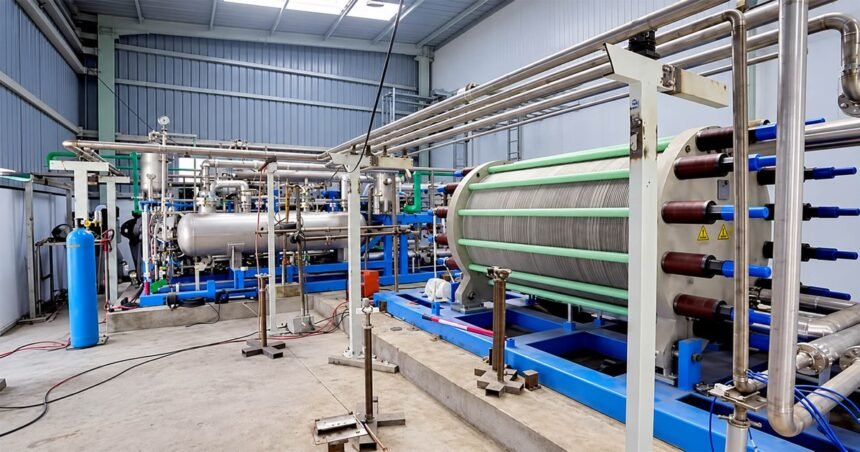
Green hydrogen starts with a machine. Feed it renewable electricity and water, and it splits the water into hydrogen and oxygen — clean fuel for steel plants, fertiliser units, refineries and trucks. India has big plans for that fuel, and in Mehsana, Gujarat, a company called Advait Greenergy is building the machines to make it at home.
Advait Greenergy, the green-energy arm of listed Advait Energy Transitions, has begun assembling its first 1 MW alkaline electrolyser at its 30 MW assembly facility in Mehsana. The company says the unit is the first step in a phased manufacturing build-out that runs from 30 MW today to 300 MW of integrated capacity, with a longer-term roadmap reaching 1 GW.
The machine at the heart of it
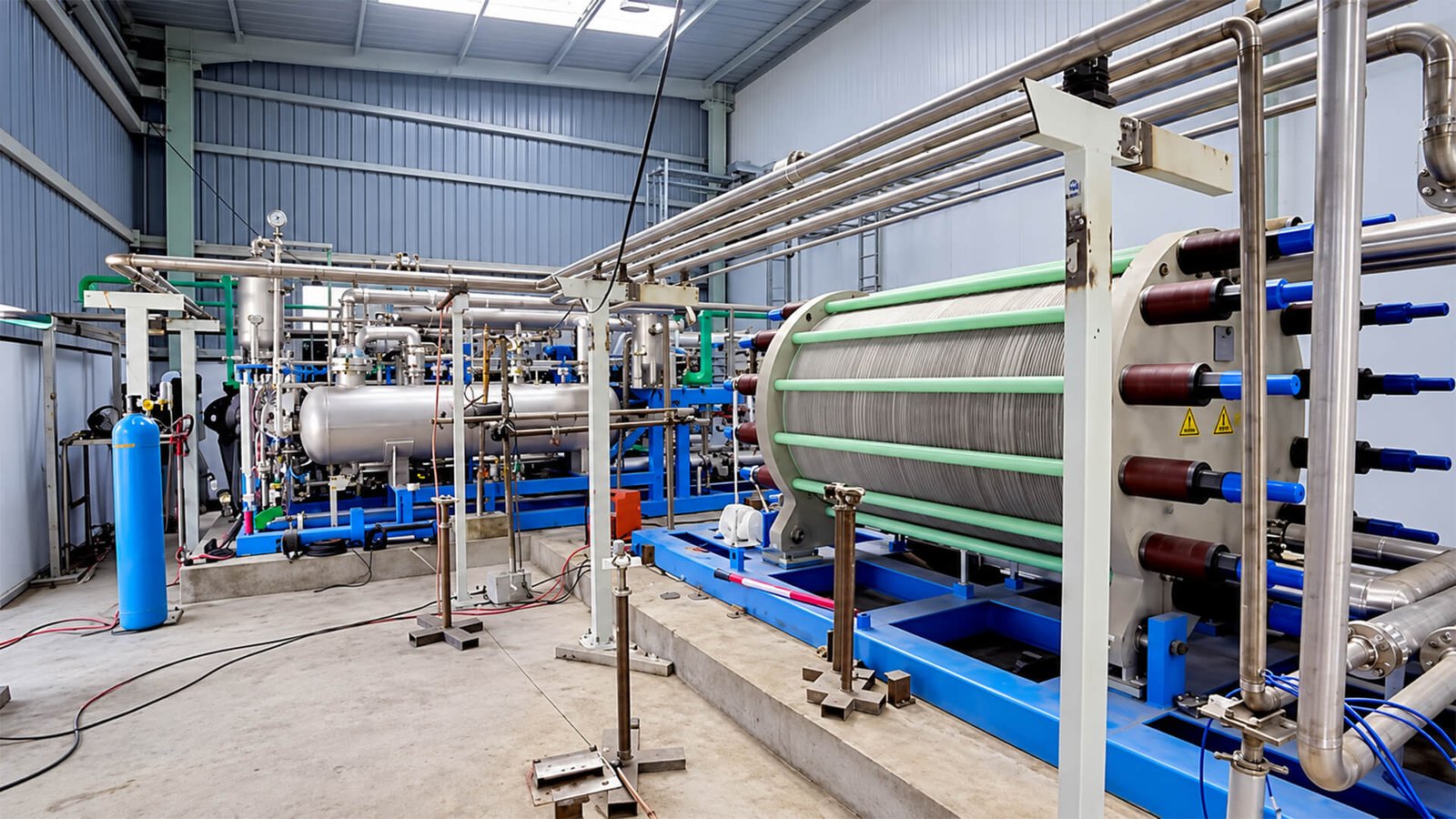
An alkaline electrolyser is the workhorse of industrial hydrogen: electricity passes through water in an alkaline solution, hydrogen bubbles off one electrode and oxygen off the other, and the gas is purified, compressed and sent to wherever it is needed. Advait’s systems come in 1 MW, 2.5 MW and 5 MW sizes — the 1 MW unit produces 200 normal cubic metres of hydrogen an hour, the 5 MW unit 1,000 — with a standard range from around 250 kW to 5 MW in containerised and skid-mounted configurations that can be combined into larger plants.
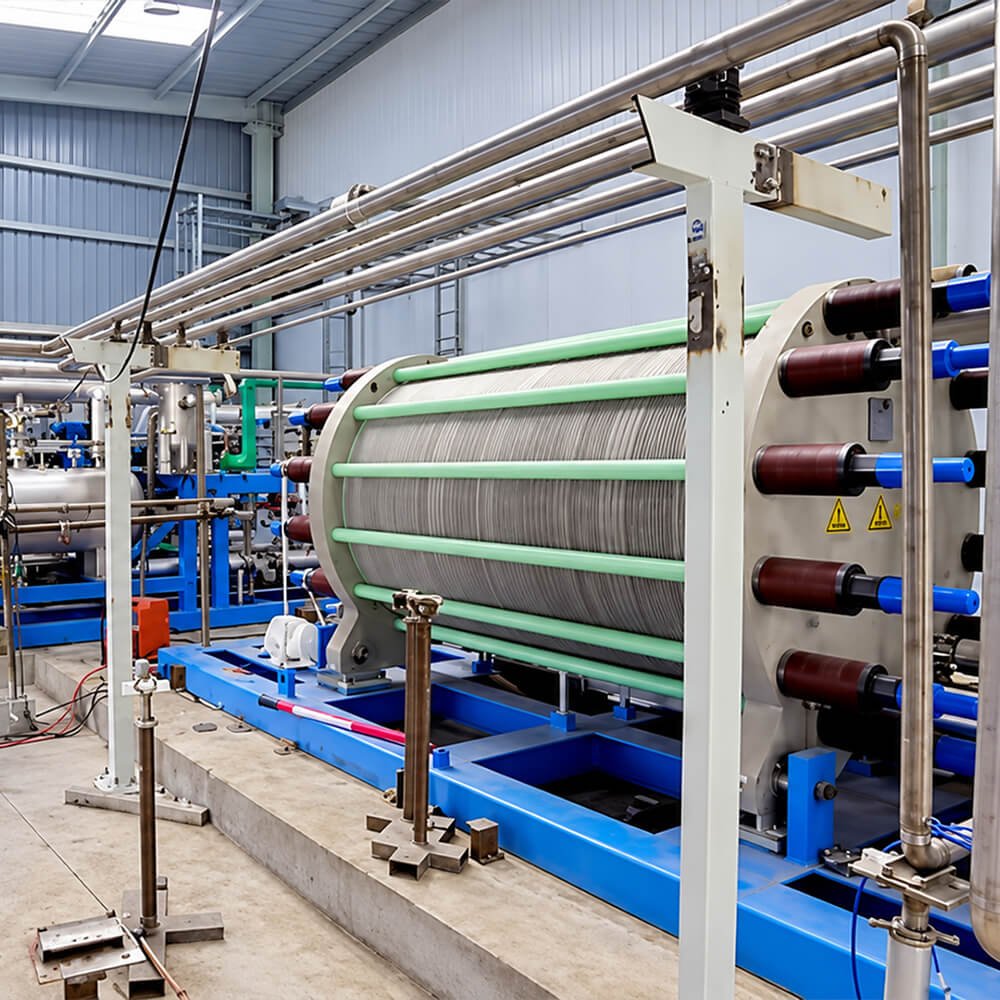
The company says its systems purify hydrogen to 99.999% and use around 4.0 to 4.4 kWh of electricity per normal cubic metre of hydrogen, with an asbestos-free diaphragm and integrated gas separation and purification. The stack itself is a study in precision manufacturing: a 1 MW unit holds 141 bipolar plates, a 5 MW unit 346, and each stack goes through a hot-and-cold tightening cycle — heated with steam to around 110°C, then cooled — so the plates seal perfectly before final testing.
A plant built in phases
The Mehsana facility opened on 13 March 2026 as one of India’s first alkaline electrolyser assembly lines, the first phase of a plan to build an integrated manufacturing platform for hydrogen equipment. Phase two takes capacity to 100 MW and phase three to a fully automated 300 MW line, with up to 1 GW of annual capacity on the longer-term roadmap.
The next stage is already taking shape at Gangad in Gujarat, where the company is developing an integrated manufacturing complex spread across more than 400,000 square feet. The site is planned to build alkaline electrolysers, battery energy storage systems and PEM fuel cells under one roof, with shared assembly and testing infrastructure. The green-energy push began with a memorandum of understanding with the Government of Gujarat at the Vibrant Gujarat Summit in January 2024, for fuel-cell and electrolyser manufacturing at Kadi in Mehsana district.
More Read

Government backing, and a technology partnership
The manufacturing build-out rests on two pillars the company secured in August 2024. The first is a Letter of Award from the Solar Energy Corporation of India under the Strategic Interventions for Green Hydrogen Transition (SIGHT) scheme, tranche two, for 200 MW of alkaline electrolyser manufacturing capacity — a production-linked incentive that pays on electrolysers actually manufactured and sold.
The second is a technology-licensing agreement with Guofu Hydrogen Energy Equipment, covering technical documentation, know-how and training for alkaline electrolyser manufacturing. Advait says the agreement let it build manufacturing capability quickly, and it is using the Mehsana facility to evaluate, qualify and onboard Indian vendors for critical components — gaskets, membranes, sealing materials, fasteners and structural parts — so more of the supply chain sits at home over time.
Proof in the field
The electrolysers are already working outside the factory. At THDC India Limited’s office complex in Rishikesh, Advait built a green hydrogen microgrid — the company describes it as India’s first — around a 300 kW alkaline electrolyser that produces about 50 kg of high-purity hydrogen a day from daylight solar power. The hydrogen is stored in a 24-cubic-metre tank at 30 bar, and after dark it runs a 70 kWh PEM fuel cell that feeds electricity back into the complex’s grid. Execution began in January 2023 and the plant was commissioned in January 2024.
At Bharuch in Gujarat, a 1 MW Advait electrolyser with integrated 200-bar compression is producing hydrogen for KPI Green Hydrogen’s galvanisation work. And in January 2025 the company signed a green hydrogen offtake agreement with Haryana City Gas Distribution (Bhiwadi) to build a 2,000-tonne-a-year green hydrogen plant on a turnkey basis, supplying 15 MW of alkaline electrolysers and the balance of plant, with a year of operations and maintenance after commissioning.
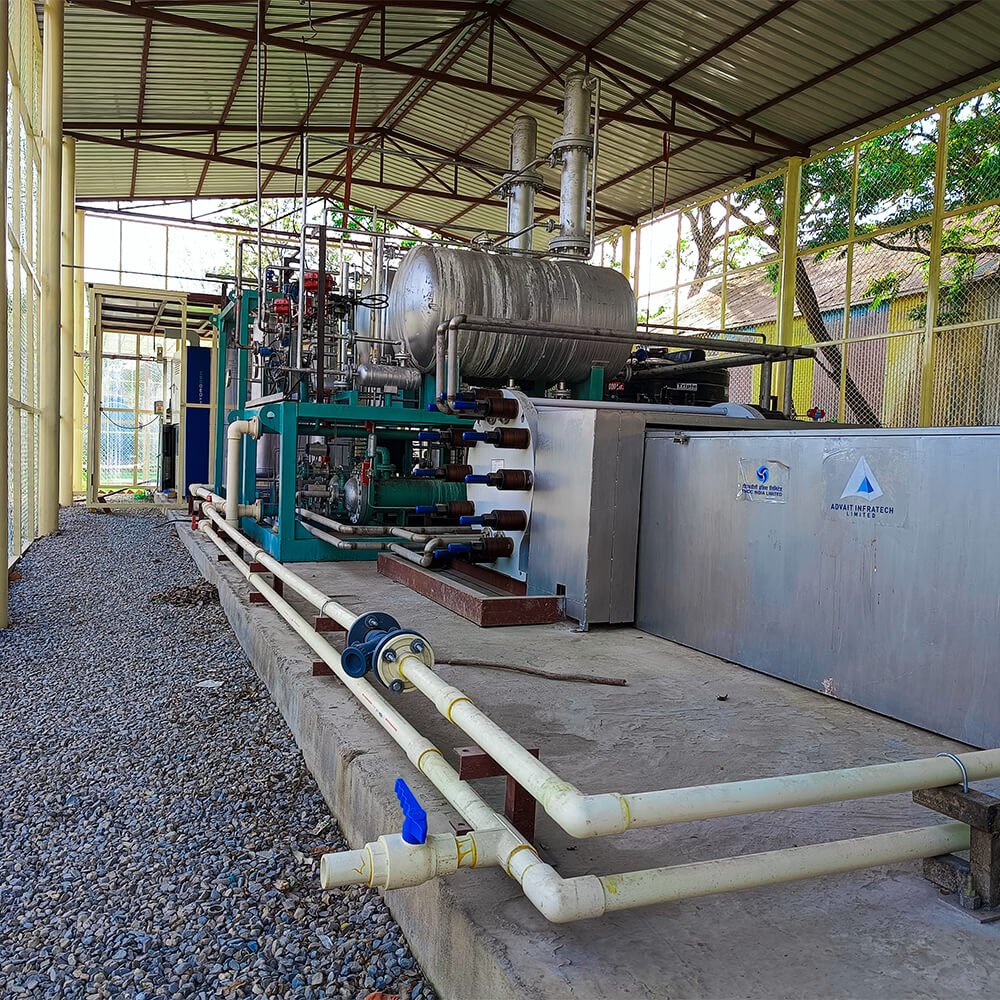
In July 2026 the company put its largest system through its paces, completing a live factory acceptance test of a pressurised 5 MW alkaline electrolyser rated at 1,000 normal cubic metres of hydrogen an hour. The company says more than 70 Indian companies, developers and public-sector undertakings attended the demonstration — a sign of how many Indian buyers are now shopping for hydrogen equipment made at home.
More than electrolysers
Electrolysers are one part of a wider energy platform. Advait Greenergy also builds utility-scale solar — the company says it delivered more than 250 MW of solar projects in its first year of operations — and battery storage, with a 50 MW / 100 MWh standalone storage project for Gujarat Urja Vikas Nigam at Radhanpur and a further 150 MW / 300 MWh awarded under GUVNL’s phase eight. A 2.5 GWh battery storage manufacturing facility is planned at the Gangad complex, so a single site can pair solar generation with an electrolyser and a battery rather than sourcing each separately.
From a 30 MW assembly line in Mehsana to a 300 MW integrated complex at Gangad, Advait Greenergy is turning green hydrogen from a policy ambition into factory output — one electrolyser stack at a time, and increasingly with Indian hands and Indian suppliers doing the building.
Keep reading: The Solar Panel That Rolls Up: Inside ABX3 PV’s Flexible Perovskite Modules from IISc · The Battery That Breathes: Inside Hindustan Zinc and IIT Madras’s Zinc-Air Three-Wheeler · More Energy & Power stories
Like stories like this? Add Exceptional Technology as a preferred source on Google to see more of our reporting in your search results and Discover feed.







