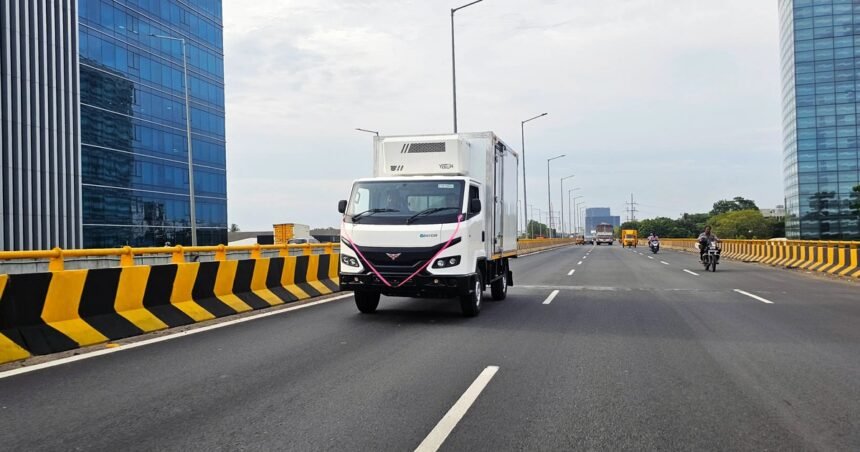
Picture a truck full of ice cream crawling through Chennai traffic. The cargo has to stay frozen, so the engine keeps running — burning diesel at every red light, at every loading bay, at every long wait in the sun. If the engine stops, the cold stops with it. That is how most of India’s refrigerated transport still works, and it is quietly expensive, wasteful and fragile. A young Chennai startup asked a simple question: why should the fridge depend on the engine at all?
Yotuh Energy’s answer is to cut the cord. The company builds battery-powered refrigeration units that run entirely on their own lithium-ion battery, keeping cargo cold for six to eight hours on a single charge — engine on or off, truck moving or standing still, even if the vehicle breaks down. It is a small change in where the power comes from, and it changes everything about how cold food travels.
The engine is the problem
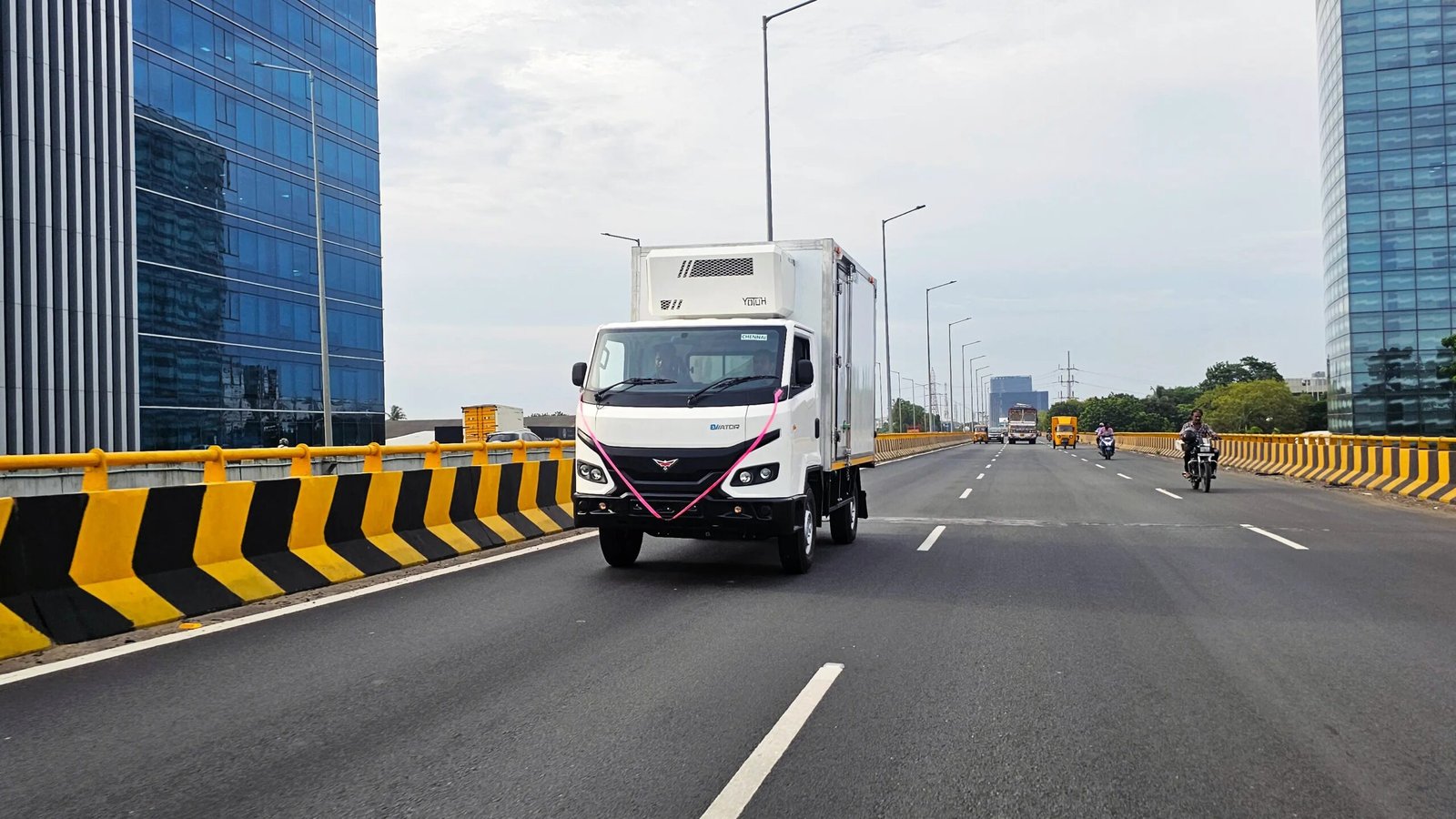
A conventional refrigerated truck ties its cooling to its engine. The compressor draws power from the same diesel motor that moves the wheels, which means the engine has to keep running simply to hold the temperature inside the cargo box. In Indian city traffic — long jams, slow loading, waiting at gates — that means hours of idling, diesel burned for no distance travelled.
The deeper problem is what happens when the engine stops. A breakdown, a stall, a long halt in traffic: the moment the engine cuts out, the cooling fades and the cargo starts warming. For ice cream, dairy, frozen food and medicines, a few warm hours can mean a whole load lost. And because the system is built around the engine, retrofitting it onto a different vehicle — especially an electric one — is difficult and expensive.
Yotuh’s engineers saw that the refrigeration unit did not need the engine at all. It needed power, and a battery could supply it better: silently, cleanly, and on its own schedule.
A battery instead of an engine
Yotuh’s refrigeration unit carries its own lithium-ion battery and a proprietary adaptive control system. The battery powers the cooling independently of the vehicle, so the cargo stays at temperature whether the truck is driving, parked, stuck in traffic or broken down. The company says a single charge keeps the unit running for six to eight hours, and the temperature can be set by the driver — the same unit serves chilled deliveries and frozen ones.
More Read

The system is smart about how it spends that charge. Door sensors detect every opening and adjust the cooling to compensate, holding the temperature steady even after repeated door openings — something conventional units struggle with. The company says the unit keeps running without interruption even during a complete vehicle failure, so the products stay safe while the truck waits for help.
Because the unit is engine-independent, it fits anywhere. It bolts onto conventional diesel trucks and onto electric vehicles alike, and the company says it needs very little maintenance, does not affect the vehicle’s mileage, and comes with a five-year warranty on the battery. Around-the-clock service support across India, including predictive maintenance and warnings before a breakdown, backs it up.
The savings add up
For the small businesses that run India’s cold chain — the distributors, dairy suppliers and frozen-food fleets — the arithmetic is what matters. The company says its technology can cut refrigeration running costs by around 75%, and its own figures put the saving at up to Rs 45,000 every six months per vehicle, with a 35% lower cost of ownership than other options.
The climate side is just as striking. The company says each unit can avoid approximately 3 to 36 tonnes of carbon dioxide emissions a year, depending on usage, by replacing diesel idling with battery power. Multiplied across the thousands of small refrigerated trucks that criss-cross Indian cities every day, that is a meaningful dent in both fuel bills and emissions — from a box on the roof of a truck.
The technology has moved beyond prototypes into commercial use. The company says its customers include distributors associated with Amul ice cream and McCain frozen foods, putting the units to work in real cold-chain operations carrying the food India actually eats.
From the racetrack to the cold chain
Yotuh Energy began in an unlikely place: a Formula Student racing team. Co-founder Shaivee Malik, a biotechnology graduate from IIT Delhi, was associate team captain of Axlr8r, the institute’s racing team, where she worked alongside Vivek Mahindrakar and Dharmik Bapodara — the two engineers who would become her co-founders. The three wanted to work on climate problems, and they landed on India’s cold chain: a sector that quietly consumes enormous amounts of energy while deciding how much of the country’s food actually reaches a plate.
In 2022 they founded Yotuh Energy in Delhi, then moved to Chennai after entering an incubation programme at IIT Madras. The early days ran on family support and government grants that helped build the first prototypes. The startup later raised about Rs 1.53 crore in a round led by Campus Angels Network, alongside grants and support from government departments and programmes focused on agriculture, science and technology — including the Ministry of Agriculture, the Department of Science and Technology and MeitY.
The name comes from Sanskrit, and refers to the act of cleaning — fitting for a company whose whole idea is to clean up one of the dirtiest corners of logistics. As Malik puts it, Yotuh is a cooling solutions company, and refrigerated trucks are only the first application: keeping things cold, cleanly, is a much bigger problem than trucks alone.
India grows enormous quantities of fruit, vegetables and dairy every year, and a large share of it never reaches consumers because the journey from farm to market is not cold enough, for long enough. Yotuh’s battery-powered fridge does not rebuild the cold chain — it fixes the one link that kept breaking it, the link between the fridge and the engine. A truck that stays cold with its engine off is a small engineering idea with a very large addressable problem, and it is now running on Indian roads, carrying real cargo, for real customers.
Keep reading: The Machine That Turns Water Into Fuel: Inside Advait Greenergy’s Electrolyser Build-Out in Gujarat · The Solar Panel That Rolls Up: Inside ABX3 PV’s Flexible Perovskite Modules from IISc · More Energy & Power stories
Like stories like this? Add Exceptional Technology as a preferred source on Google to see more of our reporting in your search results and Discover feed.