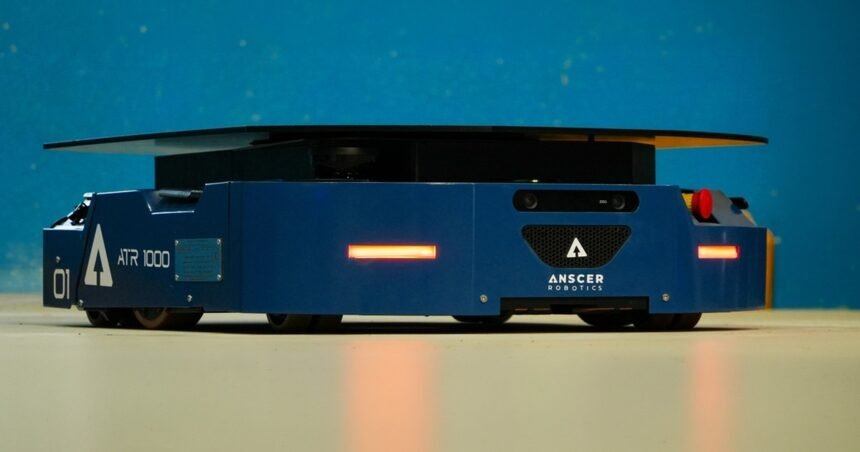
Inside a modern factory, the hardest gap to automate is often not the production line itself — it is the few metres between one machine and the next. Pallets, trolleys and one-tonne loads still move on muscle power, forklifts and luck, because most heavy-load robots are simply too big for the aisles they would need to work in. A Bengaluru company has spent six years closing exactly that gap, and its newest robot is built to slide into the factory that already exists.
ANSCER Robotics, founded in 2020 and headquartered in Bengaluru with a North American presence in Plano, Texas, unveiled the ATR 1000 on 28 October 2026. The ATR 1000 — short for Autonomous Turntable Robot — lifts, rotates and transports loads of up to 1,000 kg, all within a footprint of less than one square metre. The company says it is the most compact footprint globally in its payload category, and the product draws on its experience across more than 100 robot deployments and over two million autonomous material-movement trips.
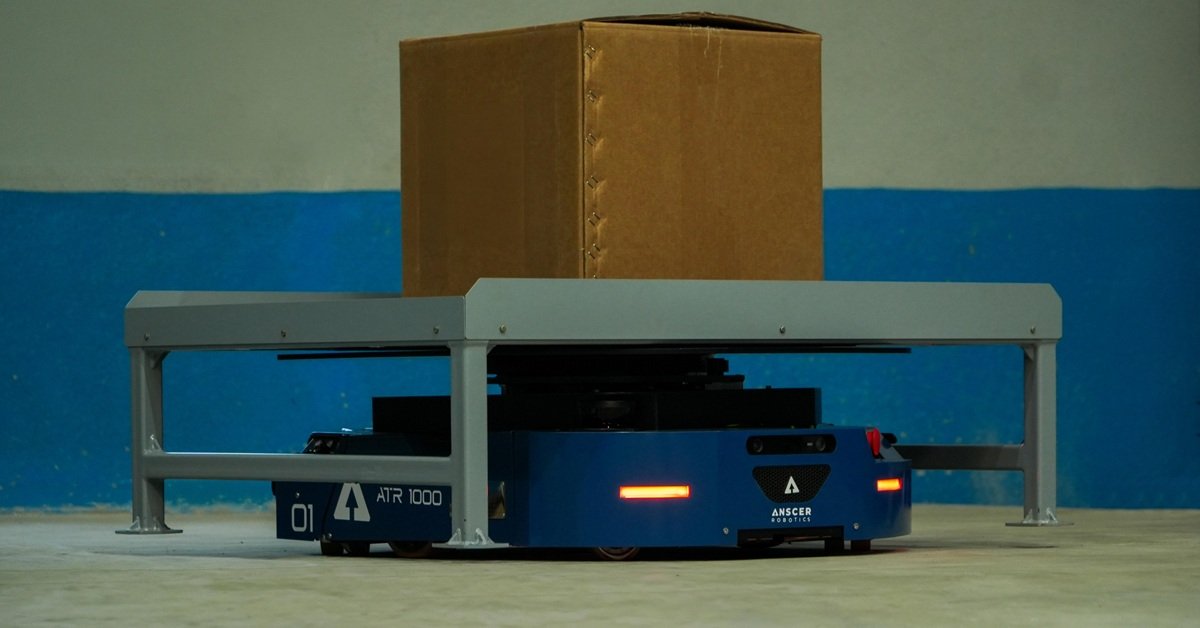
ANSCER Robotics’ ATR 1000 carrying a loaded trolley, as shown on the company’s website.
Lift, spin, deliver — in under a square metre
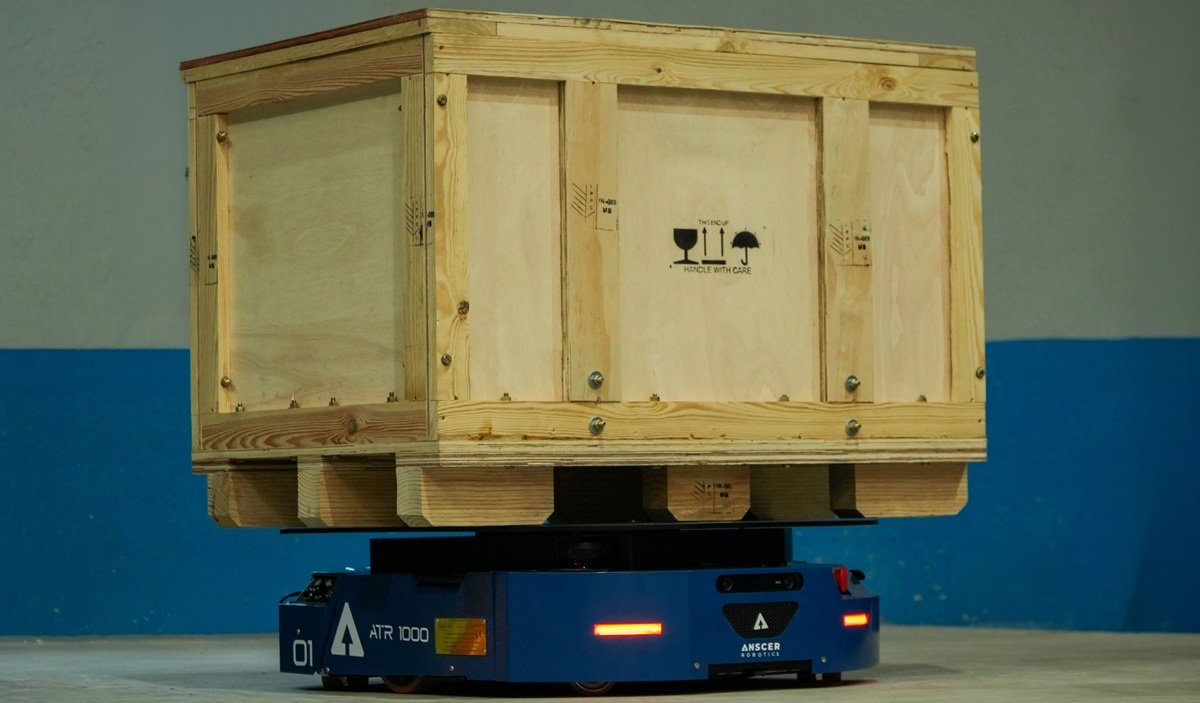
The ATR 1000’s signature feature is its turntable. Instead of a worker wrestling a heavy carrier into position, the robot rotates its load through a full 360 degrees, docks at a specific angle, and presents any face of the load to a workstation — so materials arrive in exactly the orientation the next operation needs. With a turning diameter of 1,020 mm and a top speed of 1.5 metres per second, the company says the robot is designed to thread narrow aisles and space-constrained corners where bigger machines cannot go, while autonomous charging keeps it running without charging-related downtime.
More Read

The ATR 1000 carrying a crated load, as shown on the company’s website.
Built for the factory floor it already has
“Manufacturers should be able to expand automation within the factory they have, with the flexibility to respond as production needs change,” said Ribin Matthew, CEO of ANSCER Robotics. “With the ATR 1000, we have brought heavy-load capacity, compact mobility and precise payload orientation into one integrated product. This opens up opportunities to automate the movements between processes, the connections that determine how smoothly an entire operation runs.”
The robot’s job list reads like a tour of the factory floor: case picking, goods-to-person workflows, line-side delivery and replenishment, work-in-progress transport, trolley handling, empty-bin returns, waste and scrap removal, and point-to-point material movement. Through ANSCER’s fleet-management software, the company says the ATR 1000 can be coordinated with other robots and connected to factory workflows, so material keeps flowing across multiple processes instead of stopping between them.
Safe to share the floor with people
The ATR 1000 navigates by SLAM — simultaneous localisation and mapping — so it needs no tracks, tape or guides laid into the floor, with QR-based navigation available as an option. For shared spaces, the company says the robot combines 360-degree LiDAR-based collision prevention with adaptive safety zones, visual indicators and audible alarms that communicate its status and warnings. Its safety architecture is designed to meet Performance Level d, Category 3 requirements, with safety functions developed in accordance with ISO 3691-4, and its design addresses the applicable requirements of ISO 13849-1, ISO 12100, ANSI/RIA R15.08-1 and EN 1175.
ANSCER’s portfolio spans autonomous mobile robots, pallet-handling robots, automated guided vehicles and fleet-management software, serving customers across international markets. Commercial availability of the ATR 1000 across global markets will follow, the company says, with India and the United States as priority markets — bringing one-tonne autonomous handling to the factories that need it most, in the space they already have.
Keep reading: From Words to Walls: Inside Tagbin’s BRIXX, the AI That Designs Buildings in Days · Teach Your Old Machines New Tricks: Inside Tensrai, the Hyderabad Startup Making Factory Machines Drive Themselves · More Industrial Automation & Technology stories
Like stories like this? Add Exceptional Technology as a preferred source on Google to see more of our reporting in your search results and Discover feed.