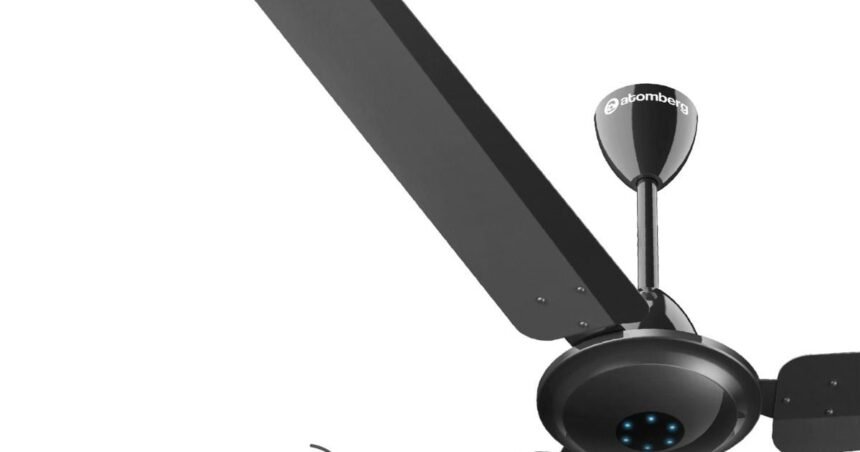
The ceiling fan is the hardest-working appliance in an Indian home. It spins for hours every day, through summers that stretch for months, in crores of rooms across the country — and for decades, the motor inside it barely changed. The ordinary induction fan draws around 75 watts, day after day, year after year. In 2012, two IIT Bombay graduates looked at that humble machine and saw an engineering problem worth solving. The company they built, Atomberg Technologies, has since put a new kind of motor into more than a crore of Indian homes.
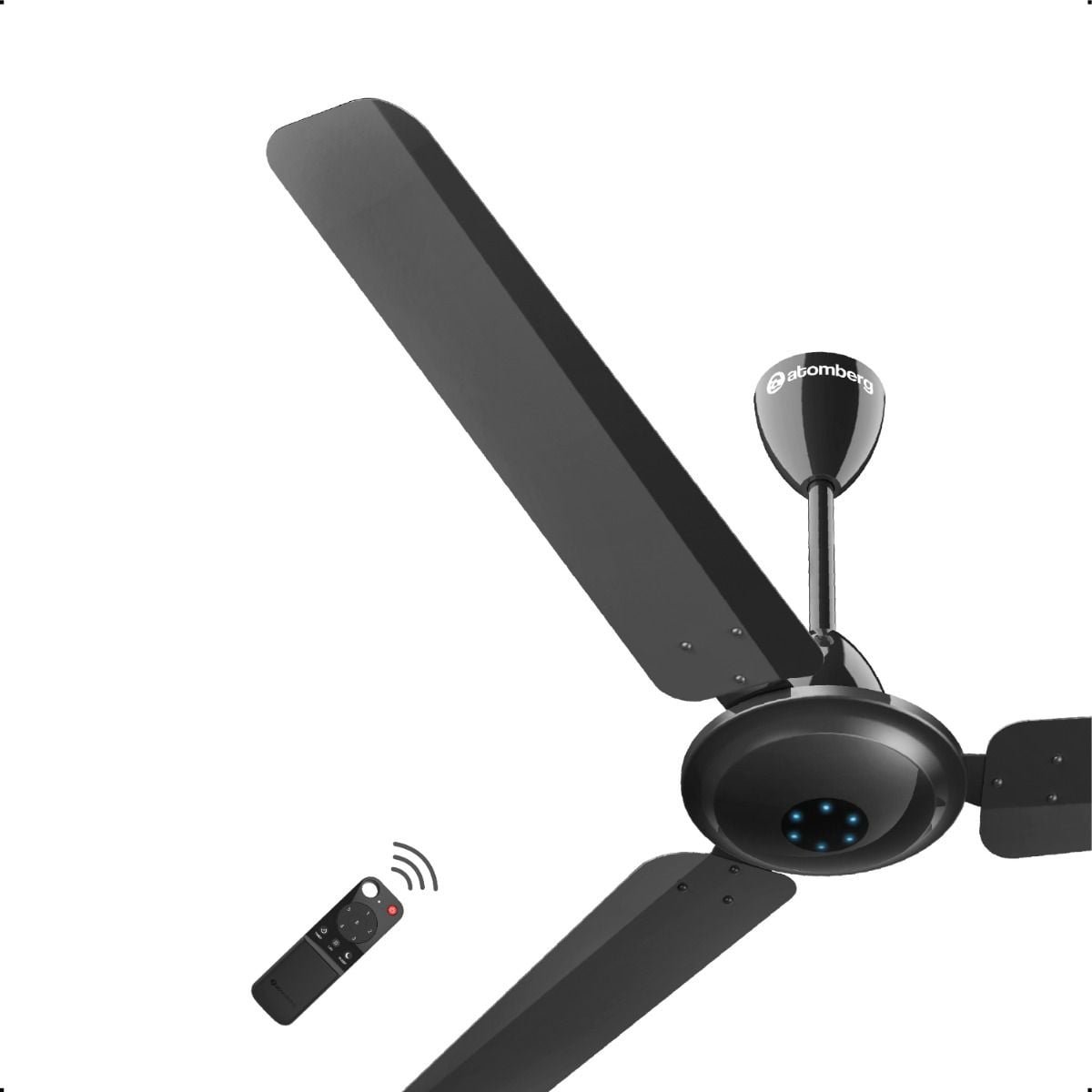
Atomberg’s Ikano BLDC ceiling fan. (Official photo: Atomberg Technologies)
The motor that changed the fan
Atomberg’s breakthrough is a brushless DC — BLDC — motor, designed in-house and tuned by the company’s AtomSENSE algorithm. Where a conventional fan needs sensors to keep its motor in step, Atomberg’s controller drives the motor without them, reading the back EMF of each coil to sense the rotor’s position in real time. The result is a fan that the company says draws just 28 watts, against 75 to 80 watts for an ordinary induction fan — up to 65% less power for the same breeze.
The idea began as Manoj Meena’s final-year project on BLDC motors at IIT Bombay. Meena founded Atomberg in 2012, incubated at the institute’s Society for Innovation and Entrepreneurship, and was joined by hostel-mate Sibabrata Das as co-founder. The first BLDC fan prototype arrived in April 2015, and the company’s Gorilla fans went on to build the market for energy-efficient fans in India almost single-handedly. The early breakthrough came in Gujarat’s ceramic factories, where hundreds of fans run around the clock drying tiles — and where the electricity savings spoke for themselves.
India’s largest BLDC fan plant
Today Atomberg designs and manufactures its fans at Chakan, near Pune — a facility the company describes as India’s largest BLDC ceiling fan plant, with an installed capacity of 6.6 million units a year. A second facility at Chakan-Varale makes the proprietary components inside them: the motors, the controllers and the electronics are all built in-house. More than 70 BLDC fan models roll out of the plants, alongside mixer grinders, cold-pressed juicers, water purifiers and smart digital locks, reaching customers through 626 distributors and nearly 47,000 retail touchpoints.
More Read
The company says more than a crore of customers now run its fans, and its IPO filing puts its share of India’s premium ceiling fan segment at 46%. Its Aris Contour fan won the Red Dot Design Award in 2024, a reminder that the engineering extends to the design on the ceiling too.
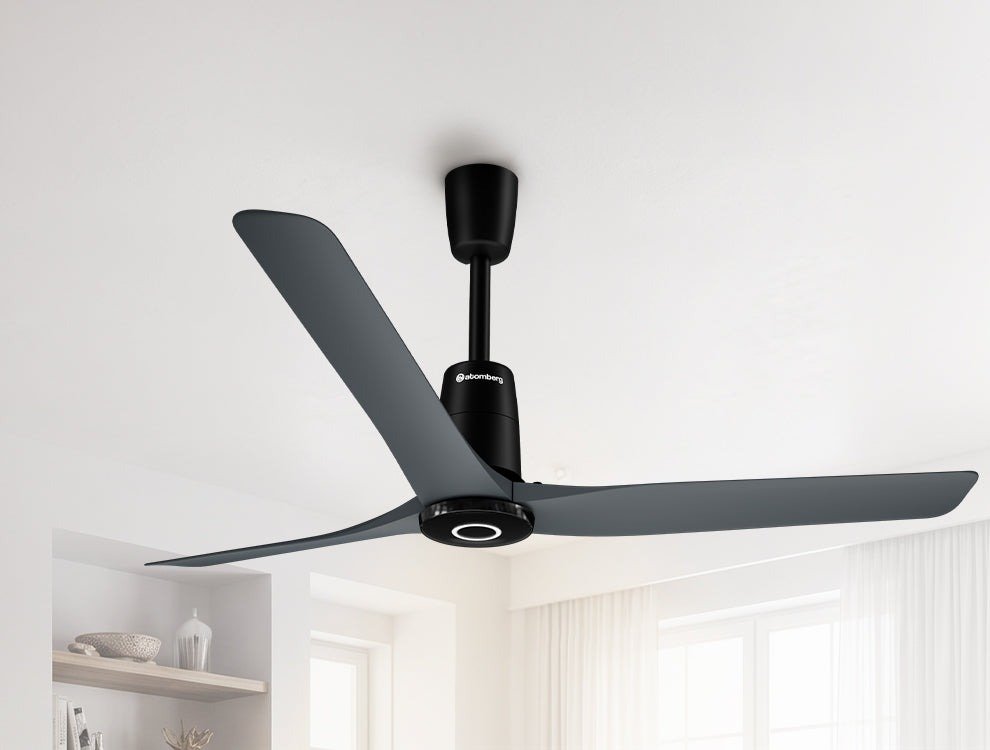
An Atomberg Aris BLDC ceiling fan in a home. (Official photo: Atomberg Technologies)
Beyond the fan
Atomberg’s motor expertise is now travelling beyond its own brand. Its components arm supplies motors, controller cards and refrigerator compressor motors to other manufacturers, growing its external sales from ₹3.6 crore in FY25 to ₹17.2 crore in FY26. And in October 2026 the company signed a binding term sheet with Voltas, the Tata Group’s air-conditioning maker, to form a 50:50 joint venture manufacturing compressors for room air conditioners — a 2.8-million-unit-a-year factory in Chennai, with commercial production targeted for early 2028.
The numbers behind the breeze
The growth has been steady and compounding. Atomberg’s revenue from operations reached ₹848 crore in FY24, crossed ₹1,000 crore in FY25, and rose to ₹1,294 crore in FY26, according to the company’s IPO filing. The company has raised more than $150 million from investors including Temasek, Steadview Capital, Jungle Ventures and A91 Partners, and in October 2026 it received SEBI’s approval for an IPO built around a ₹450-crore fresh issue — with ₹100 crore of the proceeds earmarked for research and development, including proprietary motor development. In November 2026, Hurun named Atomberg one of India’s Gazelles, the startups most likely to become unicorns within three years.
It is a long way from a final-year project on a motor. But the idea has never changed: the most ordinary machine in the Indian home deserved the most efficient motor India could build — and Atomberg set out to build it.
Keep reading: The 18-Year-Old Building the Tiny Metal Frames Inside Every Chip: Inside Micronex’s ₹80-Crore Sanand Plant · The Shoe That Comes Out of a Printer: Inside Drifbolt, the Delhi Startup 3D-Printing Footwear in One Piece · More Manufacturing & Engineering stories
Like stories like this? Add Exceptional Technology as a preferred source on Google to see more of our reporting in your search results and Discover feed.