


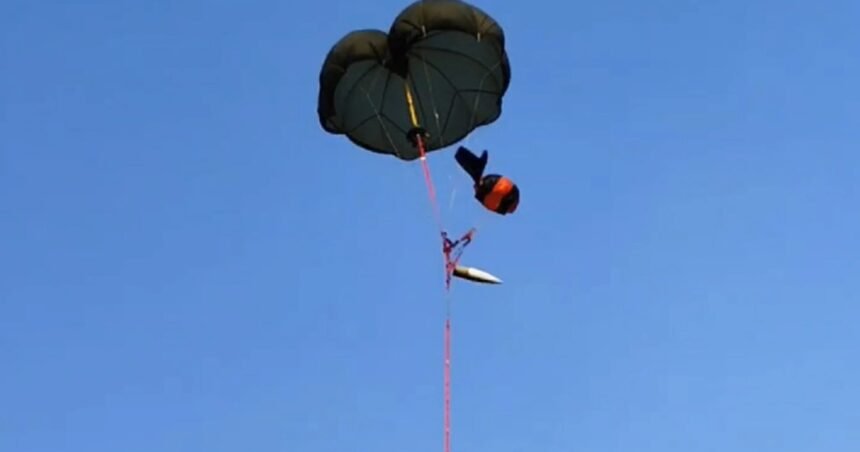
Every satellite India launches today rides a rocket that is used once and then thrown away. The booster that does the hardest work — the climb through the thickest air, the push toward orbital speed — ends its life in the ocean or burns up on the way down. That single-use habit is a big part of what makes getting to space so expensive. A young startup in Pune is building rockets designed to come back.
BAAS Technologies, founded in March 2024, is developing a family of reusable launch vehicles — from small suborbital rockets that carry research payloads to the edge of space, to Gallon, a 23-metre orbital rocket designed to carry 400 kilograms to low Earth orbit and bring its booster home under parachutes. The company’s motto says it plainly: launch, recover, relaunch.
Four rockets, one idea
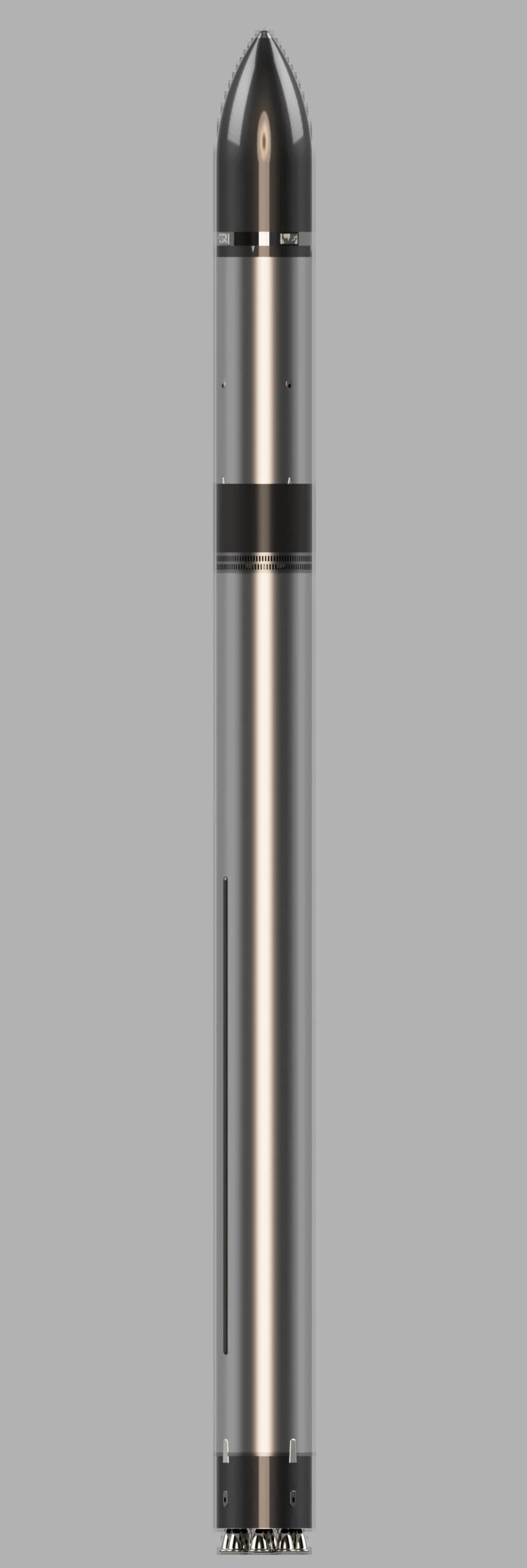
Gallon is the flagship. The two-stage rocket stands 23 metres tall and 1.4 metres across, with an expandable fairing that opens to 2.6 metres for larger payloads. Nine of the company’s own JOULES engines power the first stage, with a single vacuum-optimised J-vac engine on the second stage and an orbital insertion module to place satellites precisely. The company says the booster will return by partially guided parachutes for a marine splashdown, ready for a quick turnaround and another flight.
Below Gallon sit three suborbital rockets, each built for a different job. Kelvin, the largest of the three at 11 metres, is a recoverable and reusable vehicle designed to carry 100 kilograms to 300 kilometres, with aluminium-lithium tanks and a booster that returns under guided parachutes — the company says it can be assembled and launched within 24 hours. Fahrenheit, about 8 metres tall, is built to carry around 60 kilograms to the Kármán line, the edge of space, on a solid rocket motor. And Celsius, the smallest at about 4 metres, carries up to 10 kilograms of nanosatellites and research experiments to 20 kilometres. Together, the four vehicles cover everything from a university experiment to a full satellite launch.
The engine at the heart of it
More Read

What makes the family possible is JOULES, the engine BAAS designed and builds in-house. It is a semi-cryogenic engine burning rocket-grade kerosene and liquid oxygen, producing 35 kilonewtons of thrust with an electric pump-feed system, and built to be reused. Its vacuum sibling, the J-vac, delivers 35.8 kilonewtons and can restart multiple times in orbit. The company also builds its own solid rocket motors — up to 4 metres long, in HTPB and sugar-based propellants with custom thrust profiles — for the smaller rockets, for defence and commercial missions, and even as rocket-assisted take-off boosters for unmanned aircraft.
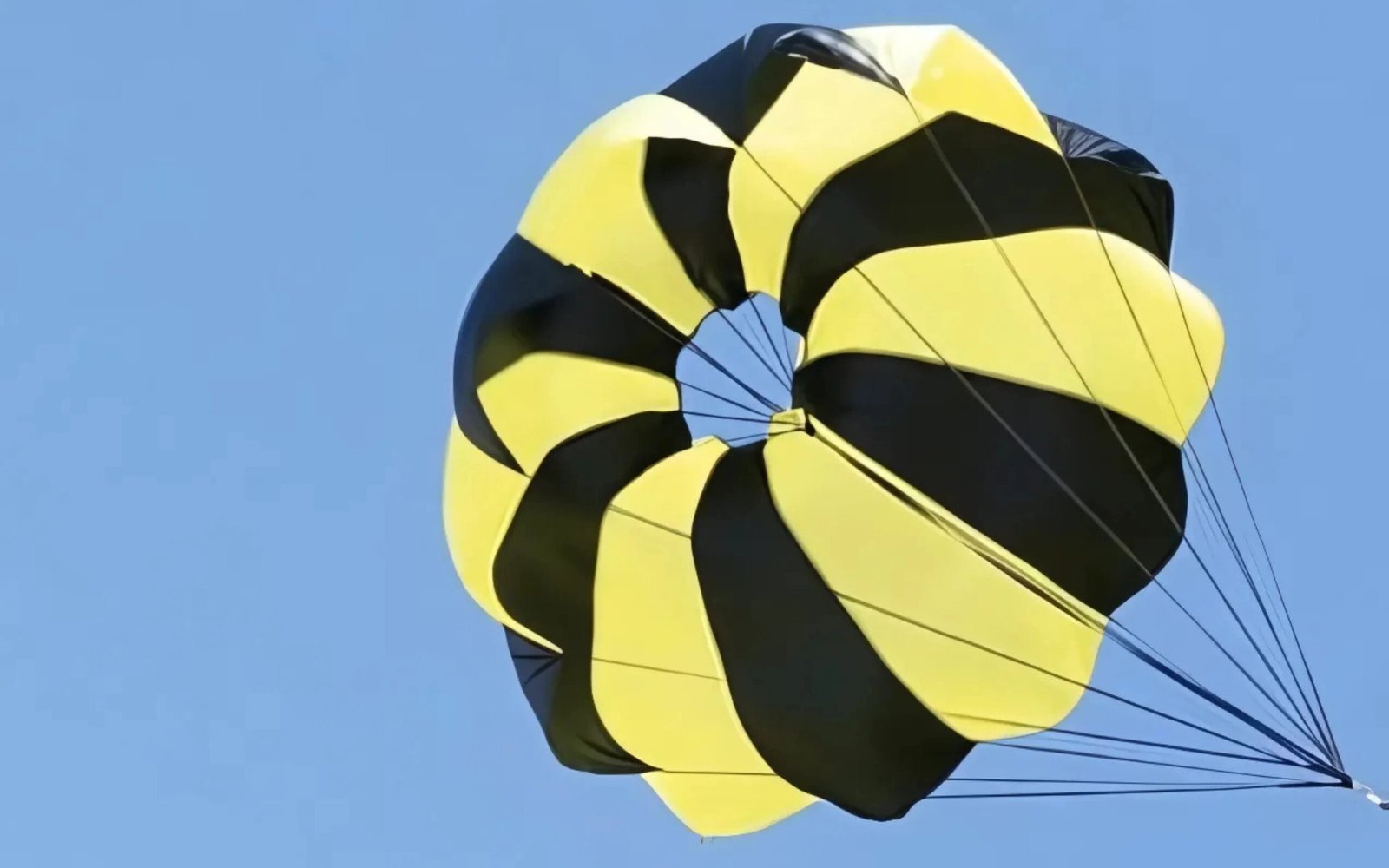
Reusability runs through the whole design, not just the engines. BAAS builds its own recovery hardware — hemispherical parachutes from 30 to 98 inches in high-strength ripstop nylon, canister and pyrotechnic ejection mechanisms, and composite shock cords — so that a booster that has done its job can be caught, refurbished and flown again instead of being written off.
A test stand of their own
Engines are only real once they have been fired, and BAAS is building the place to do it. The company is setting up a 100-kilonewton Rocket Propulsion Testing Facility across 20,000 square feet in Pune, where it will run static-fire tests to validate and qualify its solid and liquid propulsion systems. The company says it has already completed paid pilot programmes in India and is expanding commercially into Latin America, the Middle East, Southeast Asia and Australia.
Five friends from a rocketry team
BAAS began with five friends who first met on the STES Rocketry Team in 2020 — Tanmay Kanmahale, the chief executive, Prashant Patil, Atharva Pingale, Swayam Sonar and Shriniwas Hase. The company is registered in Nashik, with its research and development office and propulsion testing facility in Pune, and is incubated by SINE at IIT Bombay, ARAI-AMTIF and AIC-JKLU. In July 2026 it raised a Rs 5-crore pre-seed round led by Inflection Point Ventures, with participation from SINE IIT Bombay and angel investors, to fund the propulsion work, the test facility and the road to engine and flight testing.
What comes next
The test facility is the next milestone: static fires of the JOULES engine, qualification of the propulsion systems, and then flight testing of the suborbital rockets on the way to Gallon’s first orbital flight. From a student rocketry team to a four-rocket family with its own engines and its own test stand, BAAS is building the launch capability India’s small-satellite makers have been waiting for — rockets that come home, so the next launch costs less than the last.
Keep reading: The Clock That Keeps India on Time: Inside QuPrayog’s Indigenous Atomic Clock · No Remote, No Manual: Inside Fly Camp, the Bengaluru Startup Teaching India to Fly a Drone in Five Seconds · More Aerospace & Defense stories
Like stories like this? Add Exceptional Technology as a preferred source on Google to see more of our reporting in your search results and Discover feed.









