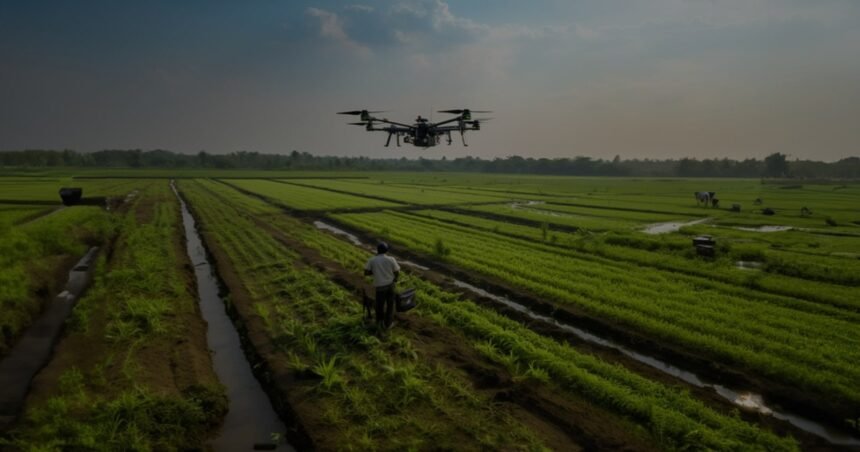
Look down at an Indian farm from a drone, and you see green rows stretching to the horizon. Look down with a hyperspectral camera, and you see something else entirely: which plants are stressed, where a pest is taking hold, which patch of soil is short of nutrients — days before any of it is visible to the human eye. A Delhi startup has spent a decade turning that invisible view into advice for small farmers, and now the same technology is following the harvest all the way to the spice jar — with the first jars heading for American kitchens.
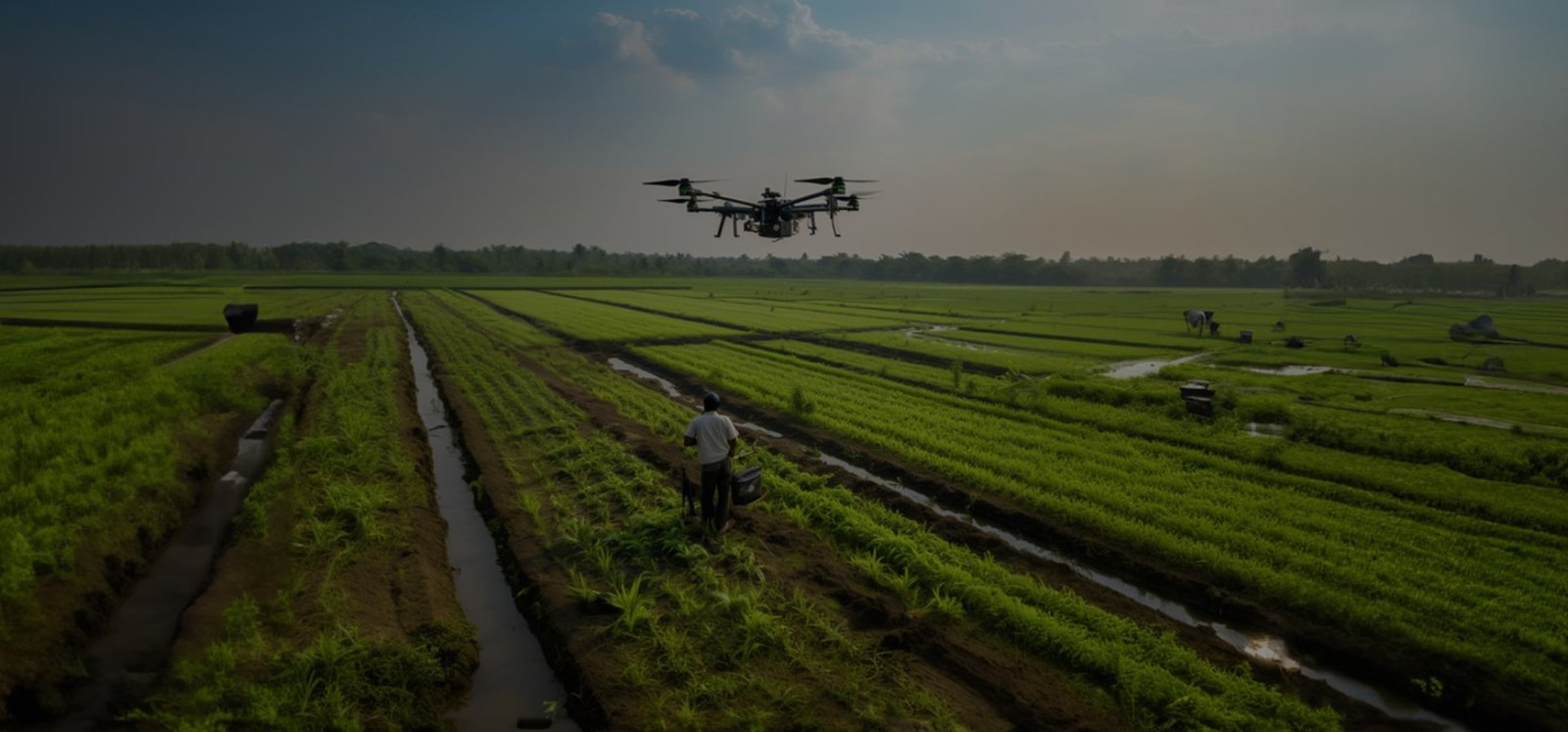
BharatRohan Airborne Innovations was founded in 2016 by Amandeep Panwar and Rishabh Choudhary, two aeronautical engineering graduates who started out visiting Krishi Vigyan Kendras to understand what farmers actually needed. Their answer was to bring a technology more familiar from space exploration down to the farm: drone-based hyperspectral imaging, which reads the light reflected by a crop across hundreds of narrow bands, far beyond what the eye can see, and turns it into a health report for every part of a field.
Reading a crop’s health from the sky
The heart of the system is the way it reads a plant. A healthy leaf and a stressed leaf reflect light differently, and hyperspectral imaging catches those differences early — the first signs of pest attack, disease or nutrient deficiency, while there is still time to act. The company says it has built spectral libraries for Indian crops in association with CSIR-Central Institute of Medicinal and Aromatic Plants in Lucknow, so the drone’s readings are matched against the chemistry of the crop itself. Its CropAssure, SeedAssure and SourceAssure platforms carry a farmer through the season, from crop planning to harvest, with drone surveys, advisory services and market linkages in one chain, alongside its Pravir line of bio-inputs.
It started small: 42 farmers across six tehsils in Barabanki, where each drone flight covered only two or three acres. The founders reworked the model around village clusters of 100 to 150 acres, and the scale followed. The company now says it works with more than 58,000 farmers across over 2.6 lakh acres in seven states — Uttar Pradesh, Rajasthan, Maharashtra, Madhya Pradesh, Telangana, Andhra Pradesh and Meghalaya — with Tamil Nadu next. Farmers working with the company report 30 to 35 percent higher yields and around 30 percent lower input costs, and its produce reaches buyers including Suhana, Dabur, Aachi, Advanta and ITC. The service is priced between Rs 400 and Rs 1,200 per acre per season, and in March 2026 the company expanded through agri-input dealers, taking drone monitoring and spraying services deeper into farming districts.

Here is the company’s own short film about its mission:
The spice jar that knows its farm
The newest chapter closes the loop between the drone and the dinner table. BharatRohan Inc., the company’s Delaware-incorporated subsidiary, will launch a traceable, lab-tested spice range in the United States in the first quarter of 2027, starting with turmeric and cumin on Amazon and the company’s own website. Every batch is tested in NABL-accredited laboratories for pesticide residues, microbiology and heavy metals, and a QR code on the jar links to the certificate of analysis and the farm it came from. The company’s Indian processing unit is in the process of FSSC 22000 certification, and business-to-business ingredient supply and retail listings are set to follow the online launch.
More Read

It is a neat full circle for a company that began by flying drones over small farms: the same field data that helps a farmer grow a better crop now vouches for the spice in the jar. BharatRohan listed on the BSE SME board in September 2025, and with its drones already watching over 2.6 lakh acres, the journey from an Indian field to an American kitchen is now a traceable line — drawn from the sky.
Keep reading: The Little Robot That Farms on Its Own: Inside XMachines’ Neo, the Hyderabad Field Robot Going Global · The Soil Glucometer: Inside Proximal Soilsens, the Pune Startup Putting a Soil Lab in Every Farmer’s Pocket · More Food Processing & Agri-Tech stories
Like stories like this? Add Exceptional Technology as a preferred source on Google to see more of our reporting in your search results and Discover feed.