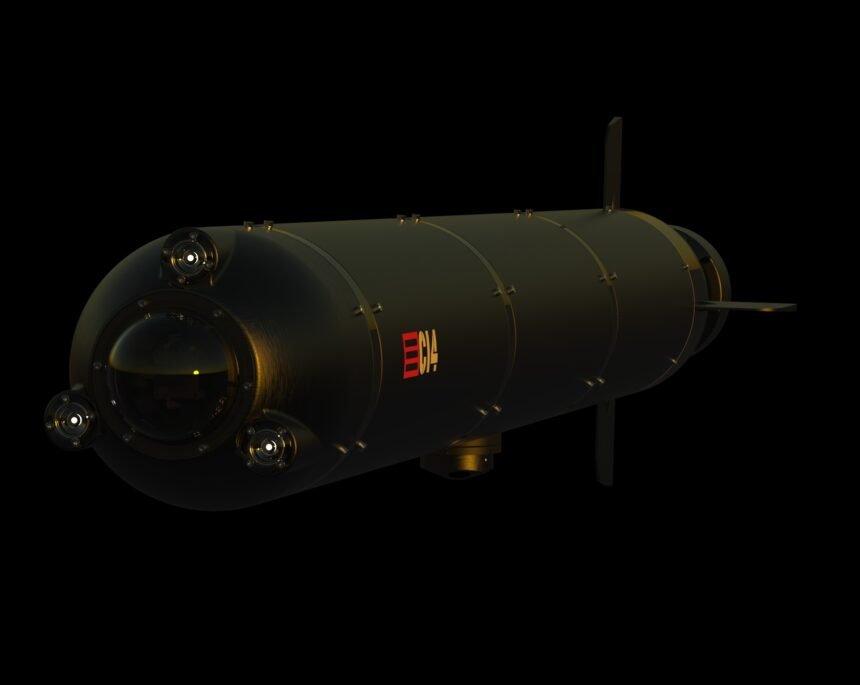
Below the surface, where light fades and visibility turns to murk, a diver’s eyes can only do so much. Ci4, a Bengaluru defence-technology company, is building the machines that see clearly down there instead — a family of autonomous surface and underwater systems that lets the Indian Navy look, listen and act beneath the waves without putting a person in harm’s way.
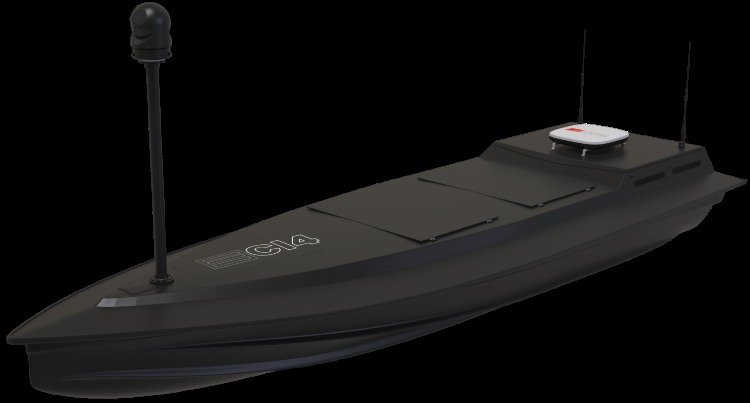
The heart of the story is a single software stack the company calls NEXUS AI. The same modular AI vision and autonomy software runs across the whole ladder, from a diver-carried device to a fully autonomous surface vessel — so one system can be fielded alone or coordinated as a swarm, with targets detected, enhanced and classified on board, without a link back to shore.
The smallest rung is AquaScan, a diver-carried underwater observation system. The company describes it as a multimodal sensing system combining sonar, 4K imaging and onboard edge processing, rated for operations down to 75 metres — a second set of eyes for divers working where visibility is poor. One step up is ECHO, a compact underwater drone that needs no diver at all: a six-degrees-of-freedom vehicle rated to 300 metres, with swappable payloads and a setup time the company puts under ten minutes.
Then come the larger autonomous platforms. TANDAV is a compact, modular autonomous underwater vehicle, also rated to 300 metres, carrying the same vision and sonar stack. SURGE is the surface counterpart — a 6 to 12 metre autonomous surface vessel built for swarming, beyond-line-of-sight communications, edge AI and uncrewed-vehicle docks, with an endurance the company puts above 750 nautical miles. Together, the four systems cover the full journey from a diver’s hand to a persistent, difficult-to-detect presence at sea.
Ci4’s work has already found its way into naval service. The company says it has won five iDEX awards, and its underwater vision technology has been developed under the iDEX framework for the Indian Navy, with the Navy awarding Ci4 a contract for an advanced underwater vision system and multi-modal observation tools. The company also says the Indian Navy has placed orders for its portable radar cross-section measurement system, which measures the radar signatures of large platforms in the field rather than inside a fixed anechoic chamber. The company says at least 70 per cent of the content in most of its products is indigenous, with that share rising with each successive version.
The company itself has an unusual origin story. Ci4 began life as TSC Technologies and later operated as Ciphor, working in space — including the UNITYsat mission, a constellation of three CubeSats launched aboard ISRO’s PSLV-C51 mission in 2021. About 900 days ago, founder and chief executive Anirudh Dube steered the team from space into defence, betting that its engineering could have a more immediate application at sea. At Swavlamban 2026, the Indian Navy’s fifth innovation and indigenisation seminar in New Delhi, Ci4 showcased AquaScan, ECHO and TANDAV together — a Bengaluru team that once put satellites in orbit now building the autonomous eyes and ears of India’s waters.
More Read
Keep reading: No Crew on Board: Inside Accurate Industrial Controls, the Pune Company Turning Indian Navy Patrol Boats Into Autonomous Vessels · 300 Metres Down, No Diver Required: Inside Coratia’s Jalasimha, the Robot Guarding India’s Waters · More Shipbuilding & Maritime stories
Like stories like this? Add Exceptional Technology as a preferred source on Google to see more of our reporting in your search results and Discover feed.