


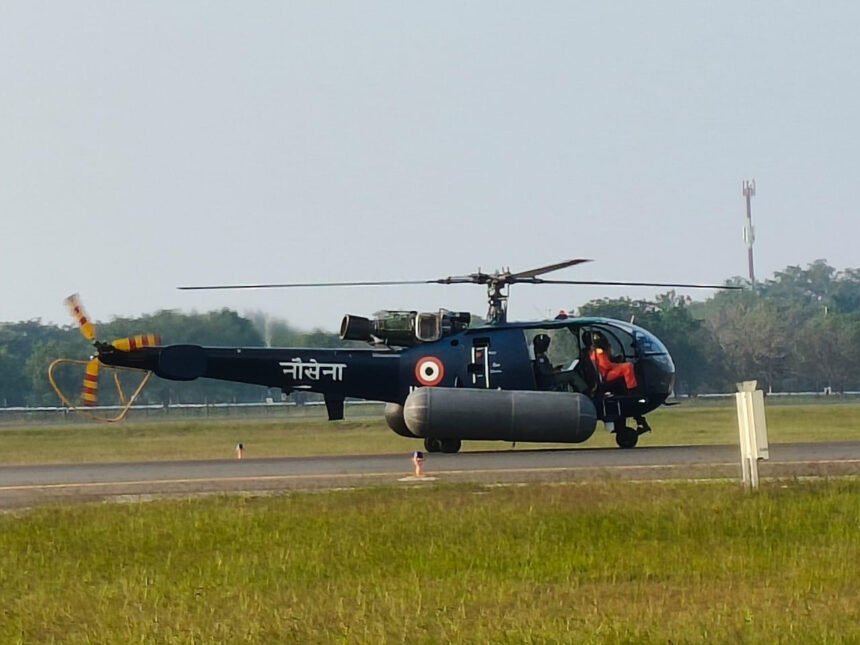
Over open water, a helicopter crew has seconds, not minutes, when something goes wrong. Xinfiniti Aerospace, a Bengaluru aerospace company, has built the system that buys them those seconds — an indigenous emergency flotation system that keeps a naval helicopter afloat after a ditching at sea, so the crew has time to get out safely.
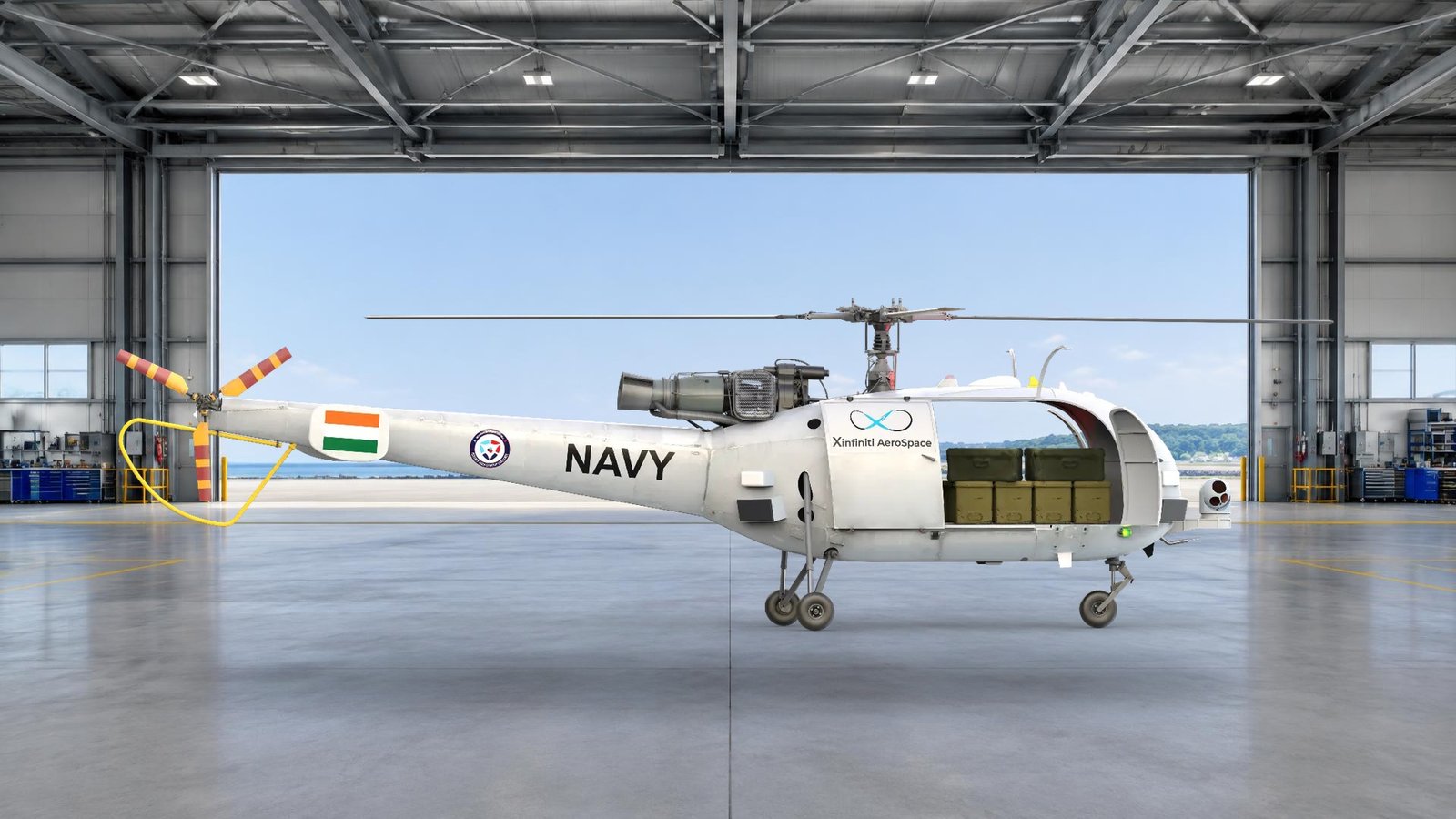
At Swavlamban 2026, the Indian Navy’s flagship innovation and indigenisation seminar at the Manekshaw Centre in New Delhi, Xinfiniti Aerospace Pvt Ltd received a Certificate of Appreciation from Defence Minister Rajnath Singh for successfully developing the Helicopter Emergency Flotation System (HEFS) for the Indian Navy under the iDEX initiative. The company says HEFS is one of its three ongoing iDEX projects.
HEFS adds emergency floats to helicopters already in the fleet. The company describes it as a safety system that activates as soon as the helicopter touches water, giving the aircraft buoyancy and keeping it from capsizing while the crew escapes. Until now, the emergency flotation systems fitted on the Naval Chetak fleet were imported; the company says its system is the first to be completely designed and manufactured in India, with the same indigenous system also intended for naval variants of the ALH Dhruv, which currently rely on imported flotation systems.
That matters far beyond a single component. A domestically designed and built system means spares, servicing and lifecycle support no longer depend on a foreign supplier for the life of the fleet — the kind of quiet, practical self-reliance that keeps aircraft flying safely for decades.
Xinfiniti was founded in Bengaluru in 2025 by Vishal Kumar Verma to pioneer what it calls M2UC — manned-to-uncrewed conversion, retrofitting ageing helicopters with autonomous platforms, advanced avionics and safety systems instead of waiting for entirely new aircraft. Its first programme is the Naval Chetak Autonomous System (NCAS), developed under the iDEX framework, which aims to convert the Navy’s Chetak helicopters into uncrewed aircraft that can fly alongside manned helicopters, extending the life and capability of airframes the forces already know, maintain and trust. The company says it has planned an Army Chetak Autonomous System as the next step in the same effort.
From a life-saving float system to a pilotless future for India’s most familiar helicopters, Xinfiniti’s work is about making the aircraft India already has safer, smarter and ready for the missions ahead — built in Bengaluru, proven with the Navy, and recognised at the highest level of India’s defence innovation showcase.
More Read
Keep reading: Thirty Kilos Over the Mountains: Inside Unmannd, the Bengaluru Startup Teaching Drones to Supply and Defend · Closer, Stronger, Unjammable: Inside VyomIC, the Startup Building India’s Own GPS in Low Earth Orbit · More Aerospace & Defense stories
Like stories like this? Add Exceptional Technology as a preferred source on Google to see more of our reporting in your search results and Discover feed.







