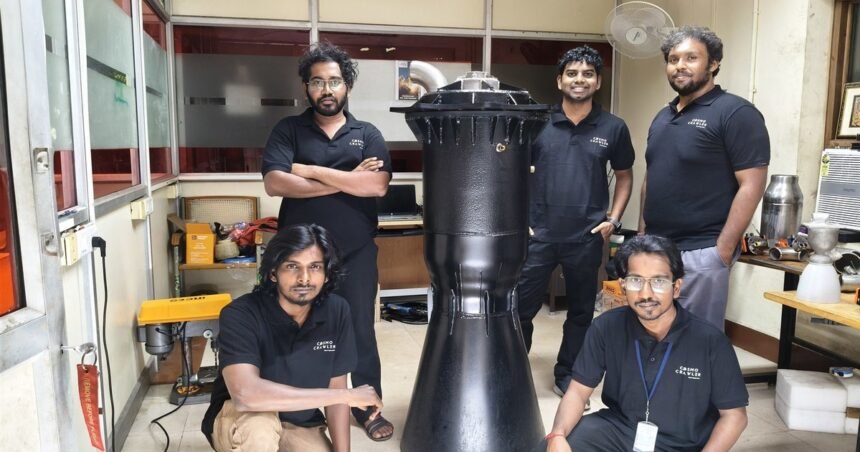
In a small workshop in West Mambalam, Chennai, five engineers gather around a black steel cylinder as tall as their chests. It has a flared nozzle at one end, a tangle of plumbing at the other, and it weighs in at ten tonnes of thrust. This is Mugger 10T, and it is the biggest thing a young Chennai space startup has ever built.
Cosmo Crawler, founded by Yoga Raj, is building its way towards a fully reusable launch vehicle, one engine at a time. Mugger 10T is the latest and largest step on that ladder: a kerolox rocket engine, burning kerosene and liquid oxygen, that the team is now preparing for its first hot-fire test.
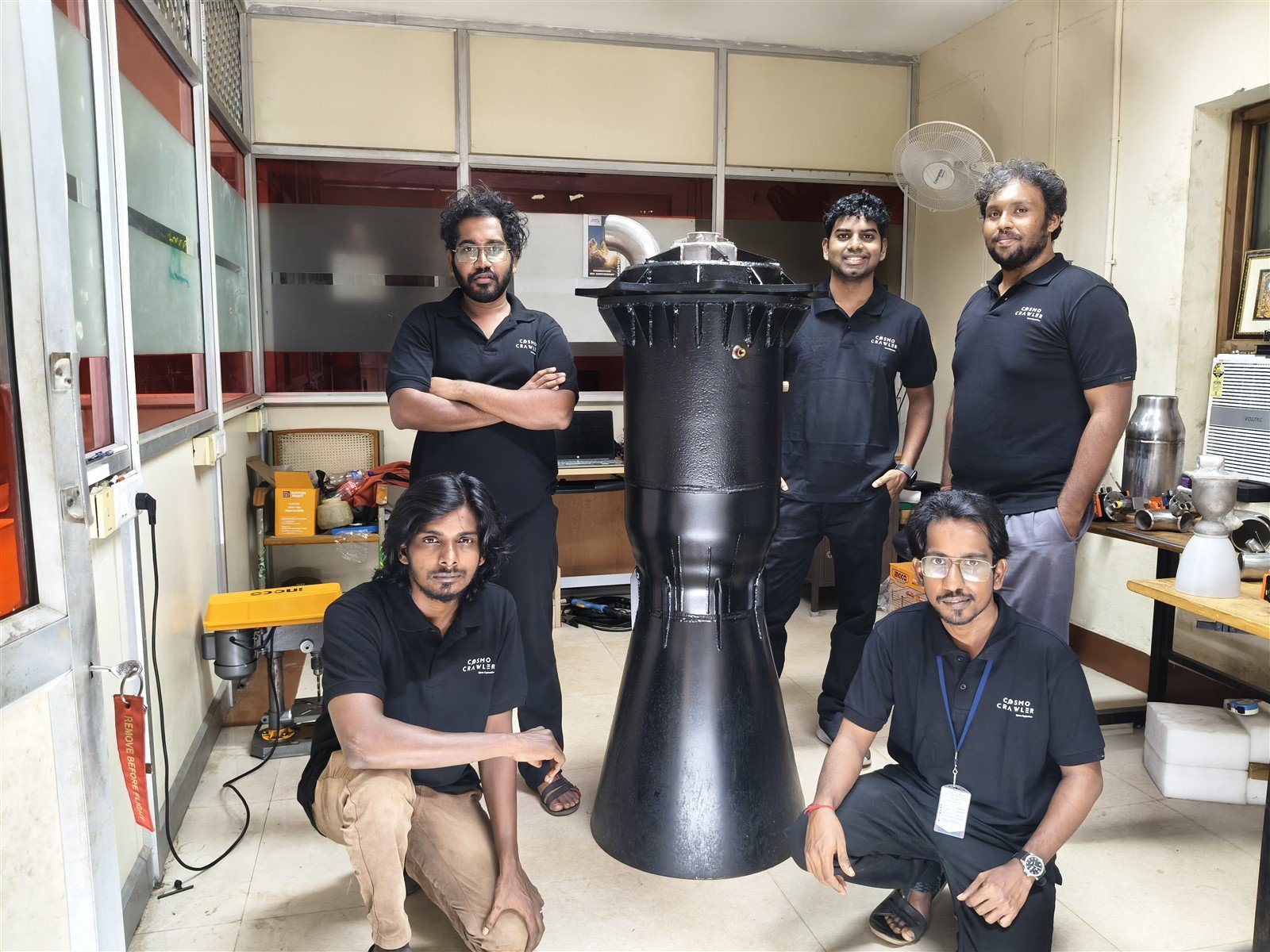
The Cosmo Crawler team with the Mugger 10T engine in Chennai. (Image: Cosmo Crawler)
Ten tonnes of thrust, built the hard way
Mugger 10T runs on kerolox, the kerosene and liquid oxygen combination that powers some of the most flown rockets in the world, chosen for its balance of performance, cost and practicality. The company says the engine’s combustion chamber is complete, and the team is preparing for a first pressure-fed hot-fire test, targeted within about a month of its mid-November update. That test will put the engine through its first real firing and validate its combustion performance under working conditions.
A turbopump for the engine is in development alongside it, part of the company’s move towards electric pump-fed propulsion, where motors rather than gas generators drive the propellant pumps, keeping the system simpler and easier to restart.
More Read

A ladder of engines
Mugger 10T did not arrive out of nowhere. Cosmo Crawler started with a small reaction control engine, the kind of thruster that steers a vehicle in flight, fully 3D-printed in an aerospace-grade aluminium-silicon alloy and driven by an electric pump feed system. That first prototype went through cold-fire testing with ignition, proving the core propulsion architecture before the team scaled up.
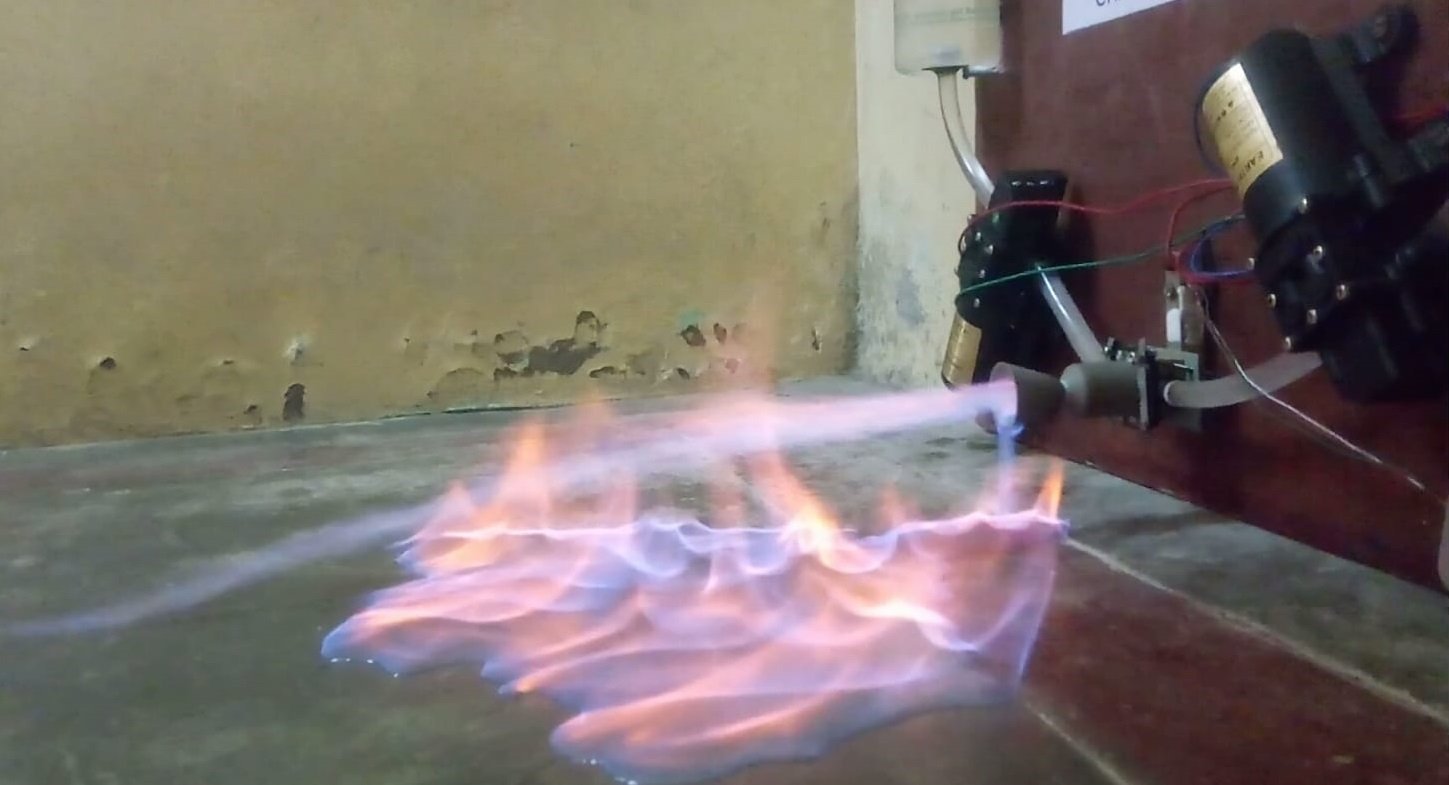
Cold-fire testing of the reaction control engine. (Image: Cosmo Crawler)
The next rung was CAIMAN 2000, a full-scale liquid rocket engine that stands roughly chest-high. The company rates it at 1,000 kgf of thrust at 60 bar chamber pressure and more than 2,200 kgf at full power, with continuous restart capability built in from the start, because a reusable vehicle needs an engine that can light, stop and light again.
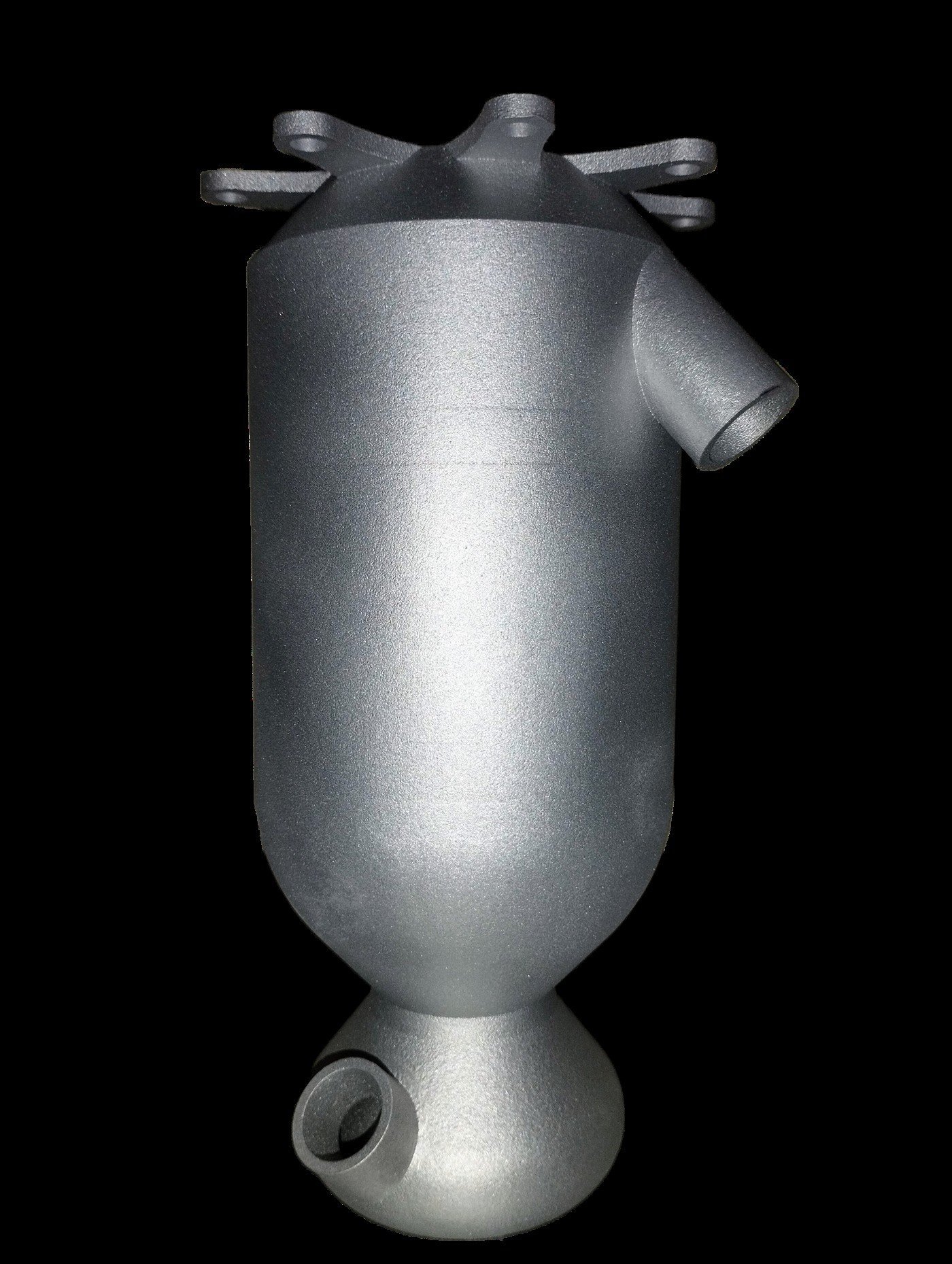
The CAIMAN 2000, Cosmo Crawler’s 3D-printed liquid rocket engine. (Image: Cosmo Crawler)
Along the way the team has tested a methane and gaseous oxygen ignitor, firing it hard enough to melt its own test article, a run the team counts as a milestone that validated several design choices before a planned re-test. It is the kind of hands-on, test-it-until-it-breaks engineering that has carried the company from a benchtop thruster to a ten-tonne engine.
The reaction control engine during its cold-fire test. (Video: Cosmo Crawler)
The spacecraft that comes home
The engines are all pointed at one goal: a fully reusable launch vehicle that does not just go up, but comes back. Cosmo Crawler’s answer is a hybrid landing system, a spacecraft that glides back through the atmosphere before finishing with a controlled vertical landing, combining the gentler return of a winged vehicle with the precision of a rocket-powered touchdown.
The thinking is simple and ambitious at once. Rockets will soon carry cargo back from orbit as well as up to it, so landing safely matters as much as launching cheaply. Recovering and reusing the vehicle, the company says, is how the cost of reaching space comes down far enough for new kinds of missions to make sense.
A small team with serious backing
Behind the hardware is a compact Chennai team: founder Yoga Raj, engineers Mageshwaran and Mohanraj, and advisors Dr S. Ekambaram in physical chemistry and K. Reivanth in materials science. The work is supported by the University of Madras and the Atal Incubation Centre network, and the company was one of 24 startups picked for Amazon Web Services’ first Space Accelerator in India. Grant funding from the Mercatus Center supports the programme, and the founder says the company has raised under $100,000 so far, which makes the hardware on the workshop floor all the more remarkable.
From a 3D-printed thruster to a ten-tonne engine in a Chennai workshop, Cosmo Crawler is building the pieces of a reusable rocket the patient way: one firing at a time, with the hot-fire test of Mugger 10T next on the stand.
Keep reading: The 5G Link Letting India’s Drones Fly Far Beyond Sight: Inside FxUAV’s FalconLink · The Tiny Jet Engine Behind India’s Jet-Powered Drones: Inside Raghu Vamsi’s ARROBOT · More Aerospace & Defense stories
Like stories like this? Add Exceptional Technology as a preferred source on Google to see more of our reporting in your search results and Discover feed.