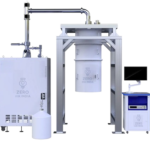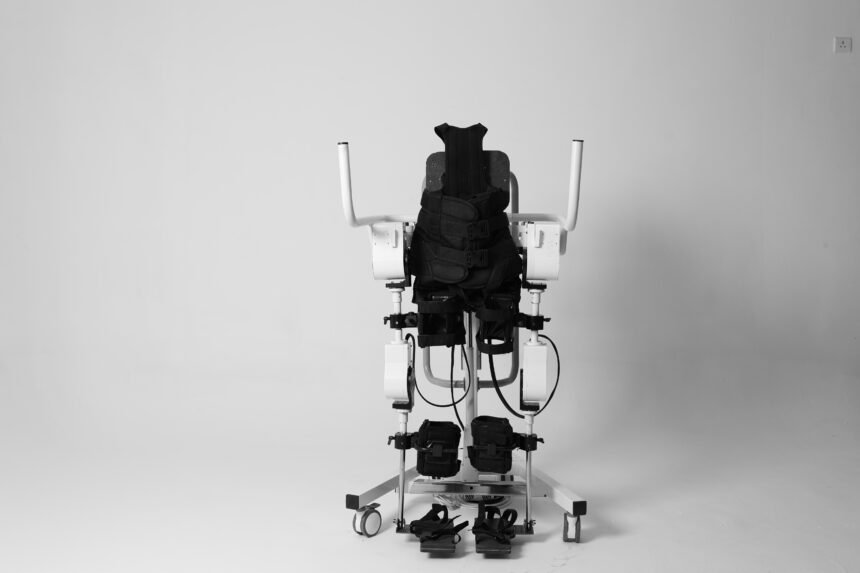
Image credit: GenElek Technologies — official company visual.
A powered exoskeleton race is one of the strangest sporting events on earth. Athletes with complete spinal cord injuries strap into wearable robots and compete on a course of everyday obstacles — rising from a sofa, climbing stairs, walking across rough terrain. At Cybathlon 2020 in Zurich, for the first time, the Indian team in that race was piloted by ex-Indian Army soldiers, injured in the line of duty, walking in a machine designed and built in New Delhi.
The machine was GenElek Technologies’ powered exoskeleton. The company, incubated at IIT Delhi’s R&I Park, says it is India’s first to design and manufacture exoskeletons locally — AI-powered wearable robots that help people with paralysis, stroke and spinal cord injuries walk again.
The device: biomechanics meets AI
GenElek’s exoskeleton is an externally worn robotic system built, the company says, on the principles of biomechanics and AI. An array of sensors tracks the user’s gait in real time, and an in-house AI algorithm adjusts the assistance through the stride — guiding movement for clinical rehabilitation while adapting to the wearer. Cloud-based connectivity streams the data to doctors in charge of treatment, so therapy can be tuned around measured progress rather than guesswork.
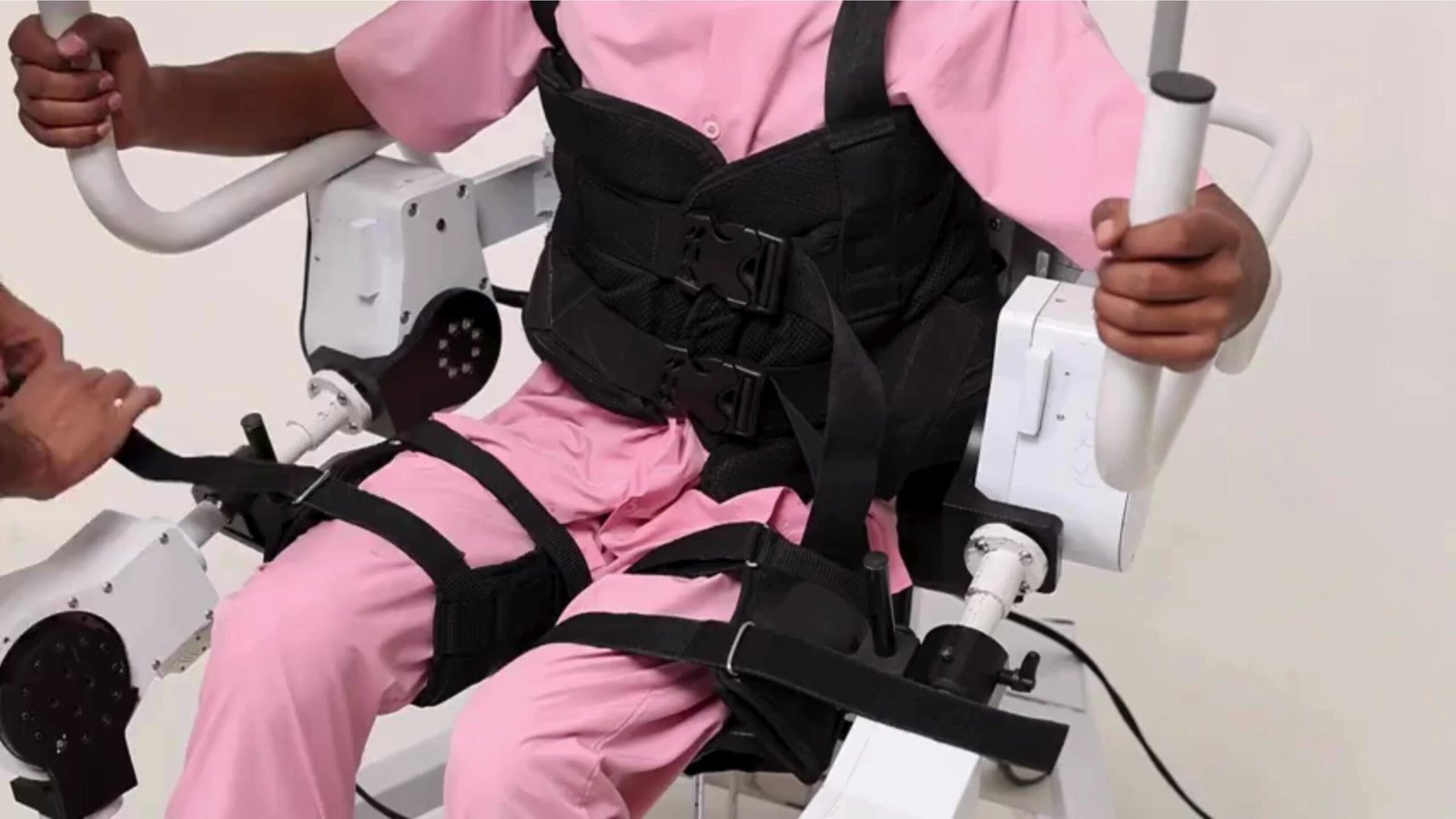
The company sells the system in two forms. The clinical pathway supports guided movement and real-time tracking with multiple therapy modes for hospitals and rehabilitation centres. The personal pathway is a wearable exoskeleton meant for everyday movement, aimed at giving users confidence and control outside the clinic.
More Read
The engineering problem: the imported price tag
Exoskeletons of this kind are priced abroad at upwards of Rs 60 lakh — a number that puts them out of reach for most Indian patients and hospitals. GenElek’s engineering thesis is that the cost can be attacked at the design stage. The company says it replaced the most expensive imported components with its own designs — including a patented circuit, ergonomic and mechanical layouts — while, in its telling, holding performance stable.
At the prototype stage the team ran software simulations to catch design inaccuracies before bending metal, and it field-trialled prototypes to refine the in-house AI. The result, per the company, is a device priced around Rs 20–25 lakh, with a stated ambition to bring it below Rs 16 lakh as production scales. Manufacturing is approved by the Central Drugs Standard Control Organisation (CDSCO), and the company’s site carries ISO 13485 and CE-mark certifications.
The validation: from Zurich to Visakhapatnam
The Cybathlon 2020 selection was the company’s first international proof point. Seventeen teams competed in the Powered Exoskeleton Race discipline; GenElek was, per reports at the time, the first team from India to be selected for it. The exoskeleton race pilots were ex-Indian Army men — soldiers whose injuries in the line of duty had left them specially-abled, now competing in Zurich on Indian-built hardware.
Back home, the company has been working the slower channel that matters most for adoption: hospitals. It has partnered with the Paraplegic Rehabilitation Center in Mohali and says it is in discussions with major hospitals to put the technology into mainstream physical medicine and rehabilitation practice, alongside NGO partnerships to build awareness of what the devices can do.
And in the last fortnight, the team picked up fresh validation. On 15 October 2026, GenElek’s Robotic Gait Trainer took the top honour at the MedTech RoboSprint 2026 at the Andhra Pradesh MedTech Zone — a two-day national programme organised with RoboMed and the Innovation Hub Foundation for Cobotics (IHFC) of IIT Delhi, where 32 startups presented prototypes before an expert panel judging technical feasibility and clinical relevance. The win brings access to AMTZ’s R&D infrastructure, rapid prototyping and commercialisation support.
The company behind it
GenElek Technologies was founded in 2018 by John Ignatius Kujur, who came to the problem through research on assistive technology for the specially-abled. The company grew up inside the Electropreneur Park incubation ecosystem and is now based at IIT Delhi’s R&I Park in Hauz Khas — designing, manufacturing and iterating the hardware in India rather than importing and relabelling it.
That is the through-line of GenElek’s story: not a cheaper knock-off of a foreign device, but a re-engineered one. A wearable robot with its own circuit design, its own gait algorithm, and a price aimed at the Indian market it was built for — now walking wounded soldiers across a racecourse in Zurich and, closer to home, helping patients in rehab centres take their next step.