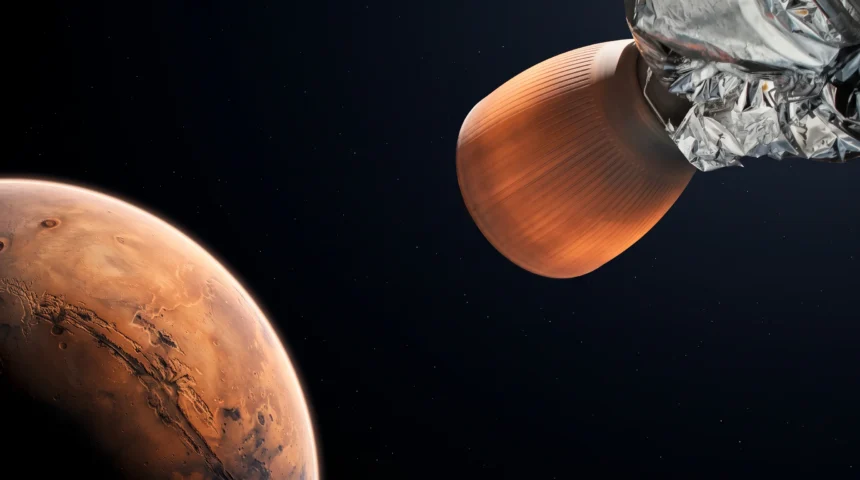
Every rocket is really two businesses wearing one airframe. There is the company that builds the vehicle, integrates the stages, books the payloads and flies the mission. And then, underneath all of that, there is the one part every mission depends on and no one can afford to get wrong: the engine. A liquid rocket engine takes six to eight years and around a hundred million dollars to develop from scratch, which is why nearly every launch-vehicle startup on the planet ends up building its own engines in-house — and why so many of them run out of time and money before their first flight.
Chennai-based Hathor Rockets was founded to break that equation. Its pitch is simple and bold: you build the rocket, we build the engines. Just as no major aircraft maker builds its own jet engines — they buy from Rolls-Royce, GE or Safran — Hathor wants to be the specialist engine supplier for the global space industry, selling ready-to-integrate liquid rocket engines to launch-vehicle companies, in-space mobility platforms and strategic programmes so they can focus on their missions instead of spending half a decade on propulsion.
Hathor is incubated at the Indian Institute of Space Science and Technology and is led by CEO V. K. Keerthivarman. The company has already designed, built and tested its first semi-cryogenic engine, and its catalogue now spans three thrust classes aimed at different missions. Bellona is a 2 kN earth-storable engine built for lunar landers and orbital transfer vehicles — the kind of workhorse that nudges spacecraft around once they are already in space. Amoghā, the flagship, is a 100 kN methalox engine aimed at small- and medium-lift launch vehicles and strategic platforms; the company is targeting qualification of this orbital-class engine by mid-2028. And Fornax, at 200 kN on methalox, takes the family into the higher-thrust class for heavier missions.
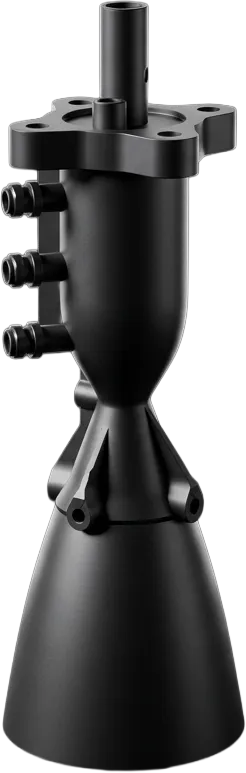
Bellona, Hathor’s 2 kN earth-storable engine for lunar landers and orbital transfer vehicles. (Image: Hathor Rockets)
The engineering is matched by a serious validation trail. Hathor has signed an MoU with IN-SPACe to access ISRO test facilities, secured the NIDHI Prayas and Excelium-SINE DeepTech Innovation grants, won first place in the AWS APJ Spacetech Accelerator 2025 and was named a National Finalist at Boeing BUILD 5.0. It was also featured on NDTV as part of Vande Bharatam, through which it secured mentorship from Pawan Chandana, the CEO of Skyroot Aerospace. NDTV described Hathor’s modular, ready-to-integrate HTR-GXP engines as the answer to the biggest bottleneck in reaching orbit.
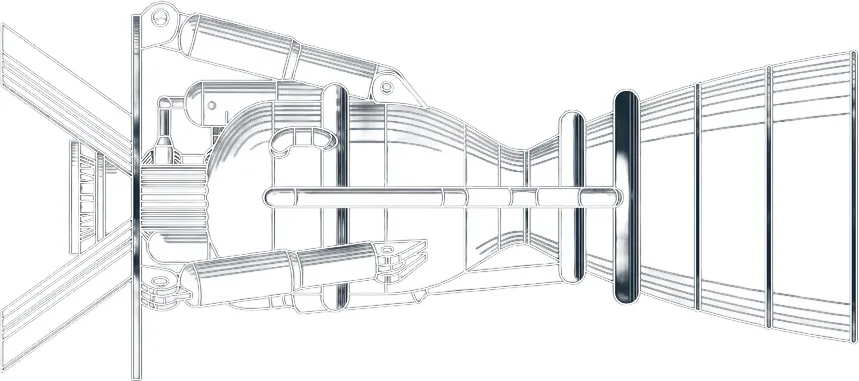
Fornax, the 200 kN methalox engine taking Hathor into the higher-thrust class. (Image: Hathor Rockets)
More Read

The momentum is commercial as well as technical. In September 2026, Hathor raised a ₹14 crore pre-seed round led by the IITM Unicorn Frontier Fund I — India’s first university-initiated venture fund — with participation from angels including Kshitij Golwalkar of Powerhouse Ventures. The cheque was presented at Sangam 2026 in Bengaluru by Finance Minister Nirmala Sitharaman, with Hathor named among the fund’s first four portfolio companies. The company says it is already engaged with clients across North America, Europe and India, and is seeing commercial interest from industrial companies and government agencies as it moves toward its first commercial deliveries.
Space is reaching an inflection point where launch cadence is climbing and the industry can finally afford to specialise. Every major hardware industry eventually gets there — engines stop being built in-house and start being bought from the people who build them best. Hathor Rockets is betting that India’s moment in that evolution is now, and that the engines of the next decade of launch vehicles will carry a Chennai stamp.
Keep reading: From Nano-Class to Heavy-Lift: Inside Decouvertes, the Pune Startup Building an Entire Indigenous Drone Fleet · Spinning India’s Electric Skies: Inside Nautical Wings Aerospace, the Bengaluru Startup Building the Motors That Fly India’s Drones · More Aerospace & Defense stories
Like stories like this? Add Exceptional Technology as a preferred source on Google to see more of our reporting in your search results and Discover feed.