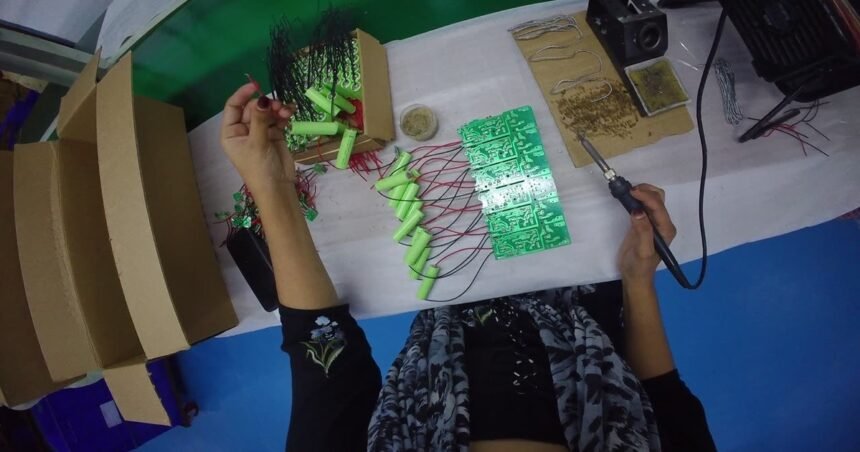
Picture a worker at an electronics bench, soldering battery cells onto a circuit board, her hands moving with the quiet certainty of someone who has done this a thousand times. Now picture a robot trying to learn that same job. It cannot watch a YouTube tutorial. There is no library of hands at work for it to study, no textbook of how a wrist turns, how a grip tightens, how a solder joint is judged by eye. A Bengaluru startup called Humyn Labs is building that library — by recording real people doing real jobs, from the worker’s own point of view, and turning every movement into training data a robot can learn from.
Humyn Labs was founded in February 2026 by Manish Agarwal, the former chief executive of gaming company Nazara Technologies, and Ishank Gupta, a former executive at brewing giant AB InBev. In nine months, the company has grown to 51 full-time employees, most of them in Bengaluru, with a subsidiary in the United States — and, the company says, more than $50 million in annualised revenue within six months of starting operations. On 18 November 2026, it announced a $47 million Series A round: $26 million in equity led by Accel, with Prosus Ventures, BeeGlobal, Bajaj Finance’s Finserv Intelligence, the Bajaj Alts AI Opportunities Fund, Dallas Venture Capital, Lighthouse Canton and Jump Trading, and $21 million in venture debt led by Lighthouse Canton.
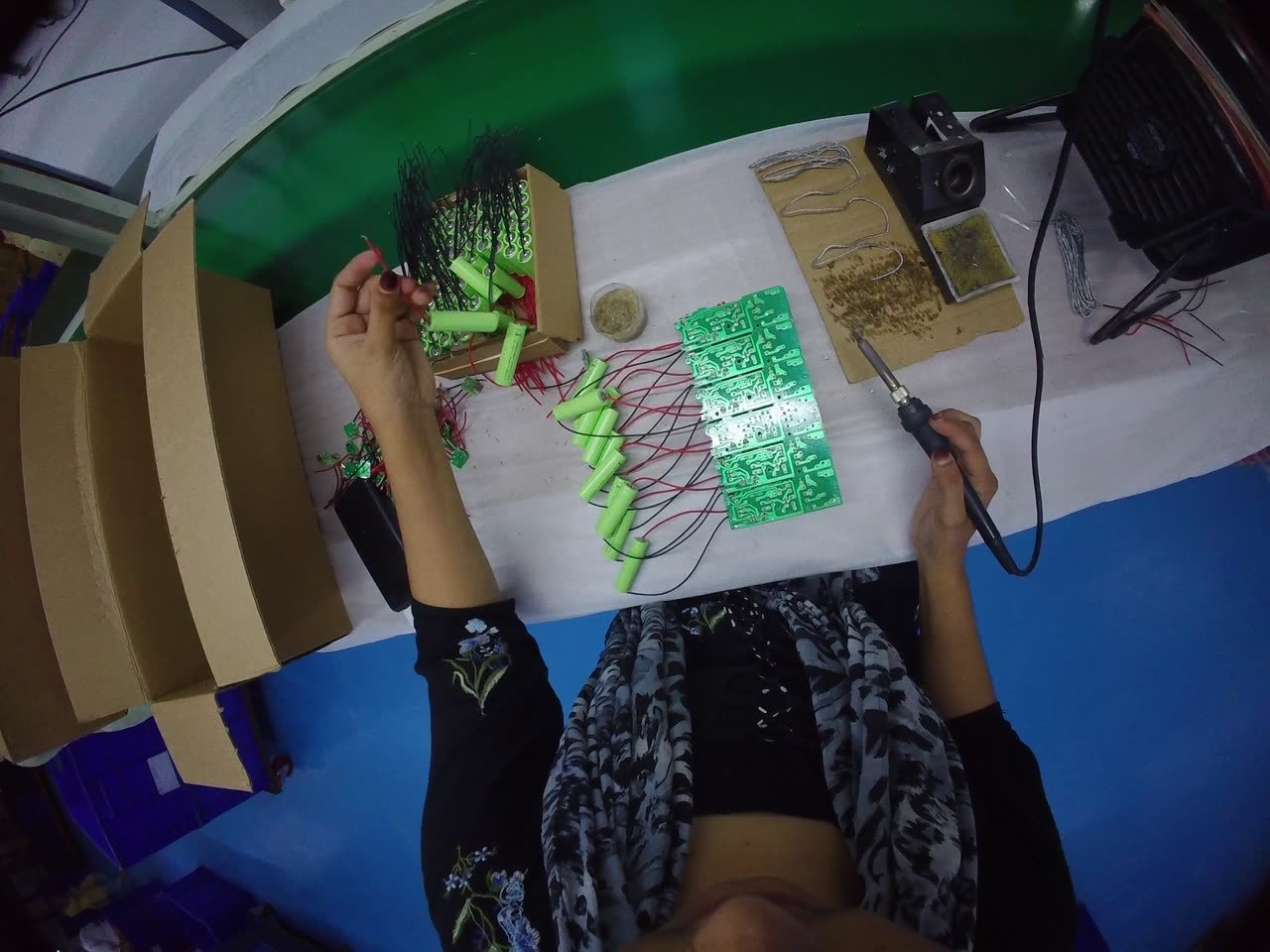
A camera that sees the job the way a worker does
At the heart of Humyn Labs is a piece of hardware the company designed itself: the egoS1, a lightweight head-worn camera that clips onto a cap and records the world exactly as the wearer sees it. It weighs just 127 grams — light enough, the company says, to wear for a full shift — and it is built around the details that make or break robot training data. Its global-shutter stereo cameras record at 1080p and 30 frames a second with a field of view wider than 130 degrees, so the wearer’s hands stay in frame. A six-axis motion sensor runs at 300 Hz, and camera and motion sensor share a single hardware clock synchronised to one microsecond, so head motion can be removed frame by frame and nothing drifts out of step. Every camera is recalibrated monthly and at each new site.
Alongside the camera, collectors sometimes wear hardware on their hands and fingers to capture touch — the movement of fingers, wrists, elbows and shoulders, and the forces applied as a job is done. The company runs single-camera rigs where scale matters and stereo rigs with motion sensors where precision matters, and its software checks every recording as it is captured, flagging lighting, frozen frames, obstructions and privacy issues in the field so a bad take can be re-shot on the spot.

From a recording to a lesson a robot can read
Raw video alone does not teach a robot. What leaves Humyn Labs’ engine is labelled, time-aligned signal: depth maps from the stereo pair, 6-DoF head pose, 21-point hand skeletons tracked frame by frame, gaze, object detections, action labels split at the moment intent changes, and step-by-step task descriptions in plain language. Sound arrives as transcripts with semantic and event tags; motion as six-axis telemetry and ego-motion trajectories; touch, on the roadmap, as grip-force data. The datasets ship in the formats robot labs already read — MCAP, RLDS, LeRobot v3 and ROS bags — so a lab can start training almost immediately.
The work is done where the work happens. Humyn Labs records people doing their usual jobs — no actors, no scripts — in factories, warehouses, farms, retail stores and homes across more than 20 countries in Latin America and Asia, with India, Brazil and South Korea as its main hubs. The company says it has recorded more than 24 million video episodes and over a million hours of audio, building a corpus of more than 200,000 hours of first-person video. Its 12 paying customers include frontier AI labs, robotics companies and developers of world models, most of them in the United States, the United Kingdom and Europe.
More Read

What comes next: robots tested on the same floors where they learned
The new funding is meant to push Humyn Labs past being a data vendor. The company plans to build deployment-readiness infrastructure in Brazil, South Korea and India — large facilities of 5,000 to 10,000 square feet that replicate warehouses, dark stores and factories, where robots can be tested in real-world conditions and measured against how humans do the same job — beginning in Bengaluru, with a playbook it can repeat in markets such as Brazil and Vietnam. It is also expanding its teams in San Francisco, London and Seoul, and investing further in its capture hardware and data engine. The ambition, as Agarwal puts it, is to build a $1 billion annual revenue business and become a global leader in physical AI data infrastructure.
It is a strikingly Indian answer to one of robotics’ hardest problems. The robots of the future will learn their craft the way apprentices always have — by watching a skilled pair of hands at work. Humyn Labs is making sure those hands, and the decades of quiet expertise in them, are finally being recorded, labelled and taught — starting on the factory floors and in the homes of India.
Keep reading: The Muscle Inside Every Robot: Inside Cosine Robots, the Bengaluru Startup Building the Joints That Move Machines · Type in Your Mother Tongue: Inside Ka-Naada, the Bengaluru Startup That Rebuilt the Keyboard for Indian Languages · More Industrial Automation & Technology stories
Like stories like this? Add Exceptional Technology as a preferred source on Google to see more of our reporting in your search results and Discover feed.