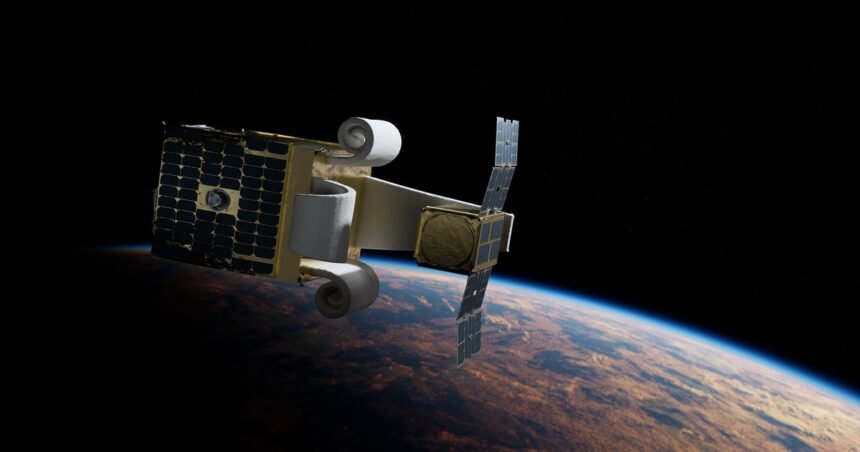
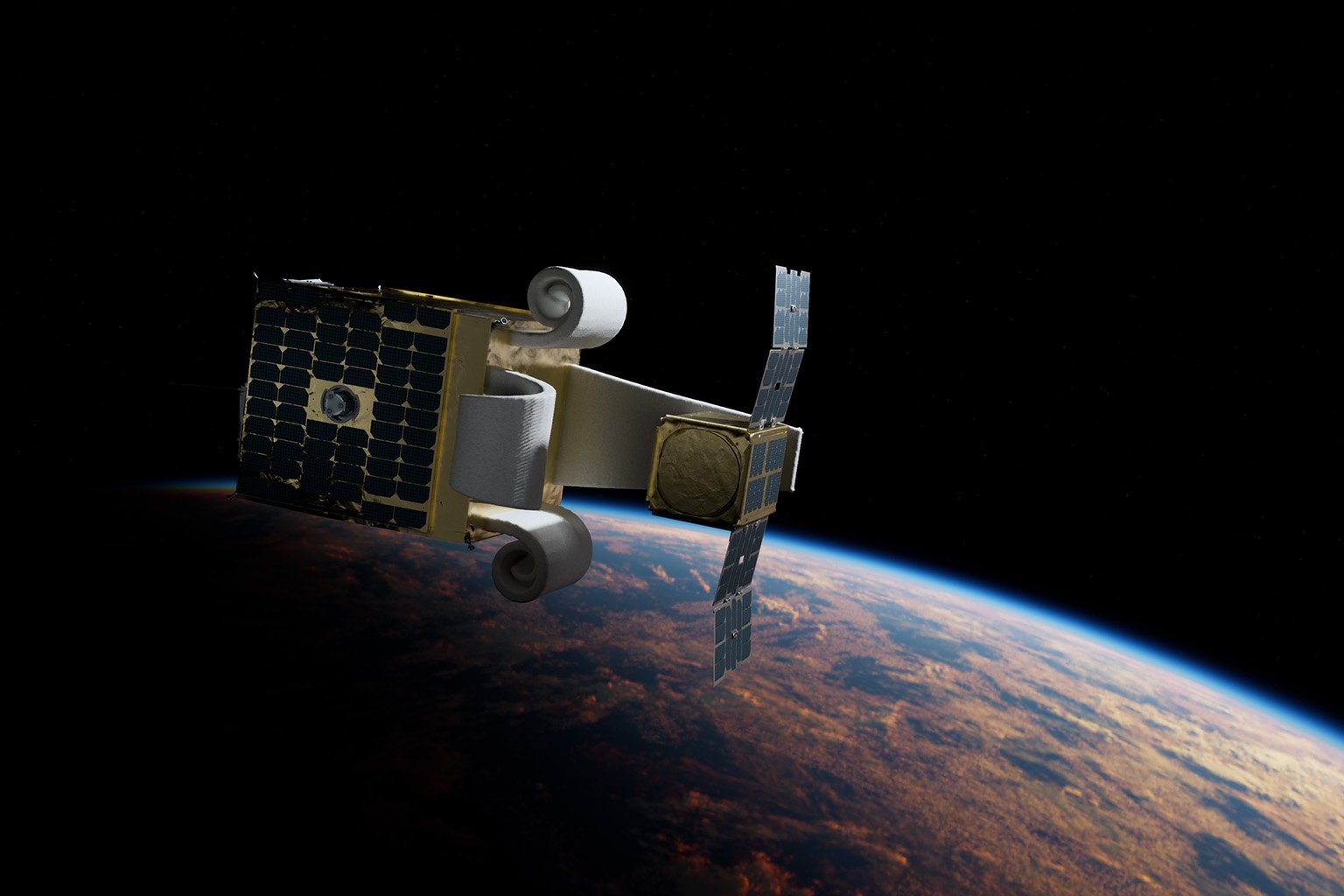
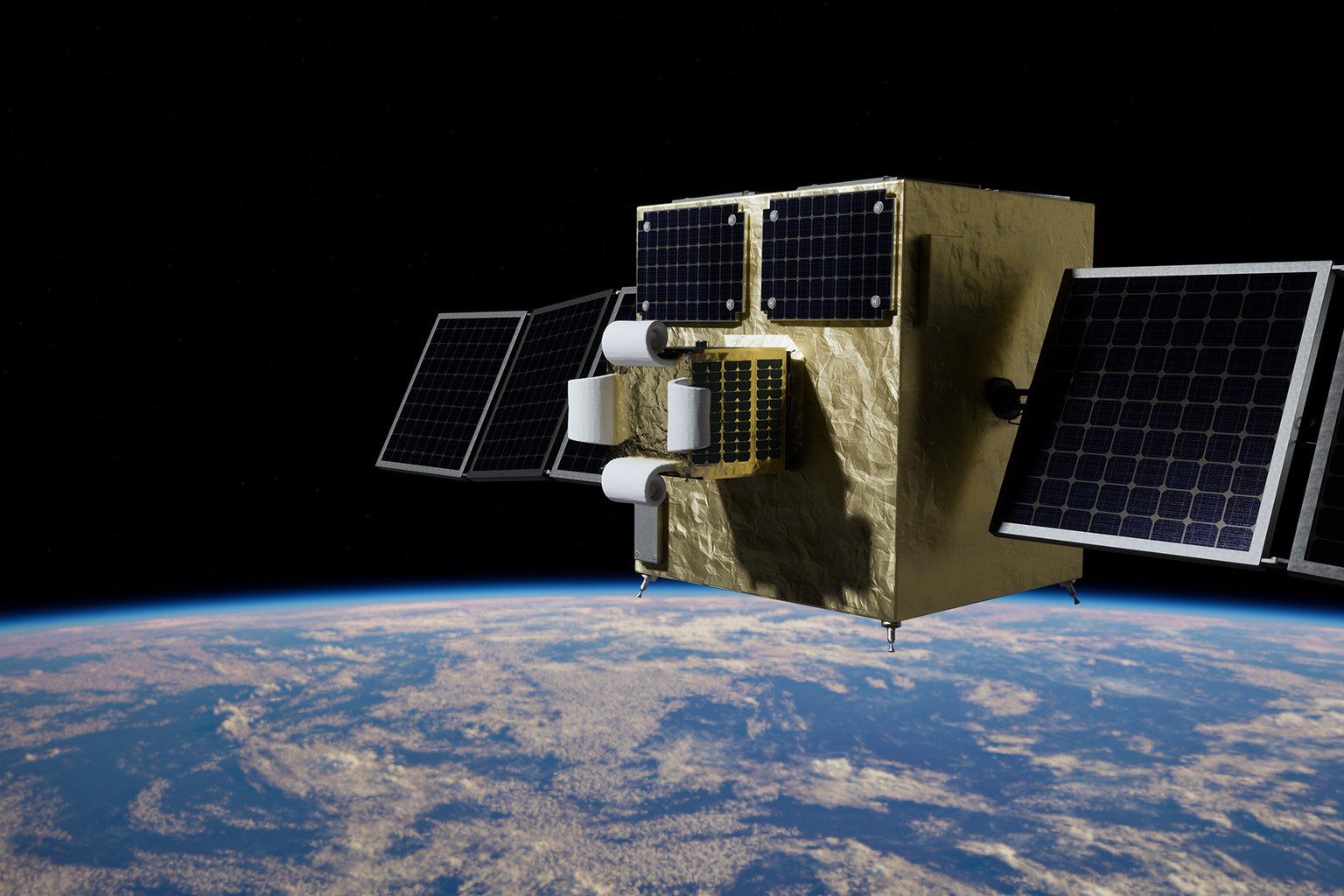
Picture a dead satellite tumbling silently above the Earth, a tonne of metal moving at more than seven kilometres a second, with nothing to stop it and nowhere to go. Now picture a smaller spacecraft sidling up beside it, opening four soft white petals like a flower, and gently folding them around its target — no grabbing claws, no harpoons, no shattering impact. A Hyderabad startup called Cosmoserve Space is building exactly that machine, and it has already flown its first experiment in orbit.
Cosmoserve Space began operations in August 2025. It was founded by Dr Chiranjeevi Phanindra B, a former ISRO scientist who worked on India’s Gaganyaan human spaceflight programme and represented the country at the Inter-Agency Space Debris Coordination Committee, the global body of space agencies that studies the orbital environment. Skyroot Aerospace co-founder Pawan Kumar Chandana is a founding partner. The company raised $3.17 million in a pre-seed round in September 2025, then a $6 million seed round led by Japan’s Rebright Partners, announced alongside the opening of its Hyderabad facility — taking its total funding past $9 million, with backing also from Aranya Holdings, Naandi Ventures, AUM Ventures and Shakti VC.
A flytrap, not a fist
The problem Cosmoserve is solving is already enormous. Around 50,000 objects are tracked in orbit, the company’s founder says, yet only about 16,000 of them are working satellites. The rest is junk, and it moves fast: at orbital speed, even a one-millimetre aluminium ball carries energy similar to a Formula 1 car hitting a wall. With companies planning to launch up to a million satellites into low Earth orbit over the next decade, the lanes above our heads are only getting busier.
Cosmoserve’s answer starts with finding the target. Ground catalogues track objects larger than ten centimetres, but their coordinates can be off by up to a kilometre, so the company’s chaser spacecraft closes in on its own cameras. Onboard artificial intelligence, trained on synthetic images, then estimates the target’s position and orientation down to centimetres — hard work in harsh sunlight against a background that shifts between black space and bright Earth.
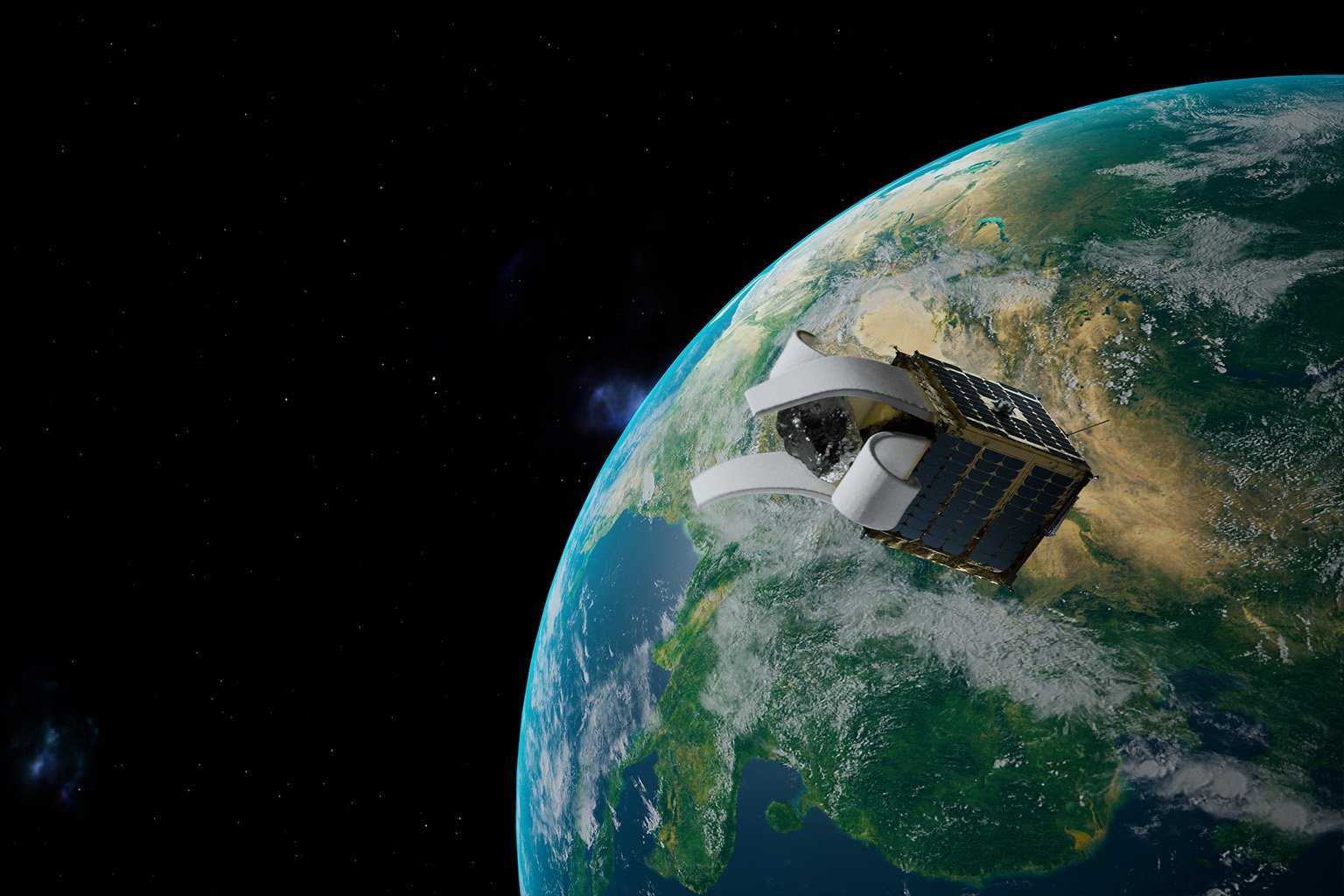
Then comes the gentle part. The capture system copies the Venus flytrap, whose lobes snap shut around an insect. Cosmoserve’s engineers call the capture arms “petals”: soft robotic structures that envelop a tumbling, fragile object rather than smashing into it. A rigid robotic arm can shatter an uncooperative target into smaller fragments; the petals are designed to grip it without making more debris.
Two spacecraft, one cleanup crew
The capture system flies on a pair of spacecraft the company calls Reviver and Mothercraft. Reviver is the worker: a roughly 150-kilogram autonomous robotic vehicle that approaches a dead satellite, captures it, and drags it down to burn up safely in the atmosphere. Mothercraft is the larger orbital depot that refuels Reviver, so one deployed system can perform multiple removals instead of one spacecraft per target. The company aims to bring the cost of servicing down to under a million dollars per satellite.
More Read

The services on offer start with end-of-life satellite de-orbiting for constellation operators and the removal of high-risk debris for governments and agencies, with the same hardware later able to support repair, refuelling and other in-orbit servicing. The founder says Cosmoserve is the only Indian company focused squarely on space debris removal — and with regulators now turning cleanup into a paying business, the timing is on its side. The US Federal Communications Commission now requires operators to de-orbit dead satellites within five years of end of life, the European Space Agency has a Zero Debris Charter, and India has pledged debris-free missions by 2030.
A flight already flown, a bigger one ahead
Cosmoserve moved fast from paper to orbit. Its first in-orbit technology demonstration, Mission Embrace, flew aboard Skyroot Aerospace’s Vikram-1 rocket on 18 July 2026, into an orbit around 450 kilometres up — the same maiden orbital flight the site covered earlier this year. On 5 November 2026, the company opened Base 1, a 14,800-square-foot facility at VSD Tech Park in Gachibowli, Hyderabad, inaugurated by Union Minister Jitendra Singh. The company describes it as India’s first private integrated centre for debris-removal and in-orbit servicing development, and the sixth of its kind in the world.
Inside Base 1, engineers rehearse every part of a capture before it ever flies. One dark room pairs a high-intensity solar simulator with projected Earth backdrops; two six-degree-of-freedom robotic arms move chaser and target while cancelling out gravity; and an eight-metre track gives the team a thirteen-degree-of-freedom test platform. The facility brings together an orbital rendezvous and capture laboratory, a space robotics innovation laboratory, microgravity simulation platforms, a satellite integration clean room and a mission simulation and control centre under one roof.
Keeping the lanes open
The founder’s warning is stark: if dead satellites are left uncleared, the cascading collisions known as Kessler syndrome could arrive within five to six years, and he counts around 650 collisions and breakups so far. GPS navigation, weather forecasts, disaster warnings and search-and-rescue all depend on the satellites flying through those lanes, so a debris crisis in orbit would reach daily life on the ground.
Cosmoserve’s roadmap runs through a full-scale orbital debris-capture demonstration in 2027, with commercial operations planned for 2028. From a village boy who slept outdoors watching the stars to an ISRO scientist who designed shields against the very debris he now hunts, Phanindra’s team is building the tow truck for low Earth orbit — so that the satellites India keeps launching have somewhere safe to fly.
Keep reading: The Brains of the Arsenal: Inside Ammunic Systems, the Bengaluru Startup Building India’s Electronic Fuzes and Warheads · The Brain Inside Every Drone: Inside ChipUAV Systems, the Mumbai Startup Building a Flight Controller on India’s Own Chip · More Aerospace & Defense stories
Like stories like this? Add Exceptional Technology as a preferred source on Google to see more of our reporting in your search results and Discover feed.