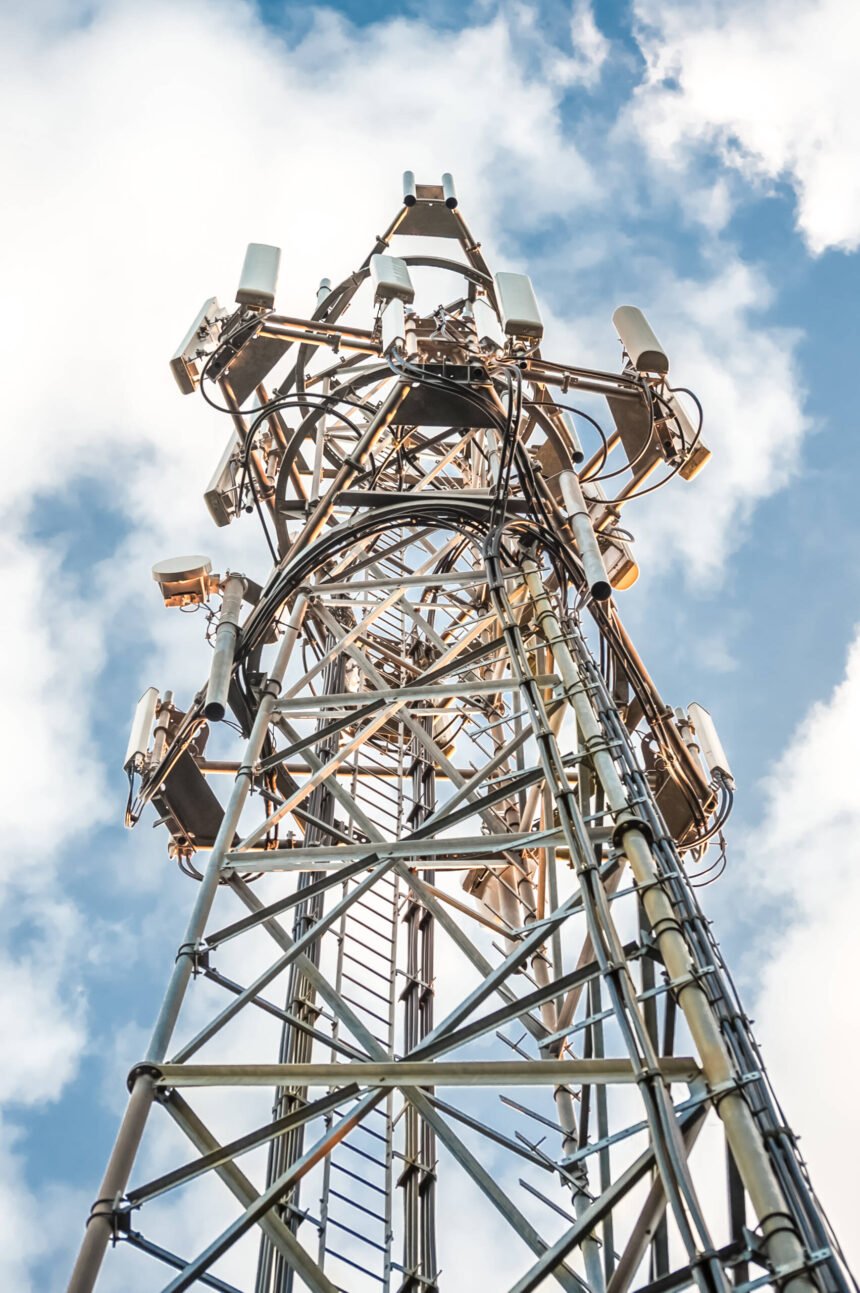
Every time a phone call connects from a distant town, a train runs under newly electrified wires, or power flows hundreds of kilometres from a generating station to a city, there is a good chance a steel structure built in Uttar Pradesh is holding it all up. Salasar Techno Engineering Limited, headquartered in Noida, is one of India’s leading builders of that hidden backbone — the galvanized steel towers, monopoles and structures that carry the country’s telecom, power and railway networks.
The company began its manufacturing journey in 2006 as a tower maker with a simple but ambitious idea: tower manufacturers rarely offered everything under one roof, so Salasar set out to become a one-stop shop for India’s infrastructure builders, carrying out engineering, designing, procurement, fabrication, galvanization and project execution itself. That idea has grown into a listed company serving more than 600 clients across 25 countries, with its shares traded on both the BSE and the NSE since July 2017.
What Salasar builds
Salasar’s catalogue reads like a map of modern India’s infrastructure. Its factories turn out telecommunication towers, power transmission line towers, monopoles, substation structures, railway overhead electrification structures, solar module mounting structures, smart city poles, lighting poles, high masts and flag masts, along with heavy steel structures such as road and railway over-bridges. It also makes portable towers and camouflaging solutions that blend into city skylines and sensitive locations.
The business is organised around four verticals: telecom, power, civil and industry, and urban and smart infrastructure. That spread is deliberate. When one sector pauses, another moves, and the same core skills — precision fabrication, protective galvanization and large-scale project execution — carry across all of them. A telecom tower and a transmission tower may serve different networks, but both demand steel that stands for decades in rain, heat and wind, engineered to exacting standards.
The engineering edge: everything under one roof
What sets Salasar apart is how much of the chain it controls. The company says it handles engineering, design, fabrication, galvanization and deployment in-house, rather than handing pieces of a project to subcontractors. That matters because a tower is only as good as its weakest joint. Designing, fabricating, coating and erecting it as a single coordinated process keeps quality consistent from the drawing board to the finished tower in the field.
Galvanization sits at the heart of that process. A hot-dip zinc coating protects steel from rust for years, and for structures that must survive decades outdoors with minimal maintenance, it is the difference between infrastructure that endures and infrastructure that needs constant repair. Salasar’s plants are built around this discipline, with fabrication lines feeding directly into galvanizing capacity.
More Read

The company also collaborates with Ramboll, the global engineering consultancy, for the technical design and quality control of its telecommunication towers, monopoles, poles and smart poles. Ramboll has spent more than six decades designing towers, and the partnership brings that depth of design experience into Salasar’s own engineering work.
Scale: four plants, 2.11 lakh tonnes a year
Salasar manufactures from four plants in Hapur in Uttar Pradesh and Bhilai in Chhattisgarh, and the company says the facilities together have a total installed annual capacity of 2.11 lakh tonnes. That scale lets a single supplier take on national programmes rather than one-off orders. The company says it has supplied more than 50,000 telecom towers, and its structures now serve clients in India and abroad, with exports reaching markets including South Africa and Myanmar.
The execution side of the business is just as substantial. Salasar undertakes engineering, procurement and construction projects on a turnkey basis — survey, supply of materials, design, erection, testing and commissioning, all delivered as one package. The company says it has completed around 885 kilometres of power transmission lines and 720 kilometres of railway track electrification, work that puts its steel directly into the arteries of India’s energy and transport systems.
A company in growth mode
The momentum continues. The company posted revenue of Rs 1,511.89 crore in FY26, and its managing director Shashank Agarwal has said Salasar is targeting around Rs 1,800 crore in FY27, backed by an order book of about Rs 2,500 crore. The company says recent large order wins, including projects from Rail Vikas Nigam Limited, Uttar Pradesh Power Transmission Corporation and TANGEDCO, are giving it strong visibility for the year ahead, with momentum across power transmission and distribution, railway electrification, telecom and industrial fabrication.
That pipeline points to where Salasar’s story is headed. India is still expanding its power grid, electrifying its railways, deepening telecom coverage and building smarter cities — and every one of those programmes needs steel structures engineered, fabricated and erected at scale. From a tower maker that started in 2006, Salasar now supplies the physical framework those programmes stand on.
It is easy to overlook the steel in the sky. The towers and monopoles that carry our calls, our power and our trains rarely get a second glance. But behind each one is a chain of Indian engineering — designed, fabricated, galvanized and erected by companies like Salasar — and it is that quiet, precise work that keeps a developing nation connected, powered and moving.