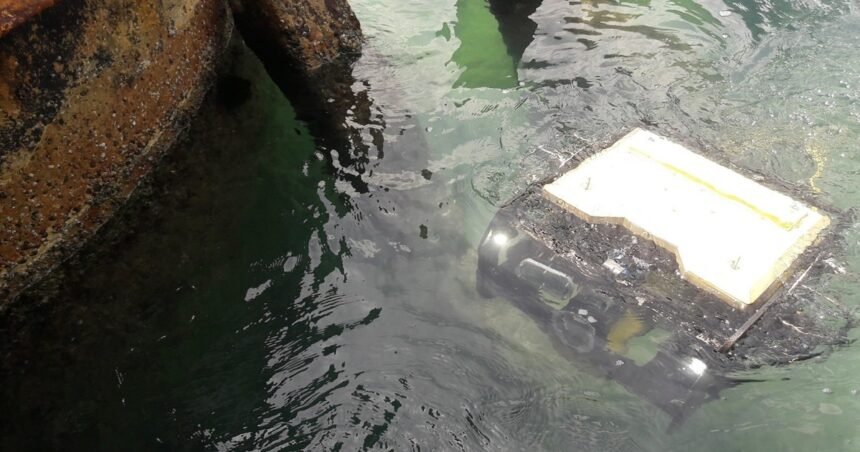
Some of India’s most important infrastructure is the hardest to look at. Dams, port jetties, pipelines, storage tanks and ship hulls spend their lives underwater, where cracks, corrosion and silt build up unseen. For decades the only way to inspect them was to send a diver down, or to drain the structure and shut it down. A Chennai company has spent a decade building a better way to see below the surface: robots that go where divers cannot, and bring back data instead of guesswork.
The company is Planys Technologies, founded in 2015 and incubated at IIT Madras by Tanuj Jhunjhunwala and Vineet Upadhyay, together with IIT Madras professors Prabhu Rajagopal and Krishnan Balasubramaniam. Planys builds remotely operated vehicles (ROVs) and autonomous underwater vehicles (AUVs), pairs them with non-destructive testing tools, and turns what they find into AI-powered inspection reports that let asset owners move from fixed inspection schedules to maintenance based on the actual condition of their structures.
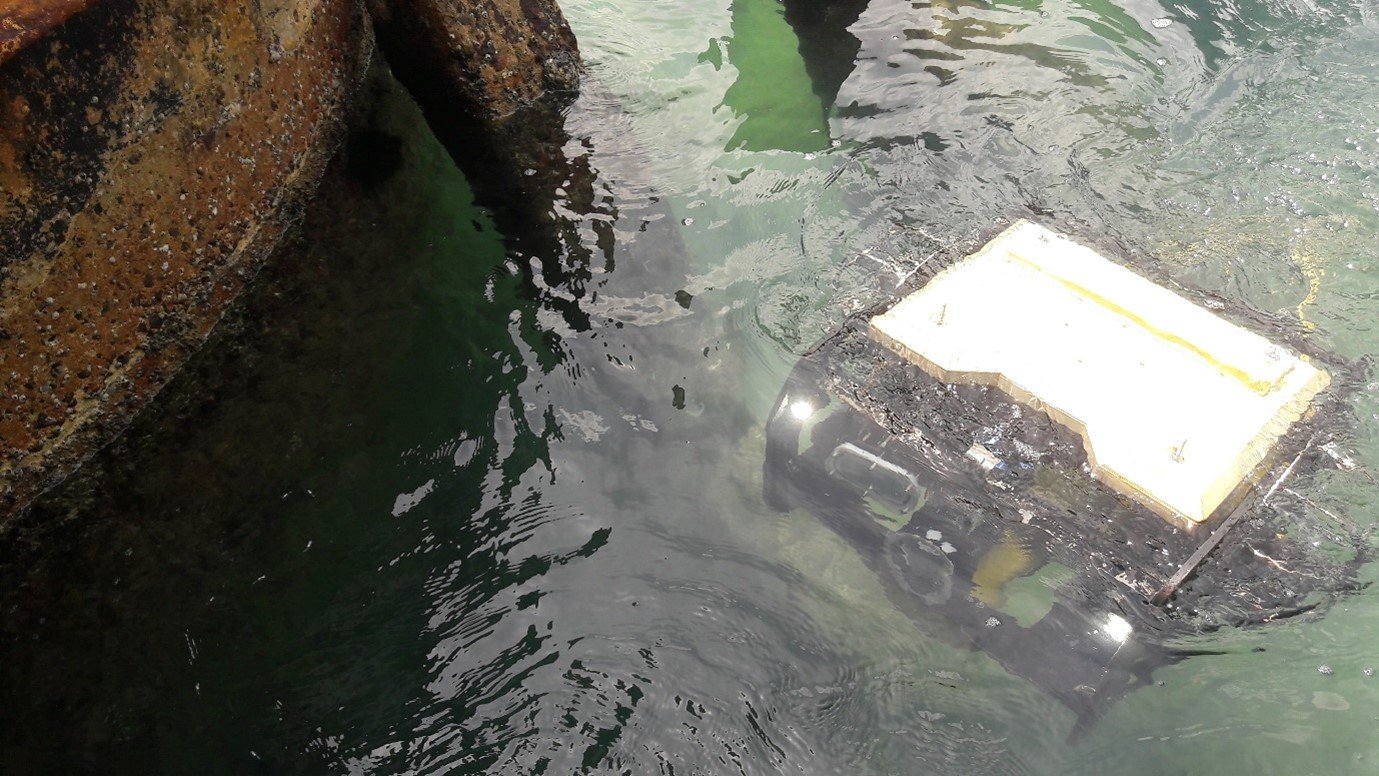
A Planys remotely operated vehicle at work beside a submerged structure.
The fleet starts with the workhorses of industrial inspection. Mike, the company’s first compact ROV, proved the idea in the field. Beluga, launched in 2016, doubled the thrust of its predecessors, reaches 200 metres deep and runs at up to four knots, carrying cameras, lights, sonar and sensors for thickness measurement and cathodic protection surveys. Mikros, unveiled in 2019, is a mini observation-class ROV built for long tether runs of 600 metres, able to hold station in turbid water and inside long pipelines at refineries, petrochemical plants and desalination facilities, staying down for unlimited hours on its tether. Across the range, the company says, its ROVs offer six-degree-of-freedom control, live video streaming to the surface pilot and calibrated visual inspection in conditions that would stop a diver.
More Read
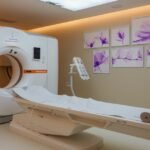
Planys ROV Trikhand, built for demanding underwater inspection missions.
The next product on the drawing board shows how far the idea has travelled. TankRover is an explosion-proof ROV designed to inspect hydrocarbon storage tanks while they stay in service, without draining them — the company says the approach improves safety, allows more frequent inspection and cuts the downtime and cost of taking a tank offline. Alongside the hardware, Planys is building an AI-powered 3D Inspection Twin, a digital model of the asset that turns inspection data into a living record of its health. The company says it is the only company worldwide offering underwater concrete testing with submersible robotic vehicles, for bridges, jetties and marine structures in low-visibility water.
The scale of the work is now global. The company says its systems have logged more than 25,000 hours of operational deployment across 500 sites in more than 10 countries, serving over 150 users. Its projects span Singapore, Brunei, Saudi Arabia, the UAE, Qatar, Oman and the Netherlands, and its clients include Reliance Industries, IOCL, BPCL, Shell, ExxonMobil, Saudi Aramco and SABIC, alongside Indian Railways and port authorities. The technology base behind that reach runs deep: 21 granted patents with 15 more filed, a National Startup Award in 2020, and early backing from the Technology Development Board for commercialising its ROVs.
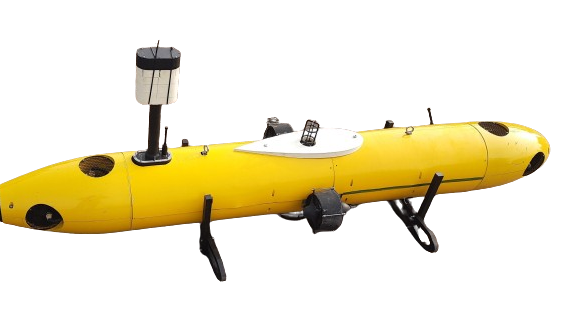
Planys AUV Svaayatt, an autonomous underwater vehicle developed for defence missions.
The newest chapter is defence. In December 2025 Planys raised Rs 100 crore in primary funding led by Ashish Kacholia and Lashit Sanghvi, following a Rs 43 crore round in April 2024, and created a dedicated defence subsidiary, Planys Ark. The subsidiary is developing indigenous unmanned underwater systems for the Indian armed forces, including micro AUVs for expendable missions, backed by three wins in the government’s iDEX defence innovation challenges and by propulsion systems designed in-house to reduce dependence on imported components. A state-of-the-art unmanned underwater vehicle production facility is planned in South Chennai, with fabrication and underwater testing infrastructure that will let the company test its vehicles in-house. The company says its defence platforms are built on the same industrial platforms proven in ports and refineries, refined with feedback from the iDEX programme and from customers.
From a campus research project at IIT Madras to robots working in waters from Rotterdam to the Gulf, Planys has turned one of inspection’s oldest problems into a showcase of Indian deep tech: machines that see clearly in water too dark, too deep or too dangerous for people, and keep the infrastructure the country runs on standing strong.
Keep reading: Beneath the Surface: Inside Vikra Ocean Tech, the Chennai Startup Building India’s Own Ocean Robots · Sentinel of the Seas: Inside Srishti, the 114-Metre Patrol Ship Goa Shipyard Just Launched for the Indian Navy · More Shipbuilding & Maritime stories
Like stories like this? Add Exceptional Technology as a preferred source on Google to see more of our reporting in your search results and Discover feed.