


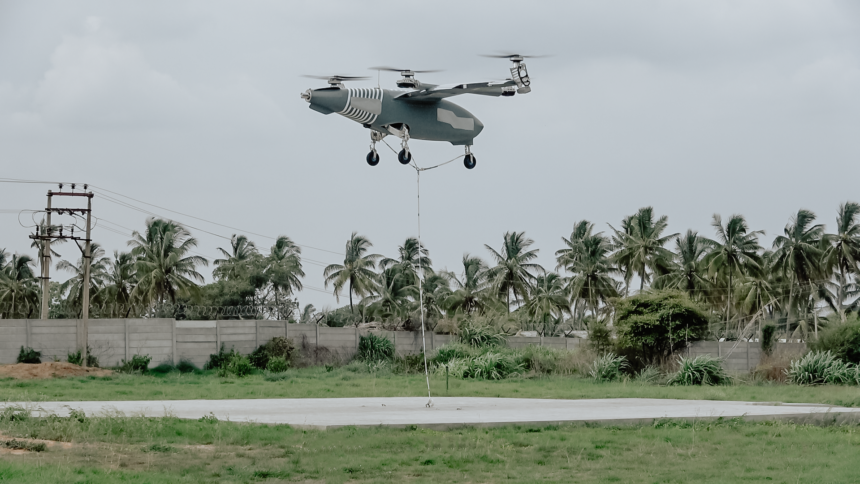
No runway, no roar, no aviation fuel — just a half-tonne electric machine rising straight off the ground, hovering under its own closed-loop control, and setting down again. In India, no electric aircraft this heavy had ever done that. Then a small Bengaluru startup built one from scratch, flew it more than 500 times, and wrapped up the entire campaign in under a year.
That startup is Sarla Aviation, and the aircraft is Sylla 1.0 — a half-scale electric vertical take-off and landing (eVTOL) technology demonstrator in the 700 kg class, with a 7.5-metre wingspan. Across six months of field testing, Sylla logged more than 500 tests and over 18 hours of flight time, making it, the company says, the heaviest electric aircraft ever to take off in India.
The campaign was never about the hover itself. Sylla 1.0 was built to validate aircraft-level and system-level integration under real operating conditions — the electric propulsion system, battery architecture, distributed propulsion, flight-control algorithms, airframe and landing gear working as one fully integrated aircraft. As co-founder and CTO Rakesh Gaonkar put it: “Flying Sylla is the moment a thousand simulations become real.”
The numbers behind the milestone are striking. The demonstrator went from design to flight in under 12 months — a pace the company says few eVTOL programmes globally have matched — on less than $13 million. That capital efficiency, the company notes, is unmatched globally for an eVTOL programme of this class, and it has drawn IndiGo Ventures to acquire a stake in the company.
The Sylla programme also stacks up what the company describes as a string of national firsts in electric aviation: the first 700 kg-class electric aircraft with vertical take-off built and flown in India, the first 400-volt electric powertrain architecture flown in the country, the first distributed-propulsion wing system demonstrated in India, and the first full-stack ground testing conducted in accordance with airworthiness regulations.
Behind the speed is a team built for exactly this problem. Sarla Aviation was founded in 2023 by the ex-Lilium duo of Rakesh Gaonkar and Adrian Schmidt, engineers who previously worked at the German eVTOL company Lilium. Roughly 30% of the company’s engineering team comes from the world’s leading eVTOL companies, including Lilium, Volocopter and Wisk — frontier flight experience combined, in the company’s words, with an India-based engineering culture built for speed. The company is named in honour of Sarla Thukral, India’s first woman pilot.
More Read
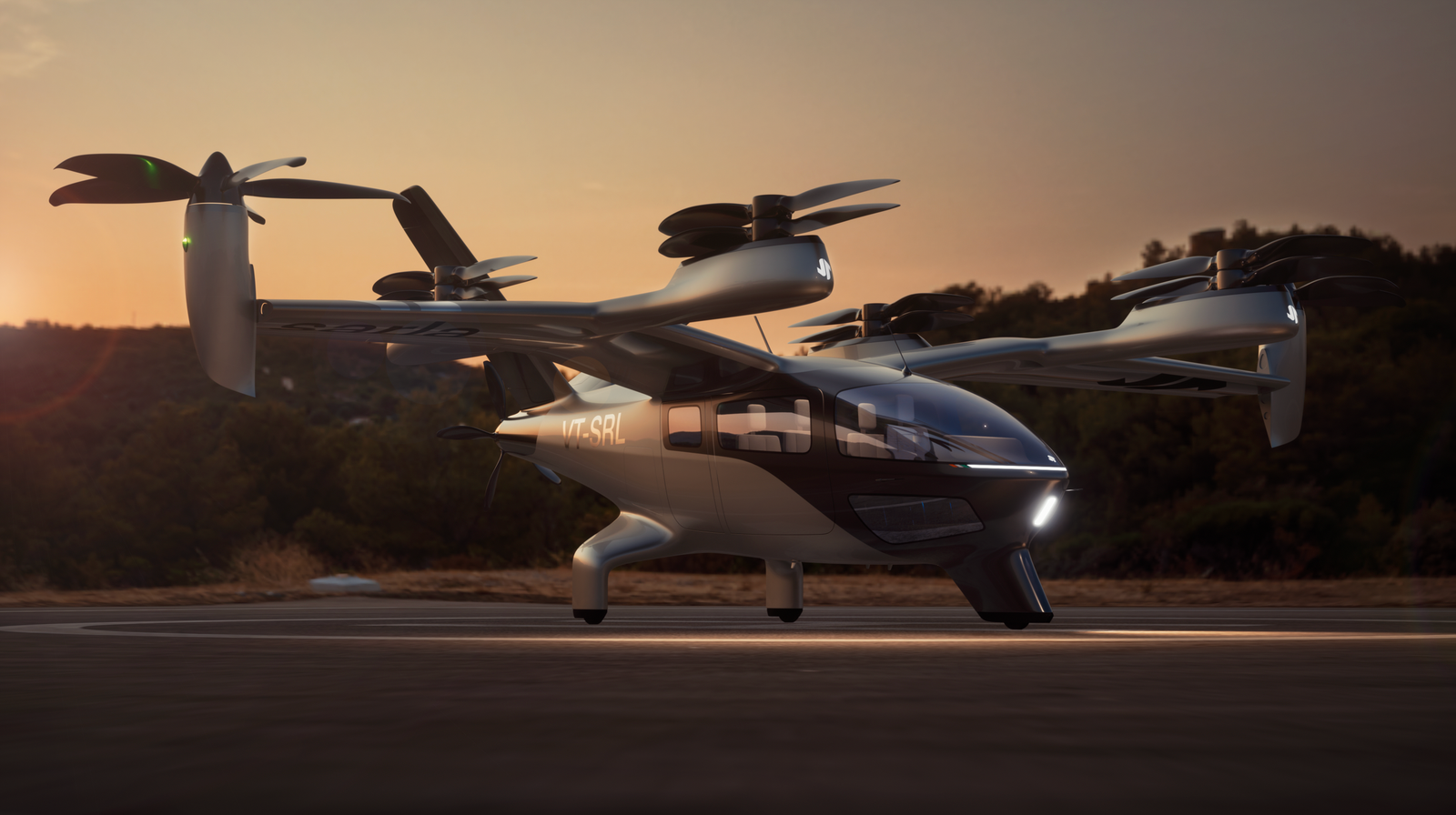
The work is already moving into its next phase. The company has begun development of Sylla 2.0, an upgraded technology demonstrator that will pursue controlled transition between vertical and wing-borne flight — the defining technological milestone before a certifiable passenger eVTOL. Sylla 1.0 proved the integrated aircraft works; Sylla 2.0 will teach it to fly forward.
That journey ends, the company says, at ‘Shunya’ — its flagship 6+1 electric air taxi, designed to dramatically reduce commute times in India’s most congested cities, including Bengaluru, Mumbai, Delhi and Pune. Built with safety, affordability and simplicity at its core, the aircraft aims to make air mobility as seamless and accessible as today’s ride-hailing apps, aligned with the nation’s Viksit Bharat 2047 ambitions. Sarla is backed by investors including IndiGo Ventures, Accel and Nikhil Kamath.
What makes the Sylla story exceptional is not just the 700 kilograms — it is what the campaign proved. A team in Bengaluru designed, built and flew a heavy electric aircraft in under a year, on a fraction of the capital global peers spend, and logged the flight data to prove every system works together. The heaviest electric aircraft India has ever flown is the opening chapter, not the headline: the real prize is the air taxi that follows.
Keep reading: Ten Grams to -196°C: Inside Techno Defence, the Mumbai Startup That Cracked Missile Cooling · Light as Infrastructure: Inside Olee.space, the Pune Startup Building Laser Communication, Power Beaming and Directed Energy · More Aerospace & Defense stories
Like stories like this? Add Exceptional Technology as a preferred source on Google to see more of our reporting in your search results and Discover feed.







