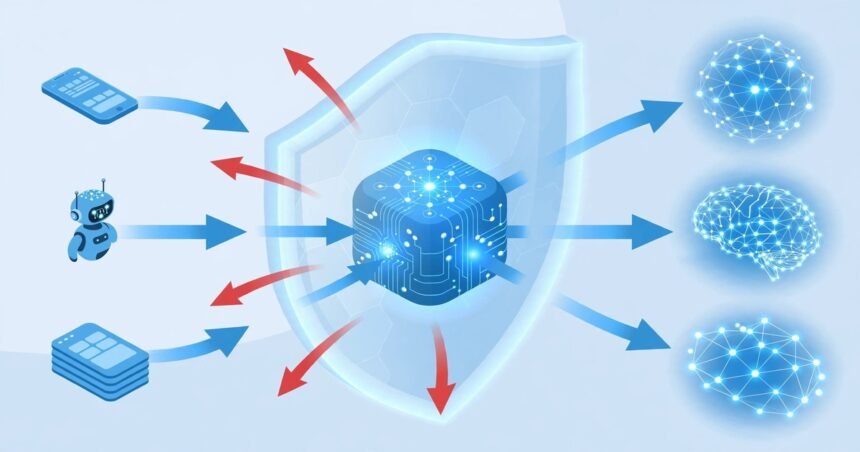
Every AI agent your company runs has a key to the kingdom — an API key that unlocks a frontier AI model, often pasted into code, laptops and CI pipelines where anyone who finds it can spend your money and read your data. On 29 October 2026, Bengaluru-born cybersecurity company CloudSEK launched KeyVigil, a secure gateway that puts one guarded door between your apps and agents and every AI model they use.
The idea is disarmingly simple, and that is the point. Your apps and agents send their requests to KeyVigil, and KeyVigil sends them to the model you choose. The keys never leave the gateway. Sensitive data never leaves the building unmasked. And every single call is logged, priced and watched.
One endpoint for every frontier model
KeyVigil gives developers a single endpoint for leading frontier AI models. Switch models without changing code, the company says — the gateway absorbs the difference, so a team can move from one provider to another without rewiring every application. It is the kind of plumbing that sounds boring until you realise how much of modern software now runs through it: customer support agents, coding assistants, document readers, research tools, all calling models dozens of times a minute.
That traffic is exactly where the new risks live. As businesses race to deploy generative AI and autonomous agents, the company points to four worries that keep security teams up at night: data exposure, credential management, prompt injection, and the quietly ballooning cost of running AI applications. KeyVigil is built to answer all four from one place.
Keys that stay put, data that stays masked
First, the keys. In KeyVigil, API keys live in the gateway — not in repositories, not on laptops, not in CI pipelines. One central vault replaces the sprawl of secrets scattered across a company’s codebase, and with it the risk that a single leaked key becomes an open tab on someone else’s account.
Second, the data. Personally identifiable information, secrets and customer records are masked before they leave, so what reaches the model is the request without the crown jewels. Third, the attacks: prompt-injection and jailbreak attempts are flagged and blocked at the gateway, before they can bend a model into misbehaving. And fourth, the bill: every call is logged with its cost, and organisations can set spending limits for teams, applications and agents — so an enthusiastic agent cannot quietly run up a fortune overnight.
More Read

It is a natural next step for a company that has spent years finding exactly these exposures in the wild. CloudSEK’s researchers have scanned popular Android apps and found live API keys hardcoded into them — 32 live keys across 22 high-install apps, the company’s BeVigil research reports — the kind of finding that shows why keys need a guardian in the first place.
From watching AI to guarding it
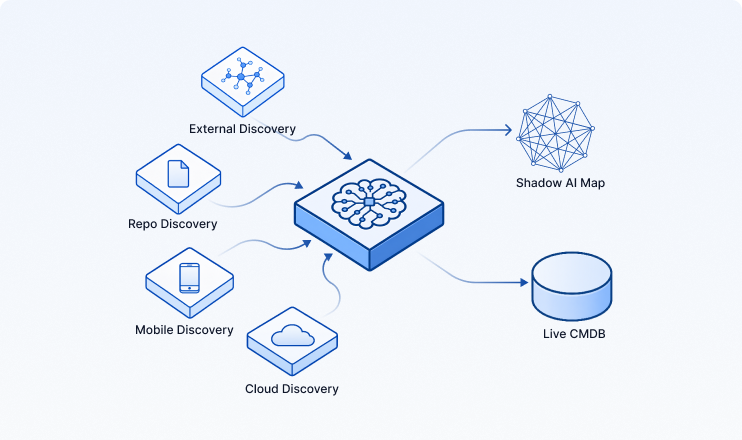
KeyVigil was developed by the team behind CloudSEK’s AIVigil platform, which finds exposed AI assets and attack surfaces — the shadow AI, forgotten endpoints and leaky keys that accumulate as companies experiment. Where AIVigil discovers the AI attack surface, KeyVigil now guards the traffic that flows across it. Together, the two products cover both sides of the AI security problem: seeing what you have, and controlling what it does.
The gateway is available to enterprise customers now. And in a move that shows how seriously CloudSEK takes the next generation, every startup in its new incubator gets KeyVigil with credits included.
Launchpad: building India’s next security companies
Announced alongside KeyVigil on 29 October 2026 in Bengaluru, CloudSEK Launchpad is a 12-week incubation programme for early-stage cybersecurity startups. The first cohort will take 10 companies — pre-seed and seed-stage startups, and even idea-stage founders with a strong team and a clearly defined security problem. Each selected company is eligible for up to $5,000 in AI model credits through KeyVigil, alongside mentorship, threat-intelligence resources, enterprise customer access and investor connections.
Participants get weekly guidance from CloudSEK’s leadership across research, product, enterprise sales and fundraising, plus warm introductions to customers and channel partners across India, the Gulf region and the United States. The programme ends with a demo day where founders pitch to investors and prospective customers. Applications for the first cohort close on 20 November 2026.
“When we started CloudSEK, I wished someone had shown us the shortcuts — which customers to call first, which mistakes cost a year, and who to trust,” said Rahul Sasi, CloudSEK’s founder and CEO. “With Launchpad, we want to share what we have learned and help promising founders get to their first ten paying customers.” The focus areas read like a map of where security is heading: security for AI systems and agents, AI-native security operations, threat intelligence, identity and fraud prevention, and software supply-chain security.
A Bengaluru original, now guarding the world
CloudSEK was founded in 2015 by cybersecurity researcher Rahul Sasi, and it has grown from a research-driven initiative into one of India’s most trusted threat-intelligence platforms. The company says it now serves more than 300 enterprises across banking and finance, healthcare, technology and government, with its predictive approach — spotting the earliest signs of a breach, like leaked credentials and exposed APIs, weeks before an incident unfolds.
That track record has drawn global backing: a $19 million Series B1 round, followed by $10 million from Connecticut Innovations, the venture arm of the US state of Connecticut — making CloudSEK the first Indian-origin cybersecurity company to receive backing from a US state fund. The company was also featured in the 2026 Frost Radar for its threat-intelligence work.
KeyVigil fits that story perfectly. CloudSEK began by predicting attacks before they happened. Now it is building the gate through which India’s AI future will pass — one endpoint, guarded, logged and priced, so that the agents doing tomorrow’s work never have to carry the keys to the kingdom in their pockets.
Keep reading: Built for Indian Dust: Inside Botloka, the Bengaluru Startup Teaching a Robot to Clean Indian Homes · No LiDAR, No Map: Inside Ati Robotics, the Bengaluru Startup Teaching Factory Robots to Navigate Like Humans · More Industrial Automation & Technology stories
Like stories like this? Add Exceptional Technology as a preferred source on Google to see more of our reporting in your search results and Discover feed.