Washing India’s solar panels takes water — staggering amounts of it. Do the maths the industry uses: roughly 24,000 litres per megawatt per manual wash, multiplied across India’s ~168 GW of installed solar capacity, and a single wash of the entire fleet would consume about 4 billion litres. That number is not anyone’s savings claim — it is the size of the problem. In Coimbatore, a small startup called Solavio Labs has spent a decade building the alternative: robots that clean solar panels with no water at all.
Dust is the silent tax on solar
Solar panels lose output to dust — a lot of it. Industry estimates put soiling losses at 20–30%, and up to 40% in dusty regions, which means a meaningful slice of India’s solar investment quietly underperforms between washes. Manual washing is the default: tanker water, labour crews, and in water-stressed states, a genuine resource conflict. Dry-cleaning robots attack both problems at once — no water, no crews on the panels, and cleaning as often as the soiling demands rather than as often as the tanker arrives.
Solavio was founded in 2016 — incorporated on 10 May 2016 — by Suraj Mohan and Prashant Goel (also spelled Prashanth Goel). It is a DPIIT-recognised startup incubated at AIC RAISE, operating from a 12,000 sq ft manufacturing facility in Coimbatore. By cleantech standards it is tiny: about $331,000 raised in total, including ₹40.6 lakh from Canada’s New Brunswick province, and FY23 revenue of just ₹2.21 crore, per TheCompanyCheck. This is an early-stage hardware company, not a scaled one — worth stating plainly before the claims.
How the waterless cleaning works
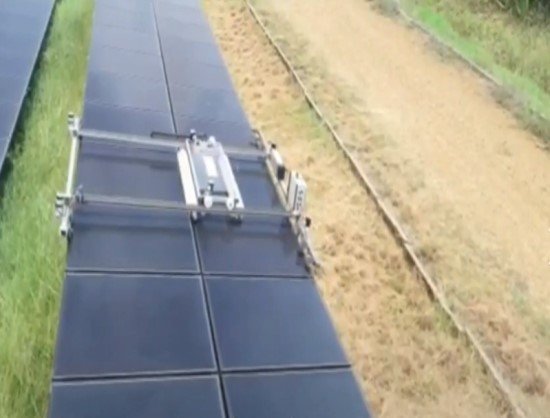
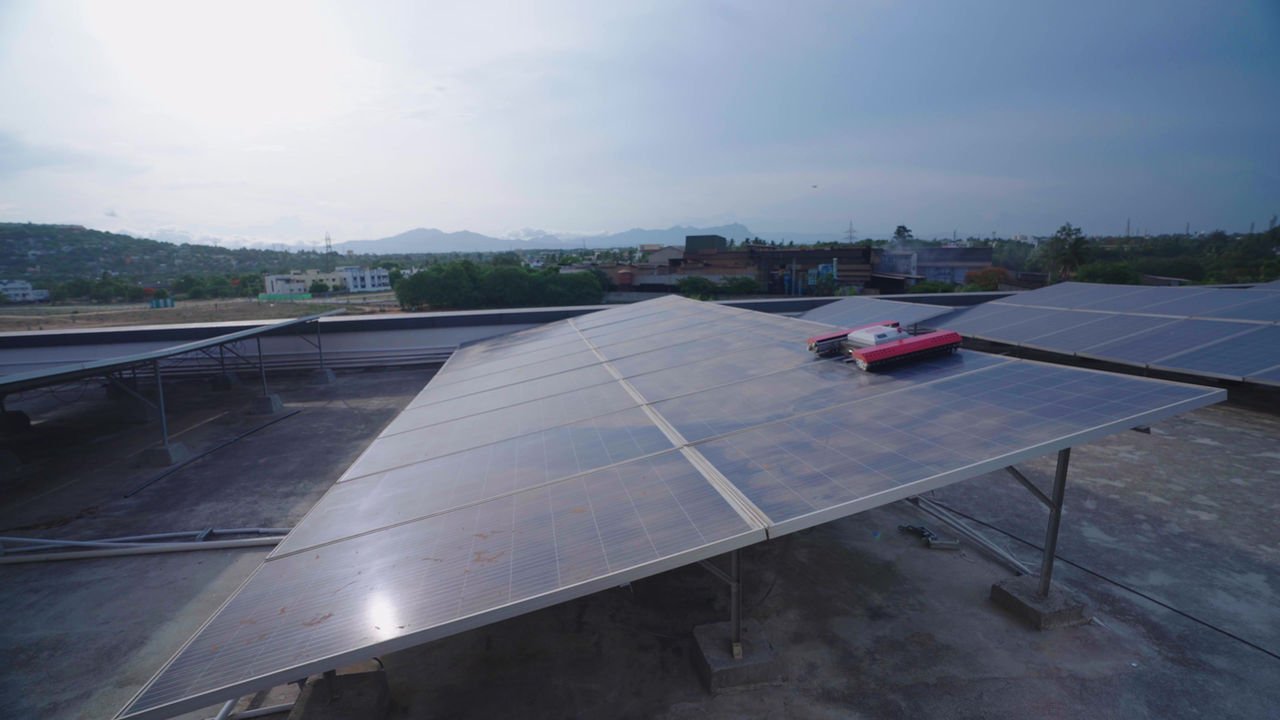
The mechanism is tubular dry-cleaning: an anti-static microfiber cloth removes dust through airflow and friction, with no water involved. The lineup has two machines. Eco Bot is the autonomous unit for ground-mount solar farms; Independent Bot is a portable, remote-controlled unit aimed at rooftop installations. The company cites an adjustable cleaning speed around 0.3 m/s, an onboard lithium battery (Japanese cells, per the company), and control via an IoT dashboard, remote fob or onboard buttons — with a dedicated cooling chamber for the electronics, a telling detail for hardware that works all day in Indian heat.
The durability question — does dry friction damage panels over time? — has a third-party answer. pv magazine reported in November 2022 that certified global agencies put the bot through 10,000 cleaning cycles of accelerated lifetime testing with no panel damage. That is the kind of independent validation small hardware startups rarely have, and it matters more than any marketing claim.
Four billion litres: the water one manual wash of India’s entire solar fleet would consume — the problem Solavio’s dry-cleaning robots are built for.
What the numbers actually say
This is where honest framing matters. The “4 billion litres” figure quantifies the industry’s water problem — it is not water Solavio has saved, and this post will not present it that way. The company’s own savings claim is “over 200,000 litres of water per MW per year” — attribute it as the company’s figure, not an independently verified fact. Similarly, “around 1,000 robots sold” and “30% lighter than competitors” are company claims with no independent verification found. And the “world’s first fully autonomous” phrasing from the company’s own YouTube titles should be dropped: Israel’s Ecoppia and others were doing autonomous dry-cleaning before Solavio.
What is independently documented: the DEWA MoU and the 1.8 MW pilot at the Dubai utility’s headquarters campus, around 100 MW of orders from tier-1 developers lined up as of 2021 (per saurenergy), and the pv magazine testing. The competitive field is real — Ecoppia is the global market leader, alongside Skilancer, Photom and Airtouch Solar — so Solavio is a small Indian challenger in a genuine market, not a lone pioneer.
Key takeaway
The takeaway: Solavio’s technology is third-party validated and its deployments are real, but the company is early-stage — ₹2.21 crore in FY23 revenue, ~$331K raised. The 4-billion-litre figure is the size of the prize, not the score so far — a scaling problem Navalt knows well from solar boats.
Why it matters for India’s solar targets
India’s solar ambitions make cleaning a scaling problem, not a housekeeping one. Every gigawatt added multiplies the wash-water maths and the soiling losses. If dry-cleaning robots can hold panel output near peak without water or labour crews, they change the operating economics of solar farms — particularly in Rajasthan and Gujarat, where the sun is strongest and the water scarcest. Whether Solavio becomes the company that captures that value, or simply proves the category for larger players, the water arithmetic is not going away. Energy-scale engineering with Indian manufacturing roots is also the story of INOXCVA’s ITER cryolines.
What is Solavio Labs?
A Coimbatore cleantech startup founded in 2016 by Suraj Mohan and Prashant Goel. It builds waterless solar-panel cleaning robots — the autonomous Eco Bot for ground-mount farms and the portable Independent Bot for rooftops — using anti-static microfiber dry-cleaning with no water.
How much water does solar panel cleaning really use?
The industry maths runs about 24,000 litres per MW per manual wash. Across India’s ~168 GW of installed solar, a single wash of the whole fleet would take roughly 4 billion litres. That figure describes the scale of the problem — it is not a measure of what Solavio has saved.
Does dry-cleaning damage the panels?
Certified global agencies tested Solavio’s bot over 10,000 cleaning cycles (accelerated lifetime testing) with no panel damage, as reported by pv magazine in November 2022. That is independent, third-party validation.
Where are Solavio’s robots deployed?
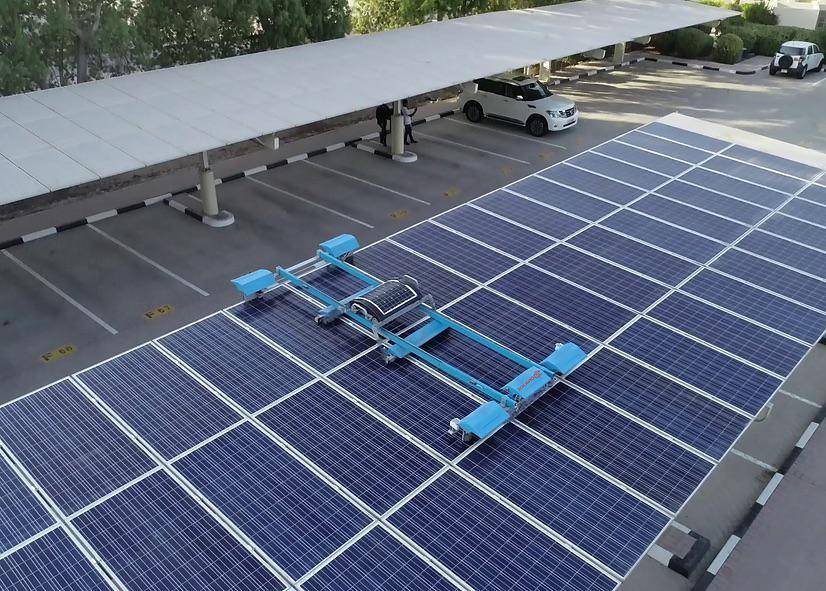
The company claims around 1,000 robots sold across India and the Middle East (company claim). Documented deployments include an MoU with Dubai’s DEWA utility and a pilot at its 1.8 MW headquarters solar carport, plus ~100 MW of orders from tier-1 developers reported in 2021.
Who are Solavio’s competitors?
Israel’s Ecoppia is the global market leader in robotic solar cleaning, alongside companies like Skilancer, Photom and Airtouch Solar. Solavio is a smaller Indian challenger — which is also why “world’s first” claims don’t hold.
More Read
Sources & further reading
- pv magazine: Affordable robotic cleaning solution for solar panels — November 2022 report on third-party 10,000-cycle testing with no panel damage
- SaurEnergy: Solavio Labs gets funding from Canadian province — Funding, DEWA MoU and order pipeline coverage
- YourStory: Coimbatore cleantech startup Solavio Labs — Founder backgrounds, product details and early deployments