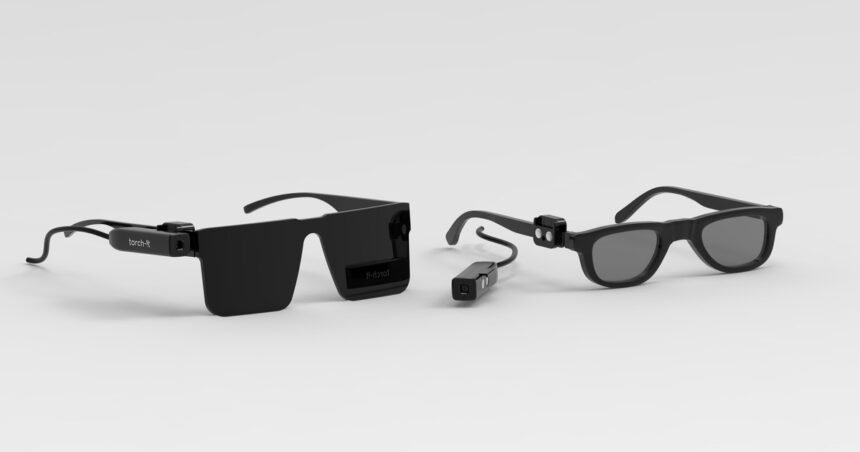
Imagine walking into a market you cannot see, and still knowing exactly what is in front of you — the shop sign, the colour of the shirt on the rail, the denomination of the note in your hand, the medicine box on the shelf. For millions of blind and low-vision Indians, that everyday independence has always depended on someone else’s eyes. Ahmedabad-based Torchit was built to change that, with glasses that listen to the world and speak it back.
Founded in 2016 by Hunny Bhagchandani and Mohit N Chelani, Torchit designs affordable assistive technology in India for people with visual impairment. Its best-known product is Jyoti AI, a camera-and-AI system that turns what is in front of the wearer into spoken information — no screen, no sight required, just sound.
Six modes, two buttons, no screen
The idea behind Jyoti is deliberately simple. A small camera unit clips onto glasses, sees the scene, and an AI describes it aloud through audio. The glasses offer six modes: Explore, Read, Medicine, Colour, Currency, and Food and Grocery. The company says users switch between modes with a red button and activate the chosen function with a second button — a design meant to work for anyone, regardless of literacy or technical experience.
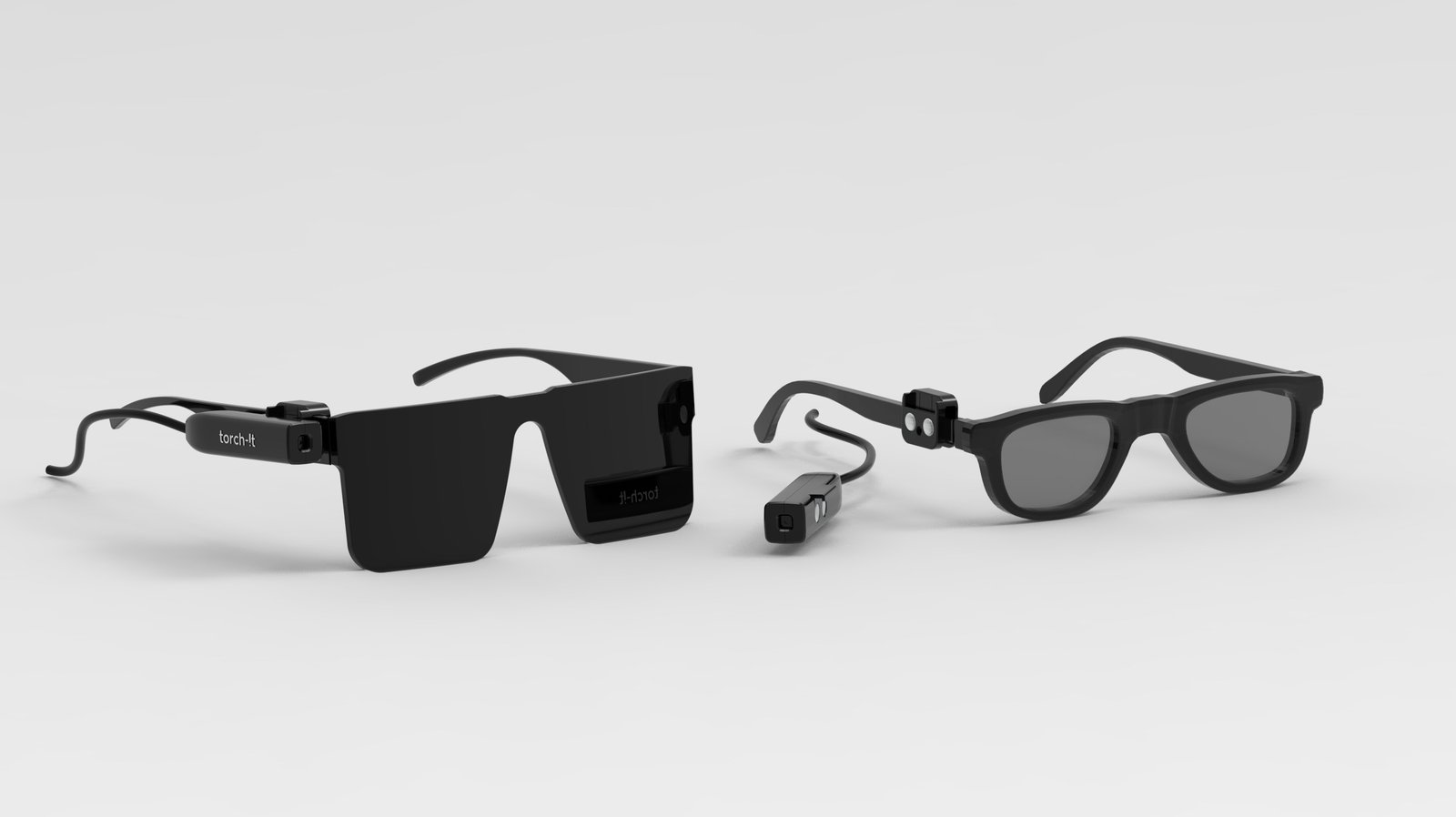
In Explore mode, the glasses describe what the camera captures, including details about a person’s clothing. Read mode reads out written material, Medicine mode helps identify medicines, and the Colour and Currency modes identify colours and banknotes. Food and Grocery mode helps with everyday items, from the kitchen shelf to the shop. The system also supports multilingual reading, with online reading in more than 60 languages, and it can be attached to any pair of glasses or to a desk lamp for reading documents with ease.
From a smart cane to wireless glasses
Jyoti did not arrive out of nowhere. Torchit’s first flagship was Saarthi, a smart mobility aid that fits onto a conventional white cane. The company says Saarthi uses ultrasonic sensing to detect obstacles with 99.7% accuracy, switching between three ranges — 2 feet indoors, 4 feet in a lobby or corridor, and 8 feet in open areas — and vibrating to warn the user so they can course-correct. The company says a single charge lasts up to 30 days, keeping the device ready for long hours of daily use.
More Read

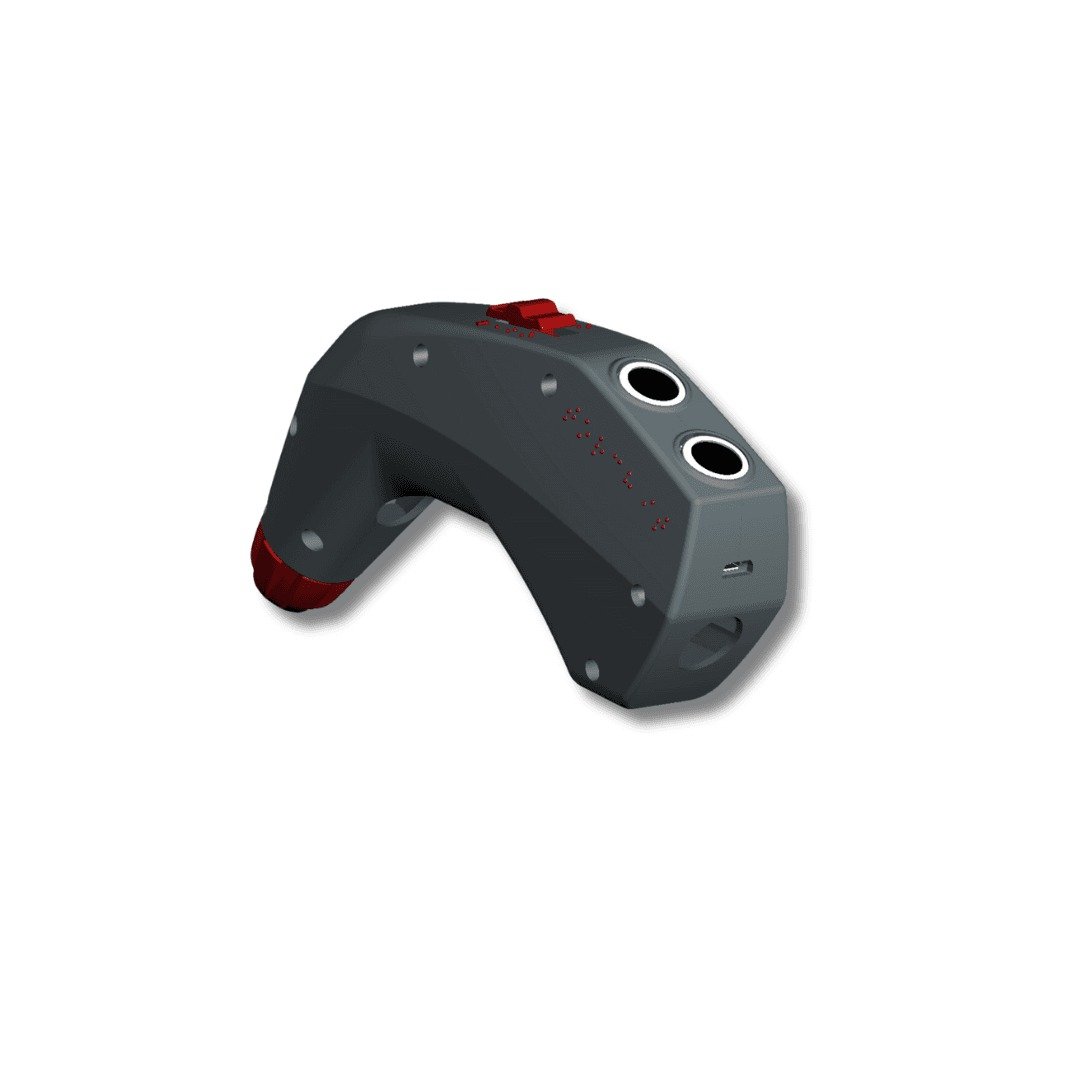
That same focus on everyday usefulness runs through the newest generation. In July 2026, Torchit and the Blind Relief Association unveiled the wireless Jyoti AI Vision Glasses alongside an advanced foldable smart white cane in New Delhi, backed by the Ministry of Social Justice and Empowerment. The wireless glasses replace an earlier wired model, freeing the wearer from cables entirely.
A national stage, and a first-place win
The new glasses took a national stage at India Mobile Congress 2026, where Torchit won first place in the Ericsson Innovation Challenge 2026, taking the ₹10 lakh first prize for affordable, AI-powered assistive technology. At the congress, Torchit’s chief growth and partnership officer Hema Khatri said the company wanted visually impaired students to have access to educational opportunities comparable to those available to sighted students — and that the glasses had already reached more than 40,000 users across India.
The recognition around Torchit runs deep. The company says its technology now reaches more than 40 countries, with more than 500 visually impaired trainers associated with its work. Jyoti AI Pro was recognised at the Zero Project Awards at the United Nations in Vienna in February 2026, founder Hunny Bhagchandani was named to the Forbes 30 Under 30 Asia list in 2025, and the company received a National Award in 2021. In August 2026, Bhagchandani was invited to the At Home reception at Rashtrapati Bhavan on Independence Day, selected by MeitY, DPIIT and MeitY Startup Hub.
The devices are priced at around ₹20,000 to ₹25,000, according to Khatri — a deliberate choice for a company whose founding promise is that cost should never be the barrier to independence. From a cane that senses the kerb ahead to glasses that read the world aloud, Torchit is building the same thing in every product: the freedom to step out, read, shop, study and work without waiting for someone else’s eyes.
Keep reading: Forecasting Without Training: Inside Birla AI Labs’ Yug-1, India’s Time-Series Foundation Model · Built to Be Worn: Inside QWR, the Pune Company Making India’s Own VR Headsets and AI Glasses · More Industrial Automation & Technology stories
Like stories like this? Add Exceptional Technology as a preferred source on Google to see more of our reporting in your search results and Discover feed.