Image credit: IZI — official company visual.
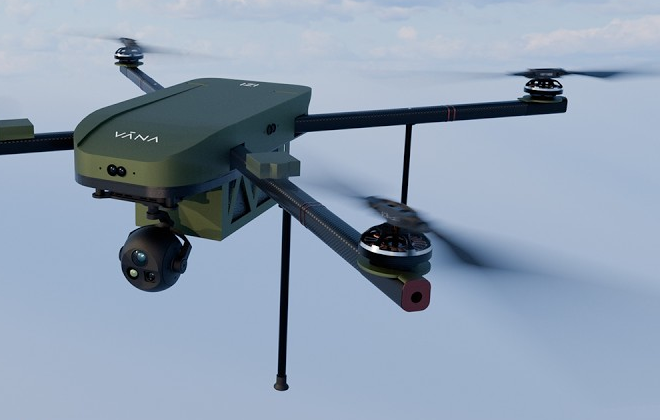
Most surveillance drones come down for a battery swap after an hour. The one DRDO just ordered from a Bhopal startup is designed to stay up for a day. On 6 October 2026, the Defence Research and Development Organisation’s Proof & Experimental Establishment (PXE) — the arm of DRDO that tests and evaluates defence systems — placed an order for the IZI VANA surveillance drone, a modular unmanned platform built by IZI Enterprise of Bhopal.
The order: maps, thermal eyes and live data for PXE
Under the order, VANA will work as an aerial photogrammetry platform: surveying and collecting terrain and ground-feature data, aerial observation and surveillance, optical and thermal imaging, real-time transmission of aerial video and mission data, precision navigation and waypoint-based autonomous missions, and flight-and-sensor data logging for post-mission analysis in demanding environmental conditions. The platform ships with high-resolution imaging, RGB and electro-optical/infrared (EO/IR) sensing, GNSS navigation, onboard sensors and a dedicated ground control station. IZI will also provide two DGCA-certified pilots for the first year of the engagement, supporting flight operations while PXE transitions piloting to its own personnel during the warranty period. The contract lists India as the country of origin. Neither the value nor the number of aircraft has been disclosed.
The machine: one core, endless configurations
VANA — the company expands it as a “Versatile Aerial Navigation Asset” — is built around a single standardised core. One airframe can be configured for surveillance, reconnaissance, mapping, infrastructure inspection, payload deployment, loitering missions and tactical support through modular payloads, endurance profiles and range classes, without redesigning the airframe or retraining operators. The official specifications: 30 to 90 minutes of endurance depending on payload and profile, up to 25 km of operational range, field-ready in under five minutes, and dual-mode operation — tethered or untethered.
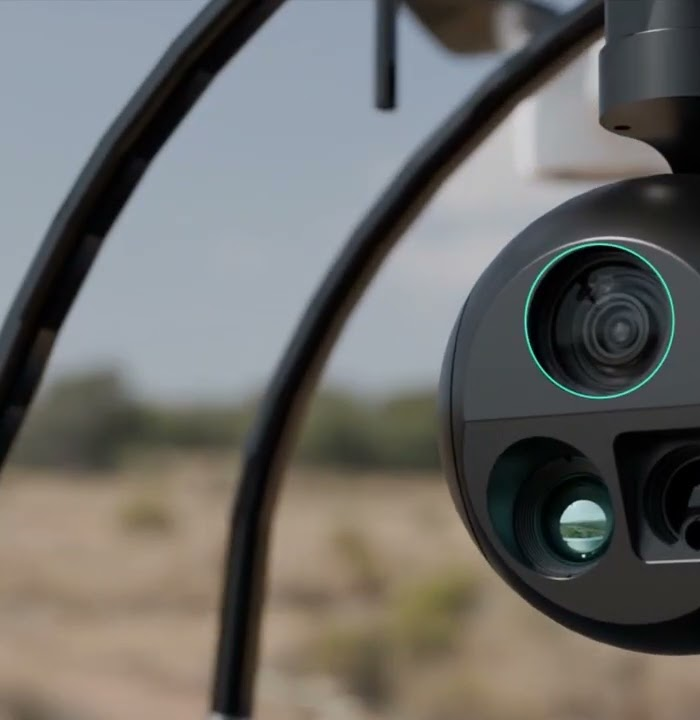
The navigation and communications stack is where the serious engineering shows. VANA carries multi-constellation GNSS — GPS plus NavIC, Galileo and GLONASS — with RTK-enabled centimetre-level positioning, and the company says it can navigate in GPS-denied environments using vision and sensor fusion. Its command-and-control link is AES-256 encrypted, frequency-hopping (FHSS) anti-jamming, and described as EW-resilient, all managed through an in-house ground control station with automated mission planning, geofencing and live data management. Payload options include high-resolution RGB cameras for mapping, thermal imaging for low-light observation and multispectral sensors.
More Read
The tether: a 30-hour stare
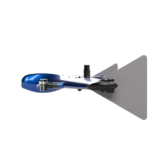
The standout capability is the tethered mode. Tethered drones draw power through a cable from the ground, so endurance is limited by maintenance rather than batteries. In a demonstration to the Indian Army reported in August 2026, the VANA tethered variant showed 24 to 30 hours of continuous aerial surveillance for border security and critical-infrastructure protection. The platform has an altitude ceiling of 4,000 metres above mean sea level — suited to India’s mountainous borders — and in tethered configuration operates up to 100 metres above ground level, holding a persistent watch over a fixed area. Persistent, wide-area ISR is exactly the mission profile DRDO’s test establishment wants it for.
The company: from consumer shelves to the defence stack
IZI began as a consumer drone brand — it was among the first Indian companies to build homegrown camera drones for creators, selling through izicart.com — and has spent the last few years pushing into industrial and enterprise platforms. The company designs and manufactures in Bhopal under founder Ishan Haydn. VANA itself debuted in mid-2026 as the company’s first multi-role platform ecosystem, explicitly aimed at civil, industrial and defence operations. The DRDO order is its first publicly reported institutional defence contract — a significant step for a company transitioning from retail shelves to the defence procurement ladder.
The caveat is disclosure: with no stated order value or aircraft count, the contract’s scale is unclear, and the 30-hour endurance figure comes from the company’s own demonstration reporting. What is verifiable is the direction of travel: a Bhopal startup that learned to build drones for consumers is now selling surveillance endurance to the establishment that evaluates India’s defence systems.