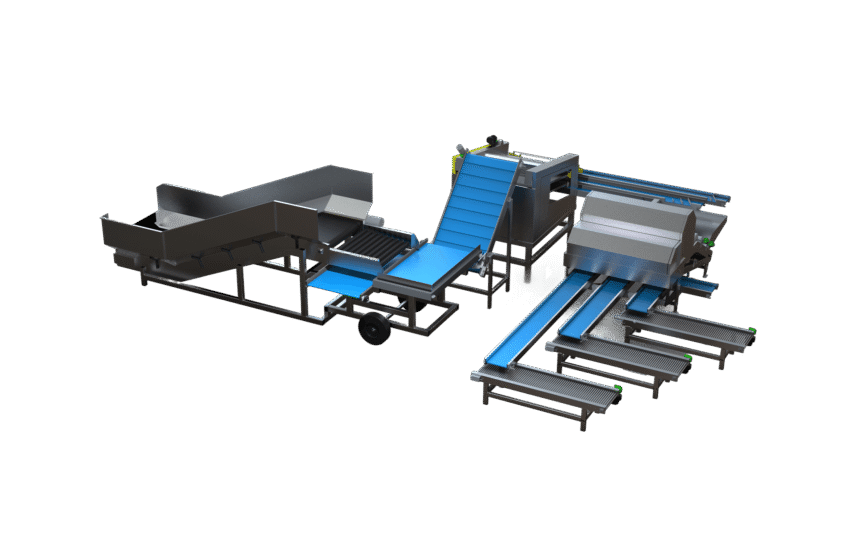
A single arecanut, worth a few rupees, changes hands thousands of times between a Karnataka farm and a paan shop — and until very recently, nobody measured it precisely. Arecanut quality was decided the way it has been for generations: by hand, by eye, on a warehouse floor, where fifteen workers working a full day could get through forty to forty-five bags and no two inspectors agreed on the same lot. This month, a Pune startup changed that arithmetic. Agrograde has installed what the company says is India’s first autonomous AI-powered optical sorting system for arecanut, and the machine now grades each nut faster than a human eye can blink.
The system, installed at Vikas Traders in Mangaluru, uses Agrograde’s patent-pending Vector technology to capture ten to twelve images of every individual nut as it passes through the line. Proprietary AI models analyse those images in milliseconds, identify external defects, and pneumatic actuators separate the rejected material from the accepted lot — all without relying on colour alone, which is where conventional colour-sorting machines stop. When first commissioned, the system sorted at around 75 percent accuracy; with more commercial data flowing through it, the models have been updated and accuracy has climbed to around 89 percent, the company says, with further improvement expected as the machine keeps learning from every lot.
The scale of the difference is in the throughput. Agrograde says the system processes up to roughly one tonne of arecanut per hour, letting the Mangaluru facility handle close to eight tonnes a day — and it generates a quality summary after every lot, recording size distribution, defects identified, defect intensity and the number of nuts packed. That data, not just the sorted nuts, is the product: a trader finally has systematic quality intelligence on every consignment instead of an inspector’s word.
Nine years of machines before the moment
Agrograde did not arrive at arecanut by accident. The company — formally Occipital Technologies Private Limited — was founded in 2017 by Kshitij Thakur, the CEO, and Rakeshkumar Barai, and is headquartered in Pune with manufacturing at Chakan, the industrial belt north of the city. For nine years it has been building machines around a single insight: more than 99 percent of Indian packhouses still do quality checks, grading, sorting, weighing and packing by hand, in the words of Thakur, and the workforce doing it is ageing.
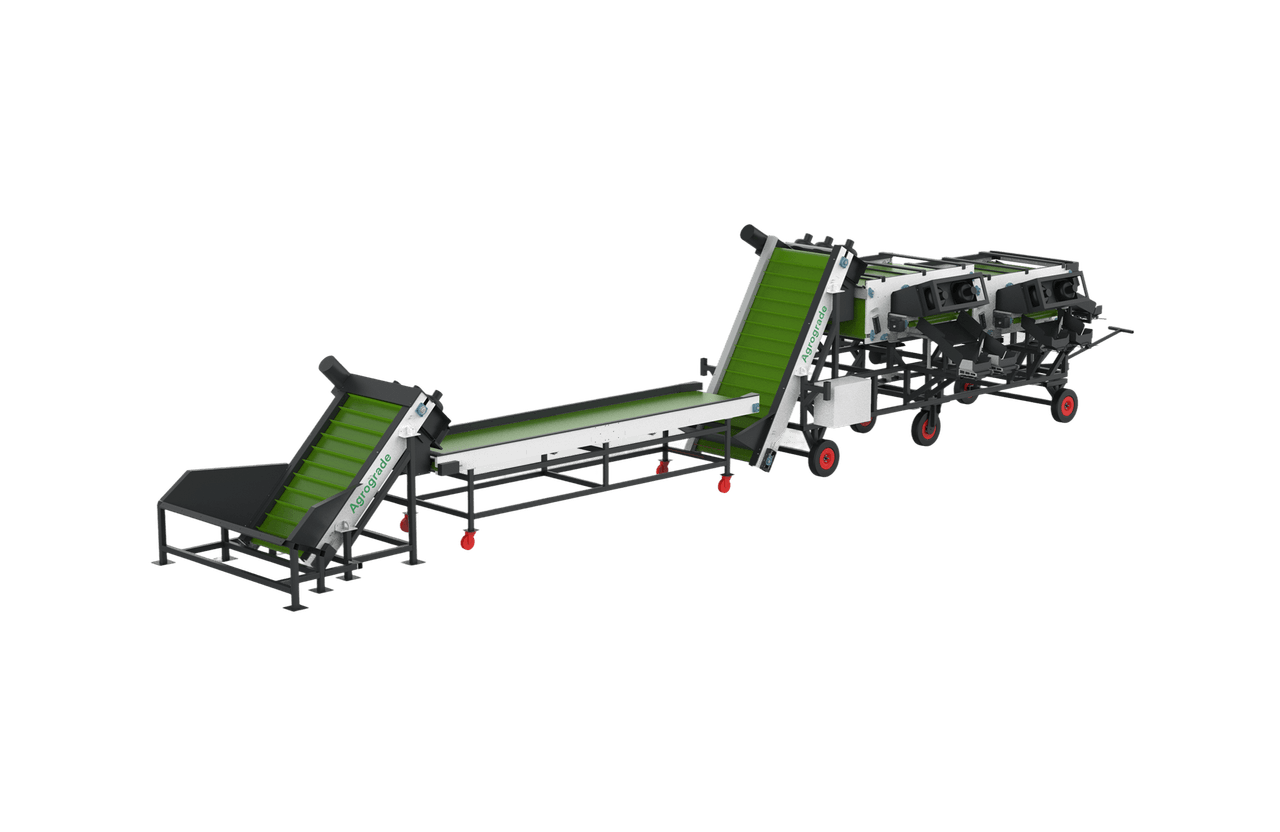
The flagship Vector Series AI optical sorter is engineered for the reality of Indian produce lots: unwashed, mixed by size, variety and source, processed in open-air packhouses. A patent-pending mechanism captures up to eight images of each item using industrial-grade, high-resolution cameras — one of the highest surface coverages in the optical sorting category, per the company — and the on-machine models reject defects through pneumatic actuators at commercial line speeds of up to 20 metric tonnes per hour. For loose-skin onions, where conventional graders rub off the commercially valuable papery skin, Agrograde built the GradePlus Series around its WaveMotion technology, which moves onions in a controlled lift-and-drop flow instead of dragging or shaking them — grading without skin-out.
The economics are what carry the machines through farm gates. Thakur told The Hindu BusinessLine that manual onion grading typically costs aggregators ₹0.40 to ₹1 a kilogram; Agrograde’s machines have brought that down to ₹0.08 to ₹0.10 a kilogram with around 99 percent accuracy in size grading, while also cutting the handling losses that used to be routine. The company’s customers are the people closest to the farm: farmer-producer organisations, aggregators and exporters, many of them adopting automation right at the farm gate.
More Read

150 machines, 15 states, and a data moat
The arecanut deployment marks the company’s 150th machine across 15 Indian states, spanning onions, potatoes, apples and now arecanut — with tomato, garlic and leafy vegetables on the roadmap. Every machine in the field feeds the same flywheel: the AI models have been trained on lakhs of crop images and run on high-performance computing infrastructure powered by NVIDIA, so each new deployment makes the next one sharper. The Mangaluru arecanut story is that flywheel in miniature — 75 percent to 89 percent, from operational data alone.
It is a deliberately frugal path to scale. Agrograde has raised only about ₹1.5 crore across three rounds — from Social Alpha, Villgro, CIIE.CO at IIM Ahmedabad and Aligned Partners Venture Services — and has built by selling machines from the start. Along the way it has collected the sector’s recognitions: a top-nine finish at Mahindra’s Startup Leap in 2023, a place in NITI Aayog’s compendium of 75 agricultural innovators, national runner-up at the MANAGE Samunnati Agri Startup Awards in 2022, and a BSE Top 10 Impact Ventures citation in 2019.
The vision Agrograde states on its site is the autonomous packhouse — and it is starting, sensibly, with the most quality-critical stage. First grading and sorting, where inconsistent manual assessment leads to debit notes, post-storage losses and rejected consignments; then, machine by machine, the rest of the line. If the company keeps to its roadmap, the day is not far off when the quality of Indian produce is settled not by argument on a warehouse floor, but by a machine that has seen every nut, every potato, every onion — and remembers them all.
Keep reading: The Driverless Workhorse: Inside AutoNxt’s Self-Driving Electric Tractor · Ten fruits a second: inside Segritech’s AI grading machines and India’s farm-gate sorting bet · More Food Processing & Agri-Tech stories
Like stories like this? Add Exceptional Technology as a preferred source on Google to see more of our reporting in your search results and Discover feed.