


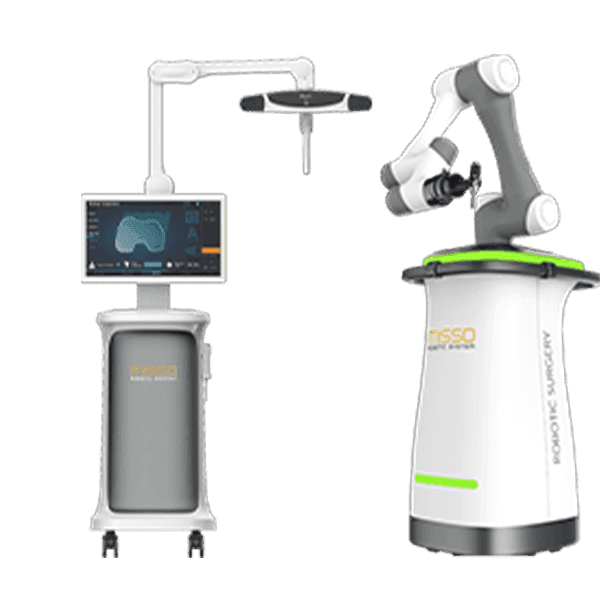
For millions of Indians, a worn-out knee quietly shrinks the world. Climbing stairs becomes a negotiation, a morning walk becomes a memory, and the simple act of standing up from a chair starts to hurt. Knee replacement surgery can give that world back, but its precision has long depended on expensive imported robots that few hospitals outside the biggest metros could afford. A company from Vapi, Gujarat, decided to change that equation by building the robot itself.
The company is Meril Life Sciences, and the robot is MISSO, which the company describes as India’s first indigenously developed, fully active robotic system for knee replacement surgery. On 23 October 2026, Sivam Ortho Hospital in Chennai installed what it calls the city’s first AI-based MISSO system, the latest stop in a rollout that the company says has now crossed 150 installations across India.
How MISSO works
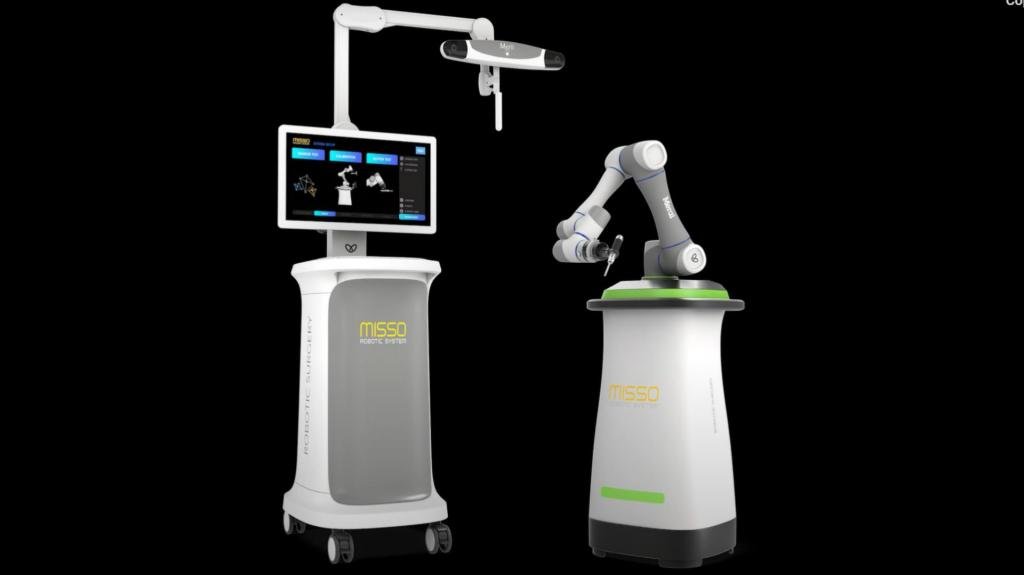
MISSO is built around three parts that work together in the operating theatre. The vision cart carries a 27-inch medical-grade touch monitor and an optical tracking system that watches the position of the patient’s bones and the surgical instruments in real time. The six-axis robotic arm translates the surgical plan into precise bone preparation, and the MISSO planner uses AI-based segmentation of the patient’s imaging to build a detailed 3D model before the first cut is made.
The company says the planner automatically detects the right implant size and flags implant overhang and notching, while the surgeon can adjust the plan during surgery as the knee’s balance is checked in real time. Crucially, the surgeon stays in full control throughout: MISSO works in an assisted mode, guiding movements only within the planned boundaries, and a safety-stop mechanism halts movement if it drifts beyond set limits. The company says its AI-driven planning can cut pre-surgical planning time by up to 80%.
Built for India, priced for India
The engineering is only half the story. The company says MISSO costs around Rs 2 crore, roughly 66% less than comparable imported robotic knee systems, a gap it set out to close so that robotic surgery is not confined to a handful of elite hospitals. Meril pairs the system with training and service support for surgeons and operating-theatre staff, and the company says it designed MISSO for high-volume hospitals as well as smaller centres, so that precise robotic surgery can reach tier-2 and tier-3 cities too.
The need is enormous. The company points to osteoarthritis prevalence in India rising from around 23 million to 62 million over the last two decades, with roughly 550,000 knee replacements performed each year against a far larger number of people who need one. Every hospital that can offer a precise, consistent robotic procedure helps close that gap a little further.
More Read

From Vapi to operating theatres across India
MISSO was launched in June 2024, and its rise since then has been swift. The system was demonstrated by Meril CEO Vivek Shah in the presence of Prime Minister Narendra Modi at the inauguration of Namo Hospital in Silvassa, where Shah called MISSO a proud milestone in India’s journey towards self-reliance in advanced medical technology. Kapadia Hospital in Mumbai became the city’s first hospital to adopt it, offering daycare knee replacement surgeries built around faster recovery, and hospitals across the country have followed.
For patients, the company says the payoff is tangible: smaller incisions, less soft-tissue damage and bleeding, and a quicker return to walking, climbing stairs and everyday life. A robot cannot replace a surgeon’s judgement, but in MISSO’s case it gives that judgement a steadier, more precise hand, and it gives it at a price Indian hospitals can actually say yes to.
That is what makes MISSO such a quietly remarkable Indian engineering story. It takes one of the most delicate jobs in medicine, builds the machine for it at home, and puts world-class precision within reach of the hospitals where most Indians actually get treated.
Keep reading: From Paralysis to Recovery: Inside S3V Vascular, the Mysuru Company Building India’s Own Stroke-Saving Devices · From Farm Waste to Fuel and Fragrance: Inside Fermbox Bio, the Bengaluru Company Teaching Microbes to Manufacture · More Chemicals, Materials & Life Sciences stories
Like stories like this? Add Exceptional Technology as a preferred source on Google to see more of our reporting in your search results and Discover feed.







