


After the harvest, India’s fields are left with mountains of straw, bagasse and stalks — material most of us see as waste. In Bengaluru, Fermbox Bio sees it as the starting point for fuel, flavour and colour. The company teaches microbes to turn that farm residue into the building blocks of a cleaner economy: sugars that become second-generation ethanol, a fresh-cut-grass fragrance made without petrochemicals, and an indigo dye brewed in a fermenter instead of a chemical plant.
Fermbox Bio was founded in 2022 by biotech entrepreneurs Subramani Ramachandrappa and Preeti Dharmagoudar, and the company says its mission is simple to state and hard to pull off: replace supply chains that depend on plants, animals and harsh chemistry with products grown by biology, at industrial scale.
One platform, from lab bench to factory floor
The heart of the company is Bio-ARC, short for Bio-based Adaptive Reprogramming Chassis. It is a full-stack platform that brings together strain engineering, enzyme design, process development and manufacturing, so a product is designed from the start to survive scale-up rather than being reworked after it leaves the lab. The company says this integration is what lets it move products from concept to commercial supply faster and more reliably than the fragmented way synthetic biology is usually done.
Bio-ARC works across bacteria, yeast and fungi, matching the right microbial host to each product. The microbes are reprogrammed to produce compounds nature already makes — and, the company says, some it normally cannot — turning fermentation tanks into factories for enzymes, lipids, proteins, flavours, colours and specialty chemicals.
EN3ZYME: turning crop waste into fuel
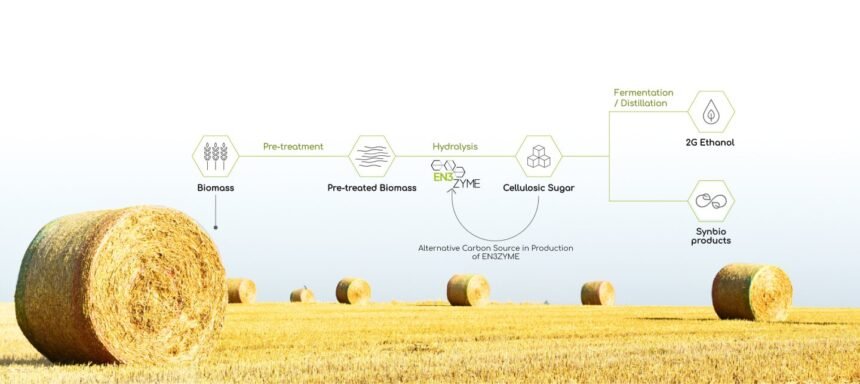
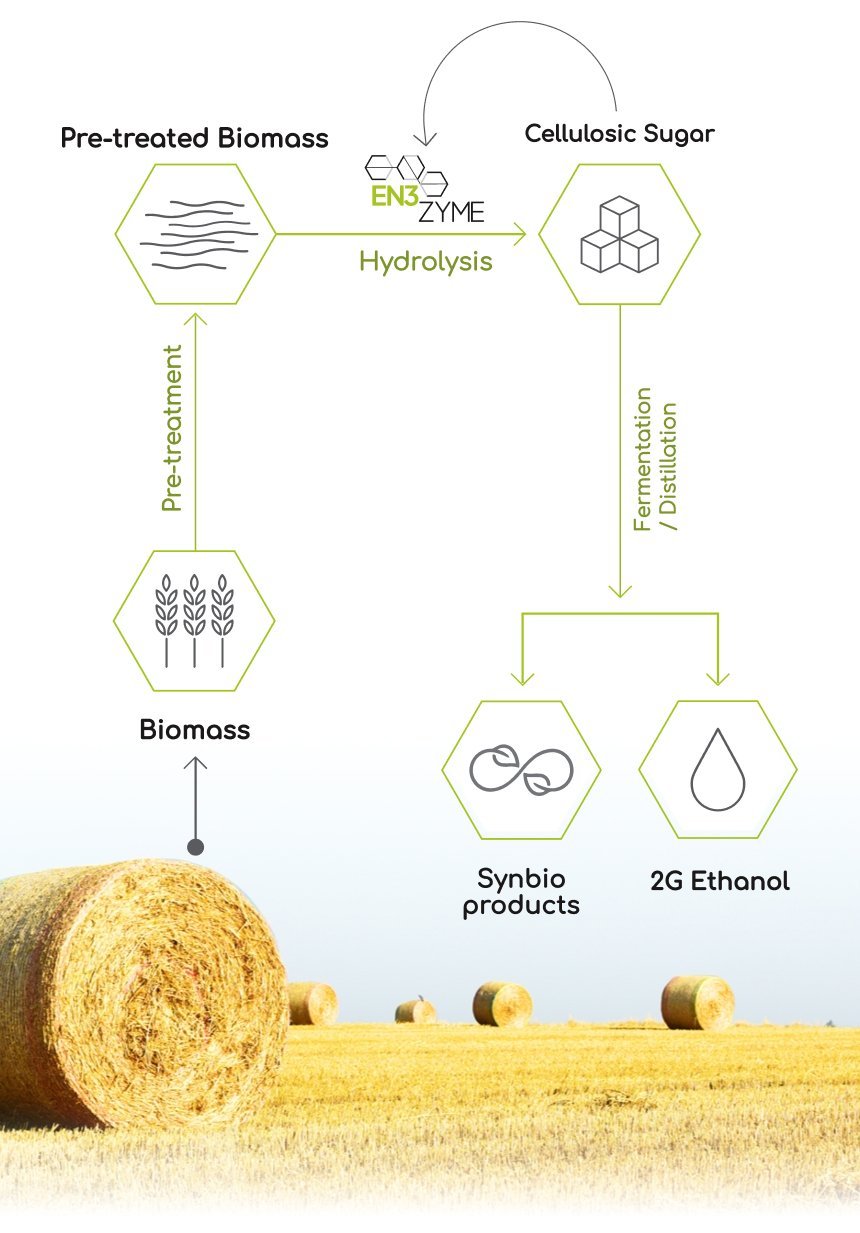
Fermbox Bio’s first product, launched in May 2024, is EN3ZYME, a cellulase enzyme cocktail that converts pre-treated lignocellulosic biomass into fermentable sugars. The feedstock list reads like a tour of Indian agriculture: bagasse, cotton stalks, rice and wheat straw, corn stover, bamboo, cane residues and hardwood and softwood.
Those cellulosic sugars are then fermented into second-generation (2G) ethanol, and the company says they also work as a cost-efficient alternative carbon source for making novel proteins and other synbio products through precision fermentation. Because the sugars come from non-food residues rather than crops grown for food, the process sidesteps the food-versus-fuel tension that has long shadowed biofuels.
More Read

The company says EN3ZYME is made in India, cutting the supply risk and cost of importing the critical enzymes that 2G ethanol production needs. The product has found commercial footing: the company announced a multi-million-dollar cellulosic enzyme supply contract with an Indian 2G ethanol producer, and says EN3ZYME is seeing active engagement with leading Indian public sector undertakings.
From fragrance to dye, brewed not synthesised
Fuel is only the first chapter. Biohexenol, the company’s fermentation-derived cis-3-hexenol, carries the signature fresh-cut-grass note prized by the flavours, fragrances and cosmetics industries — produced by microbes in a tightly controlled process that the company says delivers high purity, consistent quality and full traceability.
Synbio-Indigo applies the same idea to textiles: a synthetic-biology-based alternative to traditional indigo dye, designed to make the dyeing process itself more sustainable and to give brands a stable, high-purity supply without the environmental toll of conventional dye production.
More recently, Fermbox Bio launched an animal-origin-free recombinant DNase I (RNase-free) as the first product under its expanded collaboration with Dyadic, aimed at research and biomanufacturing workflows where RNA integrity matters. The company says further recombinant proteins — including alpha-lactalbumin, transferrin, FGF-2 and lactoferrin — are planned under the collaboration, targeting cell culture, vaccine and advanced biologics manufacturing.
Scaling up, in India and with Indian science
In June 2026, Fermbox Bio signed a technology licensing agreement with the International Centre for Genetic Engineering and Biotechnology (ICGEB), New Delhi, for the scale-up, manufacturing and commercialisation of active dried yeast and an enzyme technology for optimised lignocellulosic degradation, aimed at multi-100 kilolitre and larger fermentation systems.
Business Standard reported that Fermbox Bio has also been selected under BIRAC’s research, development and innovation initiative to set up a large-scale precision fermentation facility with 400 kilolitres of fermenter capacity, to produce made-in-India cellulosic enzymes for second-generation ethanol and active dried distiller’s yeast for first-generation ethanol.
The company’s model for getting there is deliberately collaborative: co-manufacturing and co-located facilities near feedstock sources, so products can be made where their raw materials already are, with shorter lead times and lower costs. It is a model the company says it wants to replicate across regions as it grows.
The work has drawn international recognition. Fermbox Bio was named to the World Economic Forum’s 2026 Technology Pioneers community and to Cleantech Group’s 2026 APAC Cleantech 25, a list of private clean-technology companies across Asia-Pacific.
What Fermbox Bio is building, at its core, is a new kind of Indian factory — one where the workers are microbes, the raw material is the straw left behind after harvest, and the output ranges from the fuel in a tank to the scent in a perfume to the blue in a pair of jeans.
Keep reading: No Batteries, No Wires, No Waiting Room: Inside Pflow, the Mumbai Device That Measures Urine Flow With Gravity Alone · From Burnt Fields to New Fabric: Inside Canvaloop, the Surat Startup Turning Farm Waste Into Clothes · More Chemicals, Materials & Life Sciences stories
Like stories like this? Add Exceptional Technology as a preferred source on Google to see more of our reporting in your search results and Discover feed.







