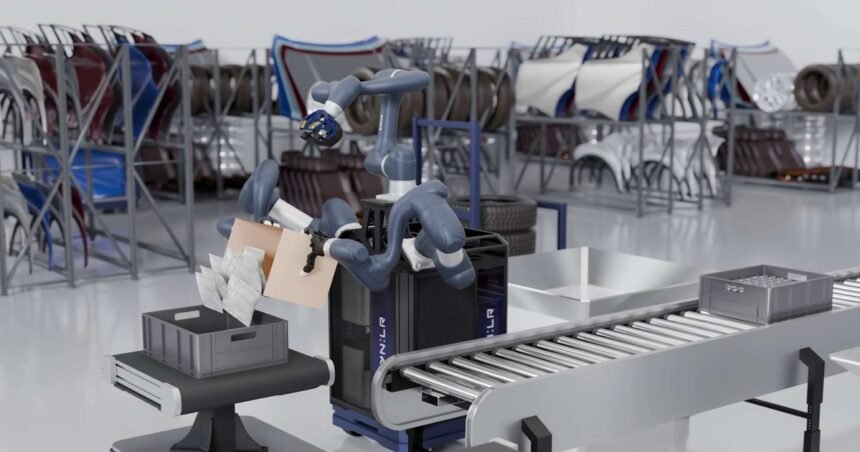
In a quiet corner of the India AI Impact Summit pavilion in New Delhi in February 2026, a robot with two arms and a pair of eyes was doing something robotics has chased for decades: picking up objects it had never seen before. No training data for that item, no program written for that shape, no fixture holding it in place. The robot simply looked, got curious, and figured out the grasp in seconds. That robot was CyRo, built by Bengaluru’s CynLr.
CynLr — short for Cybernetics Laboratory — was founded in 2019 by Nikhil Ramaswamy and Gokul NA, and is based in Whitefield, Bengaluru. The company says its mission is to give robots the one ability they have always lacked: intuition about objects. Its Object Intelligence platform, the company says, is the first commercial-ready system of its kind to emerge from India.
The problem: machines that repeat but cannot respond
For fifty years, the company says, robotics has been about controlled environments — programming every movement, every condition, every exception. Machines that could repeat but not respond, execute but not adapt. That is why, as CynLr’s founders point out, most of the 10,000 parts in a car are still assembled by hand: machines cannot cope with the unfamiliar. Fitting a bolt into a screw hole without slipping, handling a glass bottle wrapped in plastic, or gripping a shiny metal part defeats conventional vision, because transparent, reflective and irregular objects break the assumptions cameras are trained on.
Eyes that work the way a baby’s brain does
At the heart of CynLr’s platform is CLX, its vision stack. Instead of fusing radar, lidar and cameras, the company says, one pair of converging eyes sees motion, depth and colour at once, in the same resolution and in sync — the way human eyes converge to judge depth. The company says this convergence delivers depth ten times faster and at three times the resolution of traditional stereoscopy. From that single view, CLX builds a live visual-physics model of the object in front of it: its geometry, texture, reflectance and grasp possibilities, all in real time.
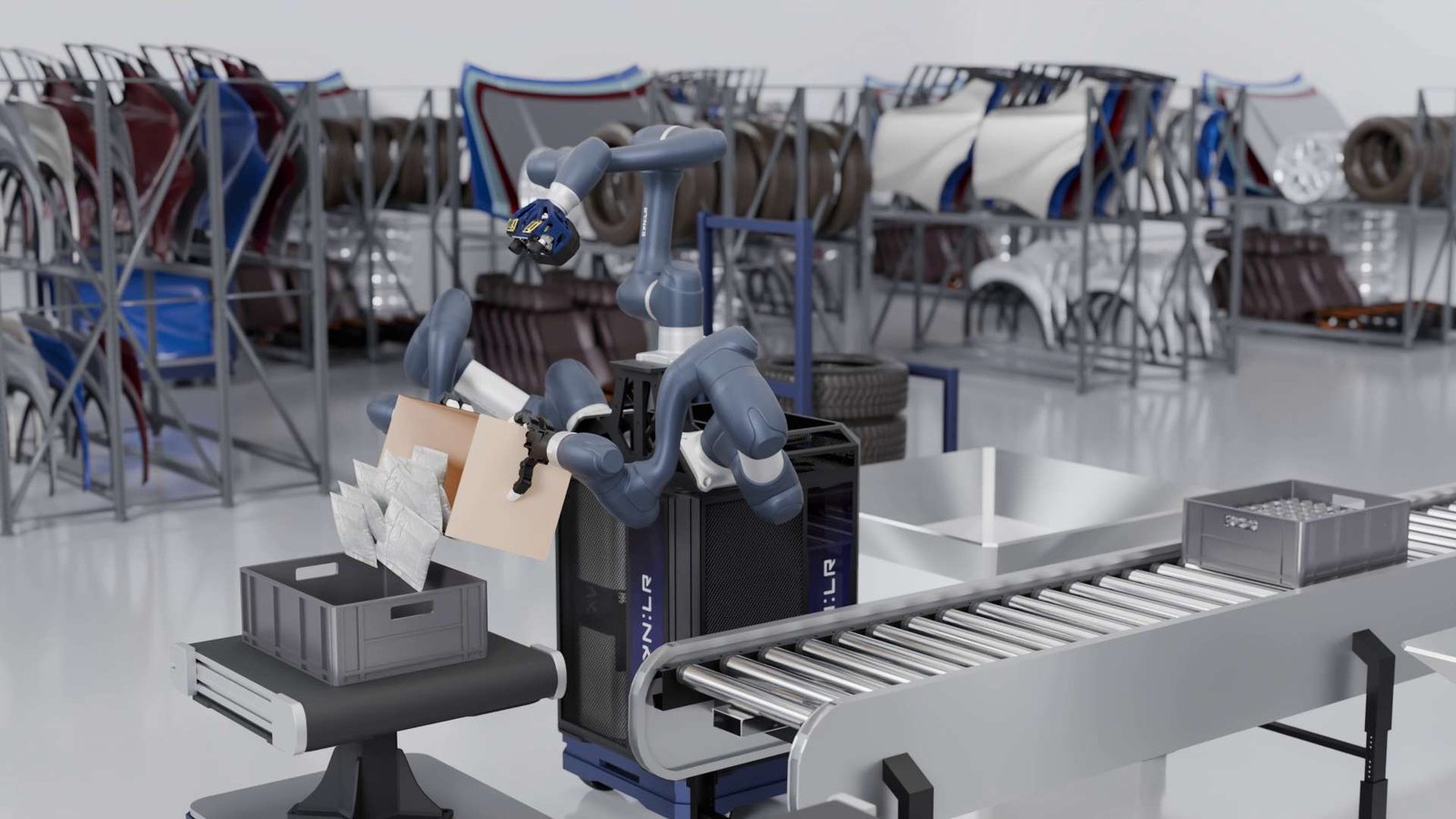
The founders draw a sharp line here. Today’s AI, they say, uses senses to act; human beings act to sense — you pick up a coin and tilt it so you can see it better. Robots, they argue, need Vision Force Models, not Vision Language Models: models built from a robot’s own eyes, touch and feel, not from human words and phone-camera datasets. That is what Object Intelligence is built to provide.
More Read

Ten seconds to learn what it has never seen
Put an unknown object in front of CyRo and the robot explores it the way a baby would. The company says it typically works out how to grasp a completely new object within 10 to 15 seconds — against the months of dataset collection and training that conventional physical-intelligence methods demand. Every grasp is a learning event: a failure triggers recalibration, and the next attempt improves in real time, with no offline retraining. Switching between tasks the robot already knows is instantaneous, the company says, and even a brand-new task can be configured within weeks.
CyRo, CyNoid and the factory that changes by software
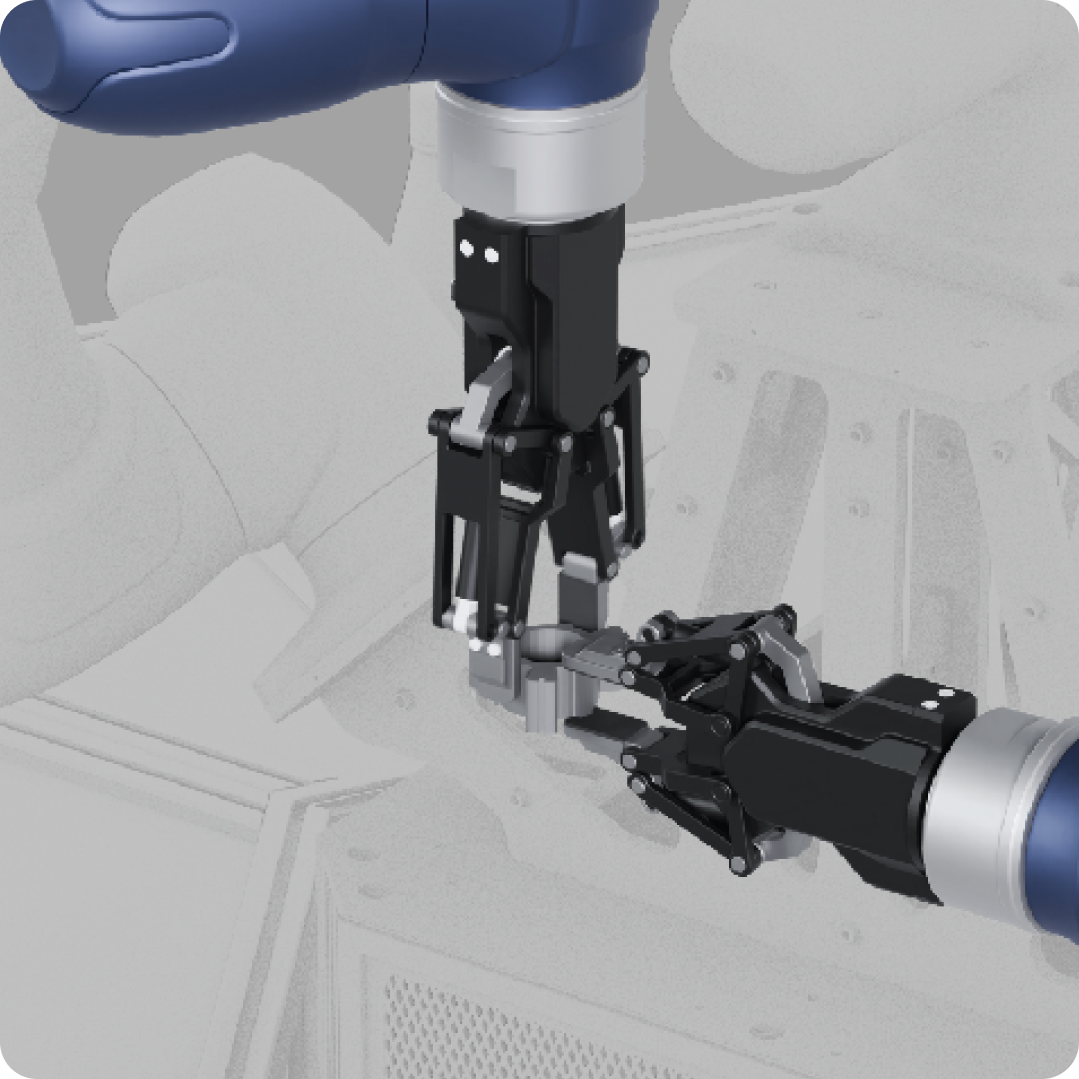
CyRo itself is a stationary dual-arm, six-axis robot on a fixed torso, built for high-speed kitting, sorting and assembly. Its CLX vision works in any lighting, the company says, and force-torque sensing gives it slip detection, adaptive grip pressure and in-air reorientation — two arms passing an object between them and turning it mid-air, with no flipping fixture. Because the two arms work independently, the company says, cycle times can halve without adding another workstation.
Its mobile sibling, CyNoid, carries two seven-axis arms on a high-mobility base, travelling between workstations, tending rows of CNC machines and snapping parts together in motion. A fleet of CyNoids, the company says, can coordinate as a hive, distributing tasks across a factory floor in real time. A third platform, Mantroid, is on the way as an open hardware sandbox, so customers can build robot form factors of their own around the same intelligence.
From Bengaluru to Audi’s production lines
The technology is already moving from lab to factory floor. The company says it is running a two-year pilot with Audi to bring its robots onto prototype manufacturing lines, and has signed a leading semiconductor equipment manufacturer, with luxury car brands in talks. A neuroscience-linked research collaboration with the Indian Institute of Science, the company says, is helping its systems function closer to brain-like perception and adaptation. From its Bengaluru base, CynLr has set up a research and design centre in Lausanne, Switzerland, and a business office in the United States, and the company says it aims to scale production to one robot a day by 2028.
The destination CynLr describes is what it calls the Universal Factory: a software-defined floor where the same machines make cars today and phones tomorrow, switching products with a software update instead of retooling, a single line handling a thousand variations. Factories become as flexible as the markets they serve. Object Intelligence, the company says, is where that shift begins — machines that observe, reason and adapt, finally useful in a real world where nothing stays the same twice.
Keep reading: Glasses That Listen: Inside Torchit, the Ahmedabad Startup Turning Sight Into Sound · Forecasting Without Training: Inside Birla AI Labs’ Yug-1, India’s Time-Series Foundation Model · More Industrial Automation & Technology stories
Like stories like this? Add Exceptional Technology as a preferred source on Google to see more of our reporting in your search results and Discover feed.