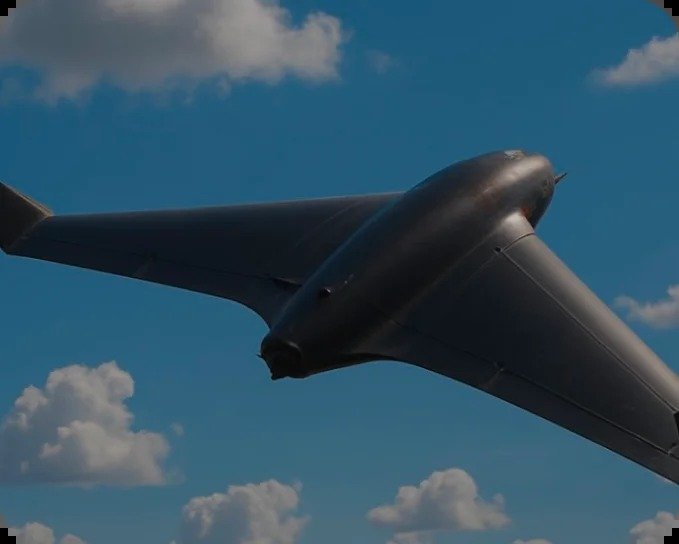
On a morning in the Himalayas, a drone weighing less than four kilograms, with a wingspan shorter than a tall man is tall, climbed from a launch site 2,700 metres up into air so thin and cold that the temperature fell to minus 60 degrees Celsius and the pressure dropped by nearly three-quarters. Nobody touched a control stick through the whole flight. The aircraft flew itself to 9,790 metres above mean sea level, and then, in a separate test, came screaming back to its base point at 800 kilometres per hour with what the company says was sub-metre precision.
The aircraft belongs to Kalam Labs, a Lucknow-based stratospheric aerial robotics lab that is building drones for a slice of sky most aircraft never visit: the stratosphere, between roughly 33,000 and 164,000 feet, above the fighters and the weather, below the satellites. The company says its machines fly where conventional drones cannot reach and where intercepting them is extraordinarily hard — and it is already flying missions for the Indian armed forces.
From a classroom game to the edge of space
Kalam Labs began in 2018 in the dorm rooms of BITS Pilani, where Ahmad Faraaz, Sashakt Tripathi and Harshit Awasthi built a gamified space-education platform that let children tour the solar system as gaming characters. The platform earned about Rs 2 crore in its first four months and won backing from Y Combinator, raising about $2 million. Then the three friends decided they did not just want to teach space — they wanted to fly there.
The turning point, Faraaz told YourStory, came on 26 January 2024, when the team unfurled the Indian flag in near-space as part of a mission tied to the film Fighter. From there, the pivot was total: Kalam Labs became a drone company, and its insight was disarmingly simple. The cheapest way to the edge of space is not a rocket, Awasthi argued — it is a balloon.
The flight that put Kalam Labs on the map
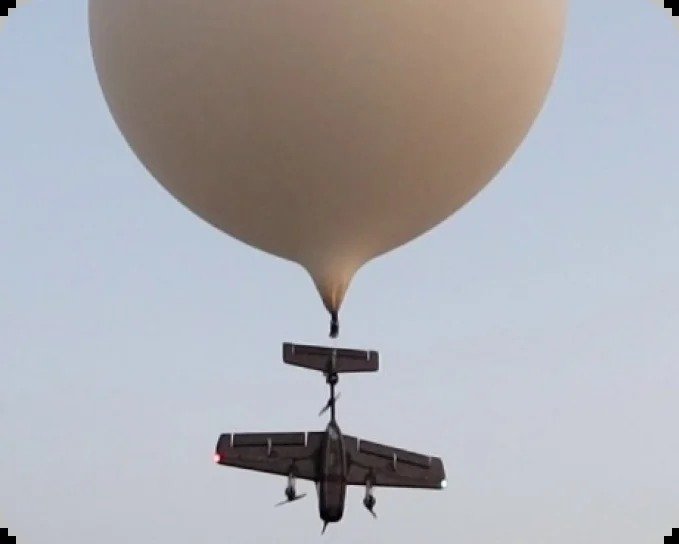
The lab’s first mission came in March 2025 with the India Meteorological Department. The IMD was losing a weather module with every balloon it launched, because a balloon cannot be brought back down. Kalam Labs attached its UAV to the balloon along with the weather module; at 30,000 metres the balloon detached, the module recorded its data on the UAV, and the aircraft glided back to Earth with the payload intact.
A single-use instrument became a reusable one.
More Read

Three months later came the Himalayan flight that made headlines. In the last week of June 2025, the fully autonomous, sub-4 kg aircraft launched from rugged Himalayan terrain, climbed more than 7,000 metres to 9,790 metres above mean sea level, and held its course through minus 60-degree cold, 50 km/h winds and a 73 per cent fall in air pressure. The company says the flight was the highest ever by a UAV with a wingspan under two metres — a claim it says has been recognised by the American Institute of Aeronautics and Astronautics. The aircraft is guided entirely by an onboard AI navigation system, with no human intervention during the mission.
Three machines, one sky
Kalam Labs now fields three ruggedised platforms, all built in-house at its Lucknow manufacturing and testing facility by a 15-member aerospace team, with a leased flight-test airstrip for trials.
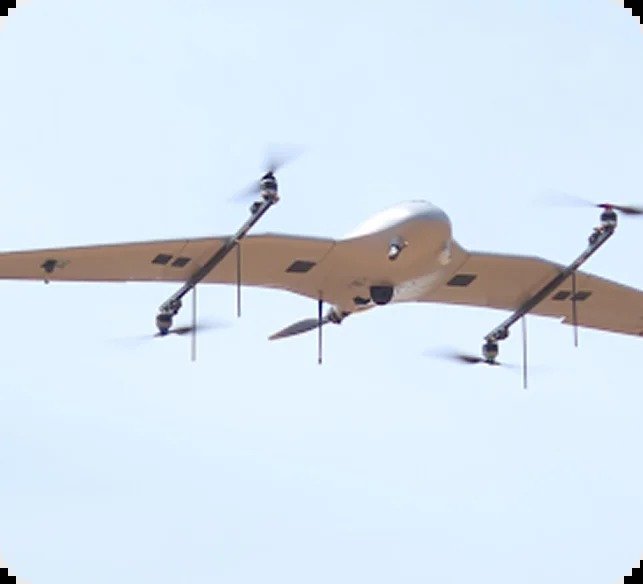
The Stratospheric ISR UAV is a surveillance aircraft with an operating ceiling above 50,000 feet, designed to loiter above commercial air traffic, watch hostile assets with AI-driven electro-optical and infrared target recognition, and recover by vertical take-off and landing in high-wind ridge terrain. The company says it has been field-tested along the Indo-China Line of Control.
The Retrievable Radiosonde is the weather platform proven with the IMD: a fully reusable high-altitude system that replaces the single-use radiosondes launched daily by meteorology and artillery units, at what the company says is a drastic reduction in cost per launch.
The third platform is the one that brought the Army to Kalam Labs’ door. The Stratospheric Kamikaze UAV was showcased to the Indian Army at its artillery headquarters in Devlali, Nashik, after being tested from an altitude of 33,000 feet. The company says the loitering munition flies more than 100 kilometres, carries a 1-kilogram warhead, operates in GPS-denied environments where jammers and spoofing would blind an ordinary drone, and can fly as part of a coordinated swarm. The company says its aircraft are also deployed at Pokhran.
What comes next: Mach 2.5 from the stratosphere
Kalam Labs is already working on its most ambitious machine yet: a supersonic near-space combat vehicle, air-launched from a Kalam Labs stratospheric platform at more than 118,000 feet, that would ignite a ramjet in the thin air and cruise at Mach 2.5 to strike targets 800 kilometres away at terminal speeds above Mach 3. Alongside it, the lab is developing a stratospheric long-endurance airship — a hydrogen fuel-cell and solar-battery hybrid that would loiter above 50,000 feet carrying a 100-kilogram sensor payload and act as a mothership for kamikaze swarms.
It is a striking arc: a team that started by teaching children about the solar system now builds machines that fly above fighter jets, shrug off jamming, and come home on their own. The stratosphere has long been the gap between drones and satellites — too high for one, too low for the other. Kalam Labs is building India’s claim to it, one balloon-launched flight at a time.
Keep reading: Five Seats, No Runway: Inside Nalwa Aero’s Aphulas, India’s First DGCA-Approved 5-Seat eVTOL · The Bengaluru Factory Behind the Rafale’s Controls: Inside Hical Technologies, India’s Quiet Aerospace Powerhouse · More Aerospace & Defense stories
Like stories like this? Add Exceptional Technology as a preferred source on Google to see more of our reporting in your search results and Discover feed.