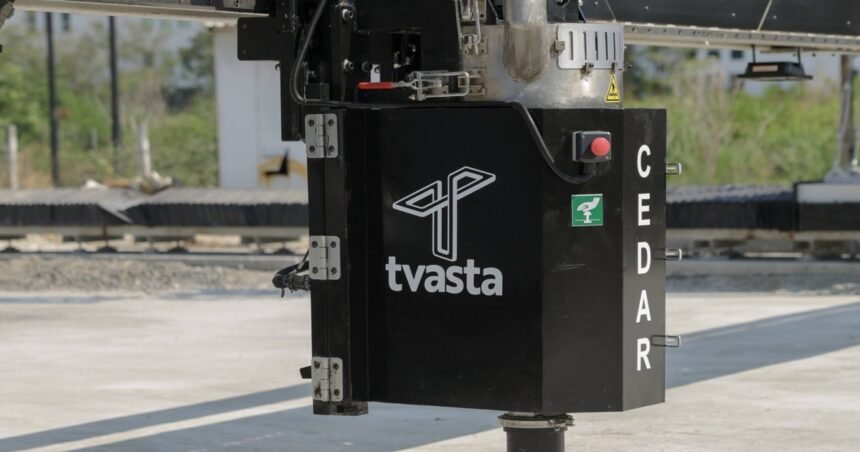
For most of human history, building a house has meant the same slow ritual: bricks, mortar, scaffolding, formwork, and months of manual labour. A Chennai startup called Tvasta Manufacturing Solutions looked at that ritual and asked a wonderfully simple question — what if a house could simply be printed, layer by layer, the way a printer lays down ink?
Tvasta is a deep-tech company founded in 2016 by IIT Madras alumni Adithya V.S., Vidyashankar C. and Parivarthan Reddy. It builds construction 3D printers, printable concrete materials, software and project-execution systems that turn digital designs into real walls and structures — automatically, precisely, and with far less waste than conventional construction.
India’s first 3D-printed house
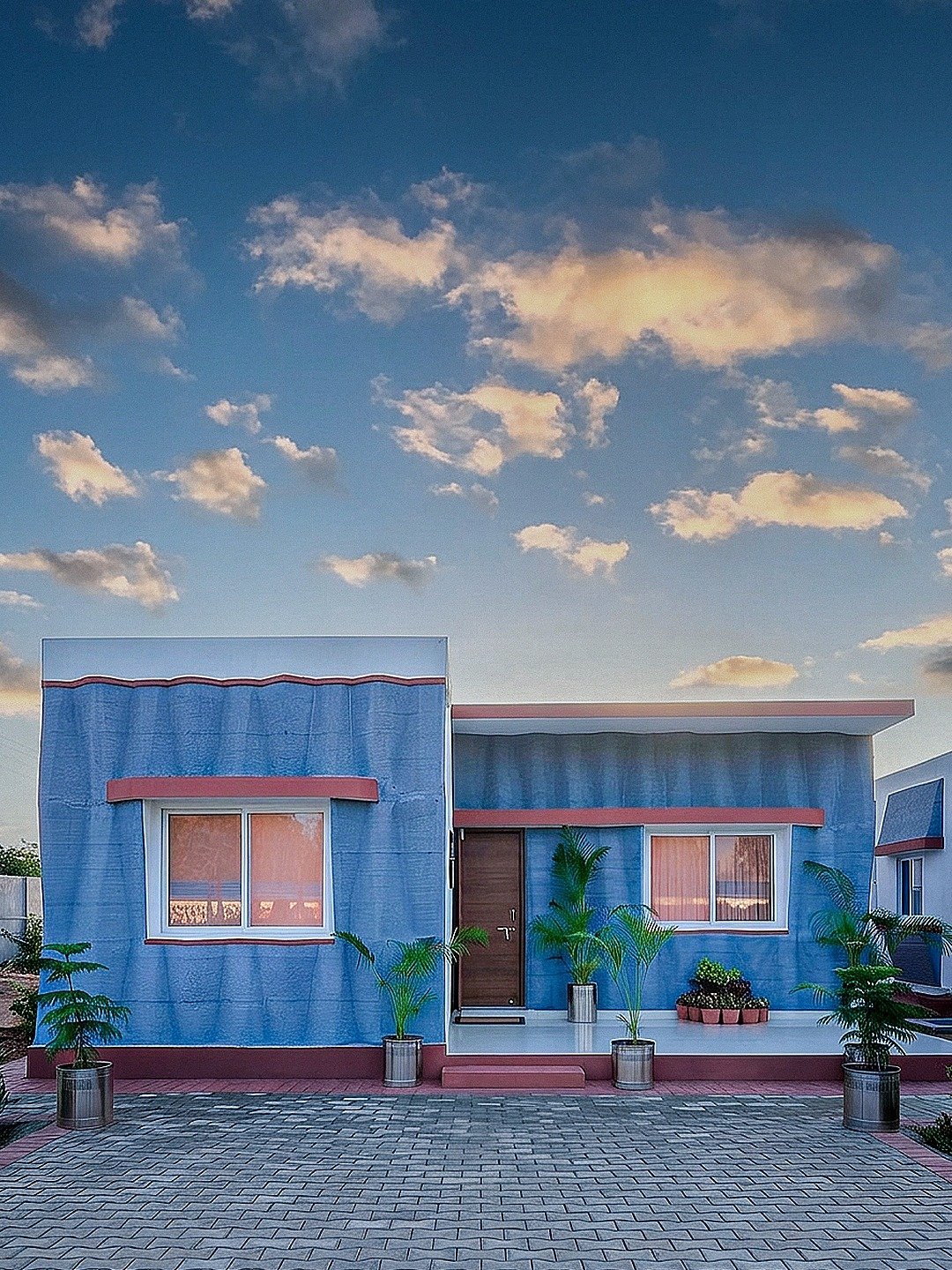
Tvasta made its name in April 2021, when India’s first 3D-printed house was inaugurated on the IIT Madras campus. The 600 sq ft single-storey home — a bedroom, hall and kitchen — was designed, developed and realised entirely with Tvasta’s indigenous concrete 3D printing technology, in collaboration with Habitat for Humanity’s Terwilliger Center for Innovation in Shelter. The company says a house like it can be printed in five days.
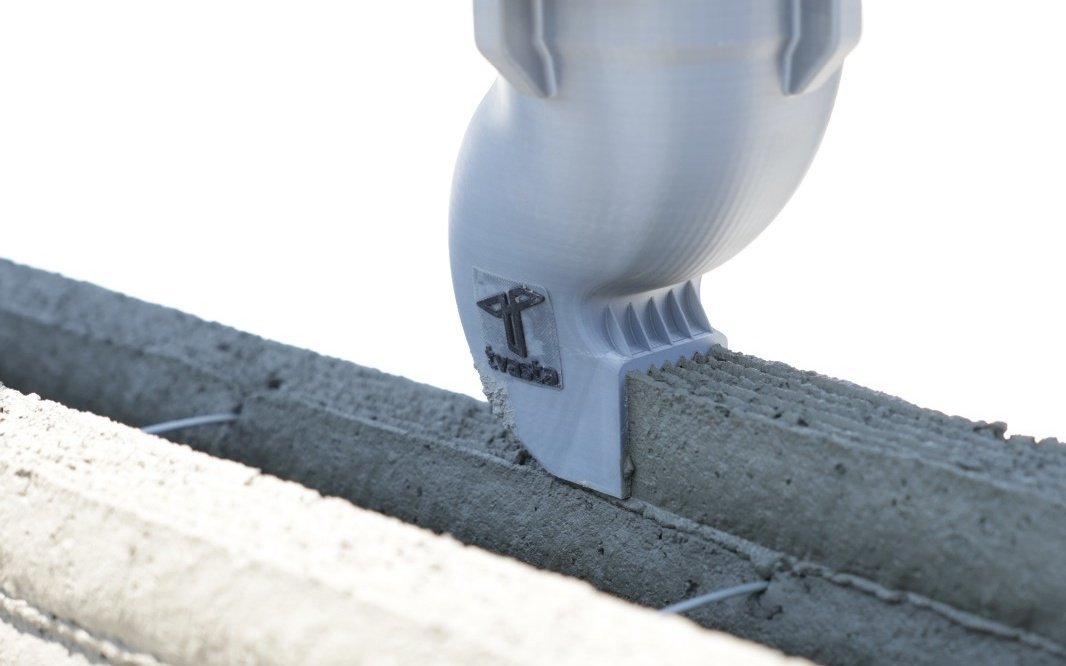
The idea is beautifully straightforward. A Tvasta printer reads a computerised three-dimensional design and extrudes a specially formulated concrete mix, layer upon layer, until the walls stand complete. There is no formwork to build and strip away, no brick-by-brick assembly, and the precision of the machine means complex, curved and organic shapes cost no more effort than a straight wall.
From a campus house to real buildings
What makes Tvasta’s story so exciting is how quickly the demonstration became real construction. For Garden Reach Shipbuilders and Engineers in Kolkata, the company built a 180 sq ft modular site office — designed and executed in just 10 days, with its modules printed in two-and-a-half days at Tvasta’s Chennai factory and then assembled on site for monitoring anti-submarine warfare shallow-water craft.
In Pune, Tvasta went bigger still. With Godrej Properties, it built India’s first 3D-printed villa at Godrej Eden Estate — a 2,200 sq ft ground-plus-one home, printed entirely on site between June and October 2024. The villa showed that the technology had grown up: this was no longer a prototype on a campus, but a full family home with flowing, modern design and the precision only a robot can deliver.
More Read

The portfolio has kept growing — Kerala’s first 3D-printed structure with the Kerala State Nirmithi Kendra, India’s first 3D-printed monument, Ananta Siras, for India Cements, and a 3D-printed security pavilion with Godrej Construction in Mumbai. Each project stretches the same core idea into a new setting: housing, infrastructure, defence and public works.
Cedar: the printer that goes global
In May 2026, Tvasta took its biggest leap yet. Together with 14Trees, a global construction technology company, it launched Cedar — an AI-ready 3D concrete printer designed and manufactured in India for deployment around the world.
Cedar is a portal-frame printer with a build envelope up to 10 metres high and a footprint of up to 240 square metres — large enough for homes, commercial buildings and infrastructure. Its breakthrough is in the material: where many construction printers demand expensive proprietary mortars, Cedar is engineered to work with standard concrete formulations, which the companies say can cut material costs by up to five times. The system also needs roughly half the capital investment of existing large-format printers, the companies say.
The intelligence sits in the 14Trees AI Companion, which optimises the concrete mix using locally available materials — balancing cost, strength and sustainability from thousands of mix combinations. That matters enormously in the real world: a printer that can use the sand, aggregates and cement already available near a site can work in remote locations, disaster zones and fast-growing towns alike, without waiting on special supply chains.
Building greener, by design
The sustainability story is just as compelling. Tvasta’s eco-concrete uses 30% recycled material, including construction debris and industrial by-products, and the company reports 60% less material waste and 30% faster construction than traditional methods. Because the printer deposits only exactly the material the design calls for, there is no pile of offcuts, no over-ordering, and no wasteful formwork heading to landfill.
Against a projected housing shortfall of 29 million homes in India by 2030, that combination — speed, precision, lower waste and designs that can be customised for every family — feels like exactly the kind of engineering India needs. Disaster-resilient housing, bus shelters, sea walls and public infrastructure are all already in Tvasta’s orbit, and its printers have even been bought for low-cost workforce housing in North Carolina in the United States.
Tvasta started with a single printed room on a Chennai campus. A decade later, it is shipping an AI-ready printer to the world and printing the homes, shelters and infrastructure of the future — one precise, beautiful layer at a time.
Keep reading: Sixty Tonnes, Zero Diesel: Inside BEML’s BH60-EV, India’s First Electric Mining Truck · From Marketplace to Factory Floor: Inside Karkhana, the Startup Turning India’s Workshops Into One On-Demand Factory · More Manufacturing & Engineering stories
Like stories like this? Add Exceptional Technology as a preferred source on Google to see more of our reporting in your search results and Discover feed.