In today’s drone warfare, the fiercest fighting often happens invisibly — in the radio spectrum. A drone that loses its link to its operator, or worse, starts obeying a stranger’s signals, is no longer an asset at all. That is the problem an Indore deep-tech company has set out to solve, and on 26 October 2026 it unveiled its answer: the Bharat Drone Operating System, or BDOS, the first indigenous drone operating system of its kind from India, built to keep military drones firmly under Indian command no matter how hostile the electronic battlefield gets.
The company behind it is Pisarv, an Indore-based deep-tech startup founded in 2018 and led by founder Abhishek Mishra. Pisarv builds advanced drones for the Indian Army, and the company says BDOS acts as a protective shield for a drone’s security architecture, guarding it against hostile signals aimed at its navigation or its command-and-control link. In practice, the company says, a BDOS-equipped drone responds exclusively to signals from Indian command centres or base stations, executing tasks exactly as instructed — a drone that cannot be hijacked, even deep inside contested airspace.
BDOS works on several layers at once. The company says the system upgrades a drone’s anti-jamming capability with frequency-hopping technology, making it far harder for an adversary to lock onto and block its link. It also protects against GNSS spoofing, so even deceptive GPS signals encountered near or inside hostile territory leave the drone unaffected, still flying the mission assigned by its base command. And it enables GPS-independent navigation, allowing a drone to find its own path and return to its control command even when satellite navigation or radio links are weak or unavailable. Pisarv’s Durgesh Shukla put the shift plainly: previously, the company’s drones would get jammed as soon as they entered enemy territory and could not function in the electronic warfare environment, and if they did manage to operate, they risked being hacked and falling under enemy control. BDOS, he said, was developed to prevent exactly those scenarios, and there is now growing demand to upgrade existing drones with it.
The system has already been put through its paces with the Army. In joint validations reported by Defence Chronicle, Pisarv’s Nabhrakshak drones faced three progressively tougher electronic warfare trials: first a jammer gun operating in all eight of its modes, then a larger “Big Jammer” across all frequencies, and finally both the Big Jammer and a dedicated drone gun activated simultaneously. The company says the drones remained unjammed and unspoofed throughout, seamlessly transitioning to pre-fed inertial navigation paths supported by autonomous visual guidance. It is the kind of validation that turns a laboratory idea into a frontline capability — and the company says BDOS is now being deployed to upgrade the drone fleets of the Army’s Eastern and Northern Commands, as well as those along the southeastern border.
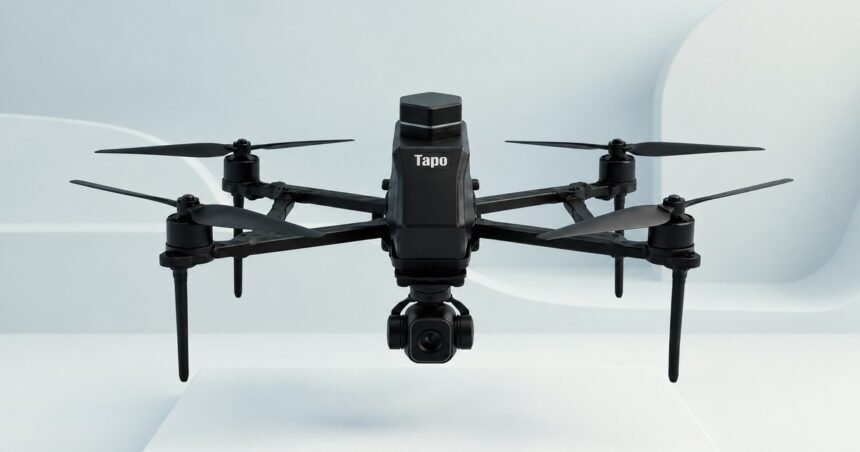
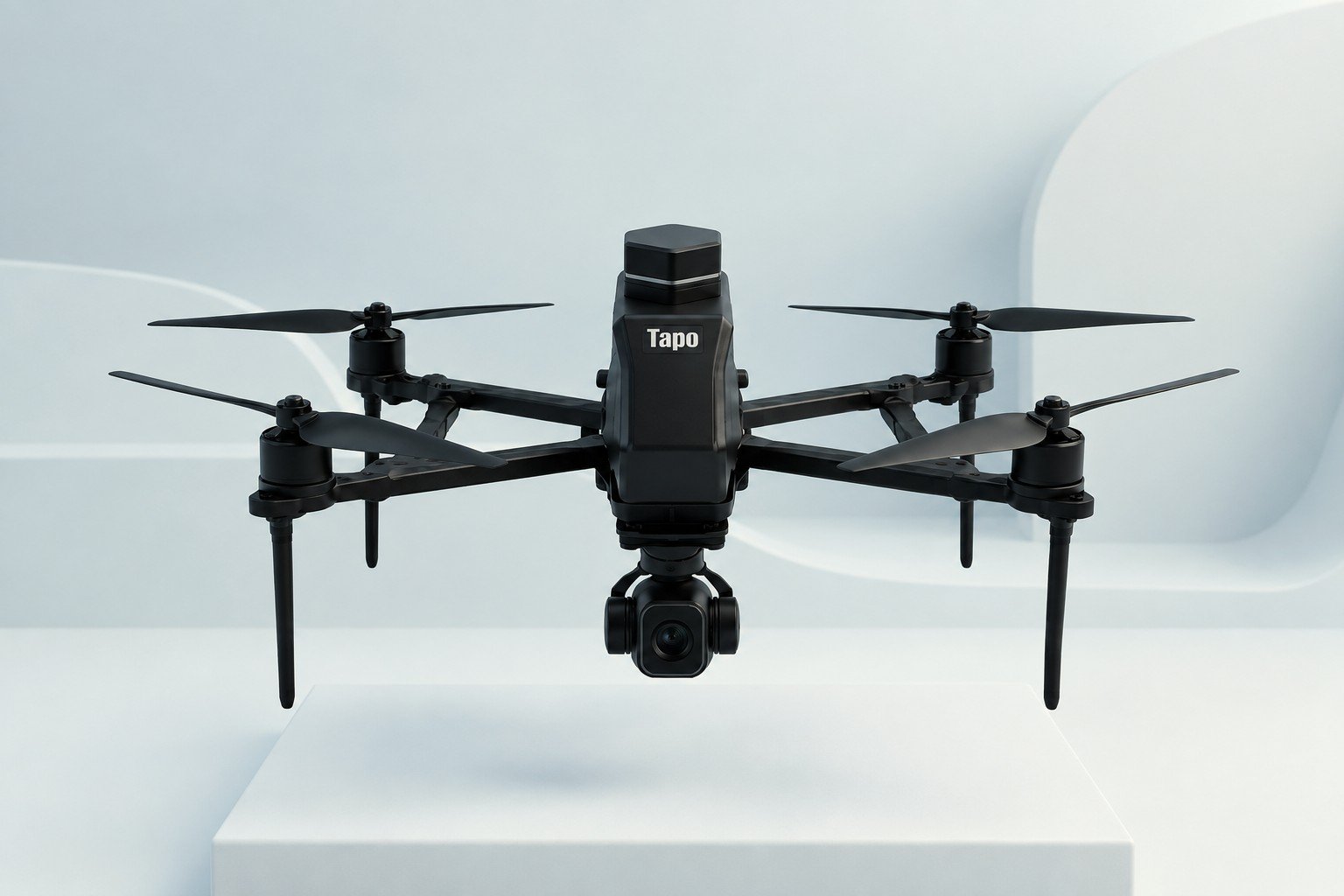
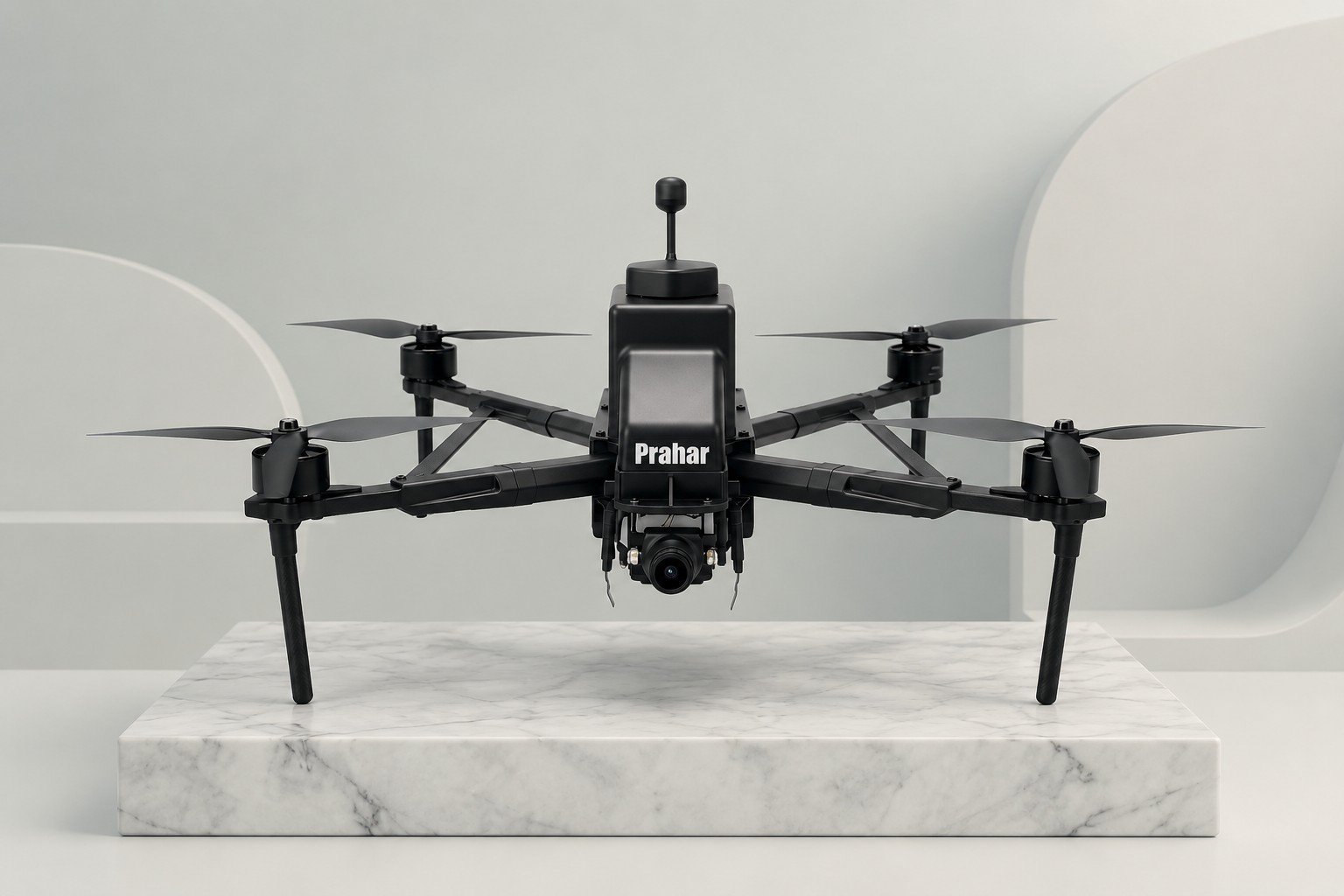
BDOS sits at the heart of a growing Nabhrakshak family, engineered for high-altitude operations and exceptional resilience. The Nabhrakshak Tapo, the company’s mission-critical surveillance platform for GNSS-denied and electronic warfare environments, carries an EO/IR sensor suite for real-time thermal and 2K day-and-night surveillance, with swarm-capable autonomous flight modes. The company says it offers up to 55 minutes of endurance, a top speed of 72 km/h and a 25 km operational range. Alongside it flies the Nabhrakshak Prahar, an indigenous FPV strike and surveillance platform built for precision in modern tactical warfare, with the company citing speeds up to 110 km/h, 20 minutes of endurance at maximum payload, a 5 km range, and low-latency FPV video with night-vision support.
What makes the story larger than a single operating system is what it represents: a fully indigenous flight controller and navigation stack, built in Indore, reducing reliance on foreign technology at precisely the layer where dependence is most dangerous. Pisarv’s partners listed on its website span the Indian Army, Navy and Air Force alongside police and leading institutes, and its drones have been calibrated and fielded across multiple defence variants, including platforms capable of precision strikes from altitude. By prioritising indigenous components and AI-driven autonomy, the company is turning Atmanirbhar Bharat from a slogan into a shield over the battlefield.
More Read

As drone swarms and counter-drone systems spread across the world’s battlefields, the side whose drones keep flying — and keep listening only to their own commanders — holds the advantage. With BDOS, an Indore startup is giving India’s armed forces exactly that: drones that stay locked on target, stay under Indian command, and stay in the fight, no matter how loud the electronic noise gets.
Keep reading: Above the Fighters, Below the Satellites: Inside Kalam Labs, the Lucknow Lab Flying Drones at the Edge of Space · Five Seats, No Runway: Inside Nalwa Aero’s Aphulas, India’s First DGCA-Approved 5-Seat eVTOL · More Aerospace & Defense stories
Like stories like this? Add Exceptional Technology as a preferred source on Google to see more of our reporting in your search results and Discover feed.