Bone loss is silent. It steals strength year after year without a single symptom, and for millions of Indians the first sign is a fracture that should never have happened. The gold-standard test for it, a DEXA scan, lives mostly in big-city hospitals — far from the villages and small towns where early screening matters most. A Bhubaneswar startup is closing that gap with something that fits in a pocket: a paper strip that reads bone health from a few drops of blood serum.
The company is Inflanova Medtech Pvt. Ltd., and the strip is the subject of a tripartite technology licensing agreement it has signed with the National Research Development Corporation (NRDC) and CSIR-Central Scientific Instruments Organisation (CSIR-CSIO), at CSIR-CSIO in Chandigarh. The agreement, reported on 28 October 2026, transfers an indigenously developed, low-cost, point-of-care paper-strip biosensor for the qualitative screening of osteoporosis biomarkers from blood serum — Indian lab science, licensed to an Indian company, for Indian patients.
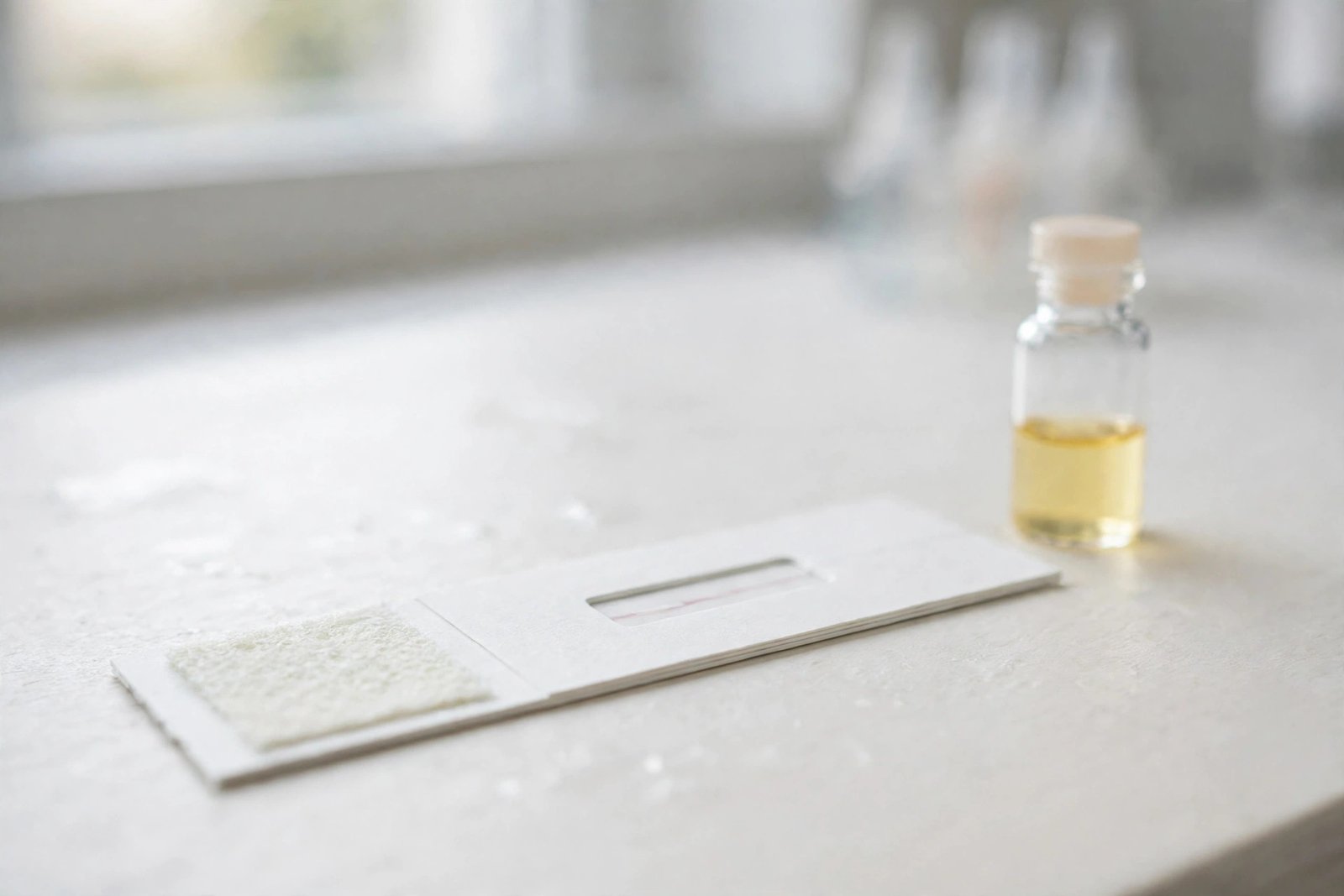
A paper-strip biosensor of the kind Inflanova has licensed for osteoporosis screening. (Illustrative image)
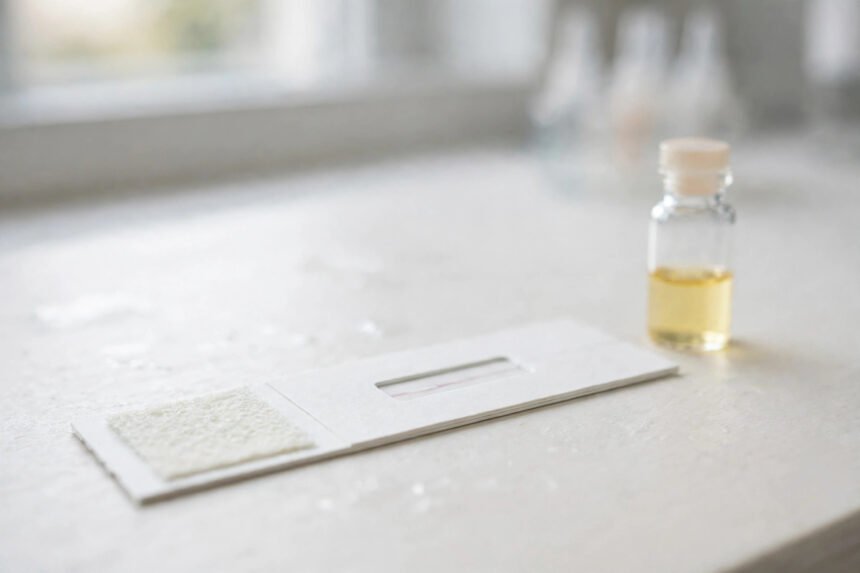
The elegance of the strip is in its simplicity. A few drops of serum — around 10 microlitres — go onto a nanoparticle-labelled immunocomplex test strip, and the result appears as a visual colour change within minutes. There are no specialised instruments to buy, no laboratory infrastructure to build, and no advanced technical expertise needed to read it. A health worker can carry the test to the patient, rather than the patient travelling to the test.
That portability is the whole point. The strip is designed as a simple, cost-effective screening tool for health camps and large-scale community screening programmes, helping identify people at risk of osteoporosis early and serving as a complement to conventional DEXA and bone-mineral-density assessment, particularly in resource-limited settings. The need is enormous: osteoporosis affects an estimated 18% to 23% of adults in India, while osteopenia, or low bone mass, affects about 44% to 50% of the population. The condition is more prevalent among women, especially postmenopausal women, and Indians are known to experience lower bone mineral density and osteoporotic fractures at an earlier age than many Western populations.
More Read
Inflanova, founded by Shailesh Kumar Samal and Alisha Dash and based at KIIT-TBI in Bhubaneswar, works on vaccines and advanced diagnostics for cardiovascular diseases, chronic inflammation and preventive healthcare, for human and veterinary applications alike. Its focus is affordable, accessible healthcare built through indigenous innovation and strategic collaboration — and the osteoporosis strip is that philosophy in its purest form: a sophisticated piece of Indian biosensor science, reduced to a strip of paper and a colour change.
From a Chandigarh laboratory bench to a health camp in a small town, the journey of this strip is a small parable of what Indian deep tech does best — taking world-class science and engineering it down to the price, size and simplicity that lets it reach everyone. A few drops of serum, a few minutes, and an early warning that could save a hip, a spine, and years of independence.
Keep reading: Killing Germs Mid-Air: Inside Biomoneta, the Bengaluru Startup Turning Hospital Air Into a Germ Trap · One Cell in a Billion: Inside Actorius, the Pune Company Catching Cancer’s Return from a Simple Blood Test · More Chemicals, Materials & Life Sciences stories
Like stories like this? Add Exceptional Technology as a preferred source on Google to see more of our reporting in your search results and Discover feed.