On a bad winter day in Delhi, the air outside can cross 900 micrograms of PM2.5 per cubic metre — sixty times the World Health Organization’s daily guideline. The usual response is to seal the house, switch on a purifier, and wait. But a sealed room brings its own problem: the same air gets recirculated again and again, and the carbon dioxide breathed out by the people inside keeps climbing. The air ends up clean, but no longer fresh. In Gurugram, a startup called YOGa Clean Air decided to attack the problem from the other side entirely: instead of chasing pollution around a room, keep it from getting in at all.
The idea began at home. Founder Sachin Panwar started experimenting with indoor air quality in 2010, after finding that imported purifiers, designed for far cleaner cities, could not cope with Indian pollution levels. Testing units in his own house, he noticed something curious: when outdoor particulate readings hovered above 200, the reading inside was nearly zero — and it stayed low even after the purifier was switched off, once the clogged filters had been replaced. The insight that followed became the company: the real job is not sterilising the air in a room, but stopping dirty air from leaking into it in the first place. Panwar incorporated YOGAN Solutions in 2019 with co-founders Deepak Raina and Gaurav Nagar, and the company took its name from its mission — Your Own Green Area.
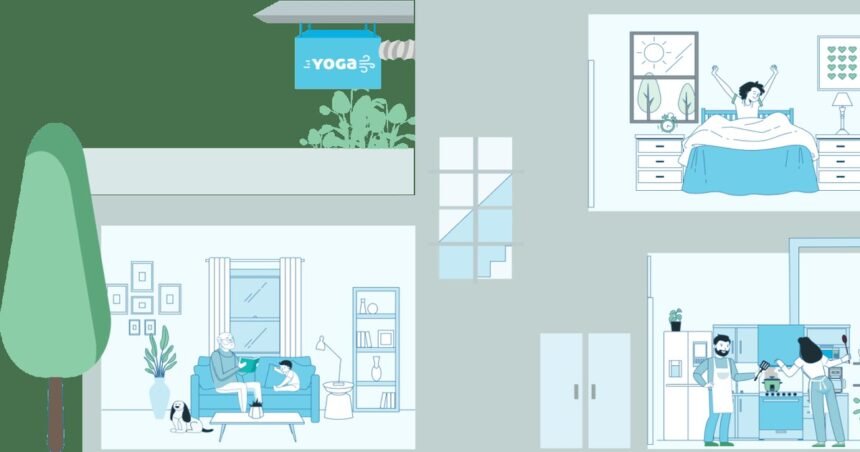
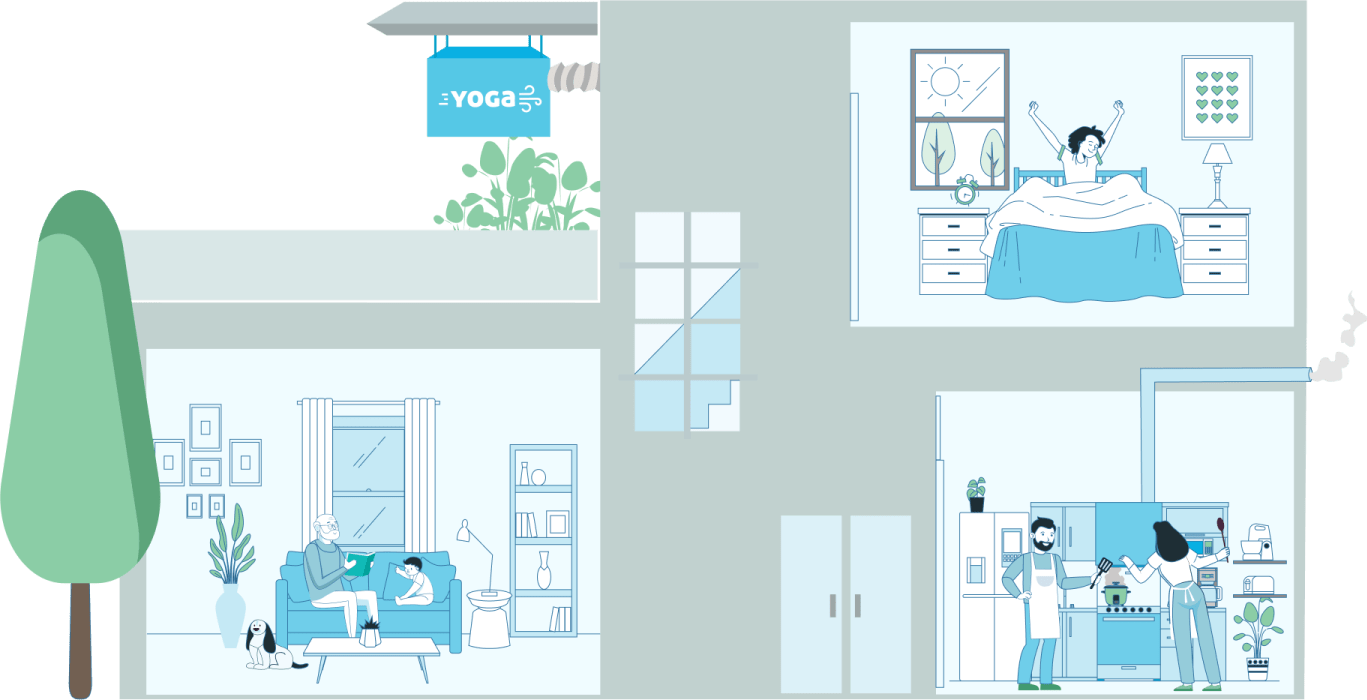
The product is the Clean Air Bubble. A compact unit sits outside the home and draws outdoor air through thick, highly efficient filters, then pushes the filtered air indoors through a small, custom-fitted opening in a wall or glass pane. Because filtered air is constantly flowing in, the room sits at slightly higher pressure than the outside — a bubble that physically prevents polluted air from seeping back through gaps around doors and windows. At the same time, the steady flow of fresh air dilutes the carbon dioxide that builds up from breathing, which the company says it holds below 1,000 parts per million. The company says a single unit can bring a home to equivalent air quality in roughly 55 minutes while drawing about 70 watts of continuous power, and that indoor PM2.5 falls to single digits even when the air outside exceeds 900 micrograms per cubic metre. The system is protected by two patents.
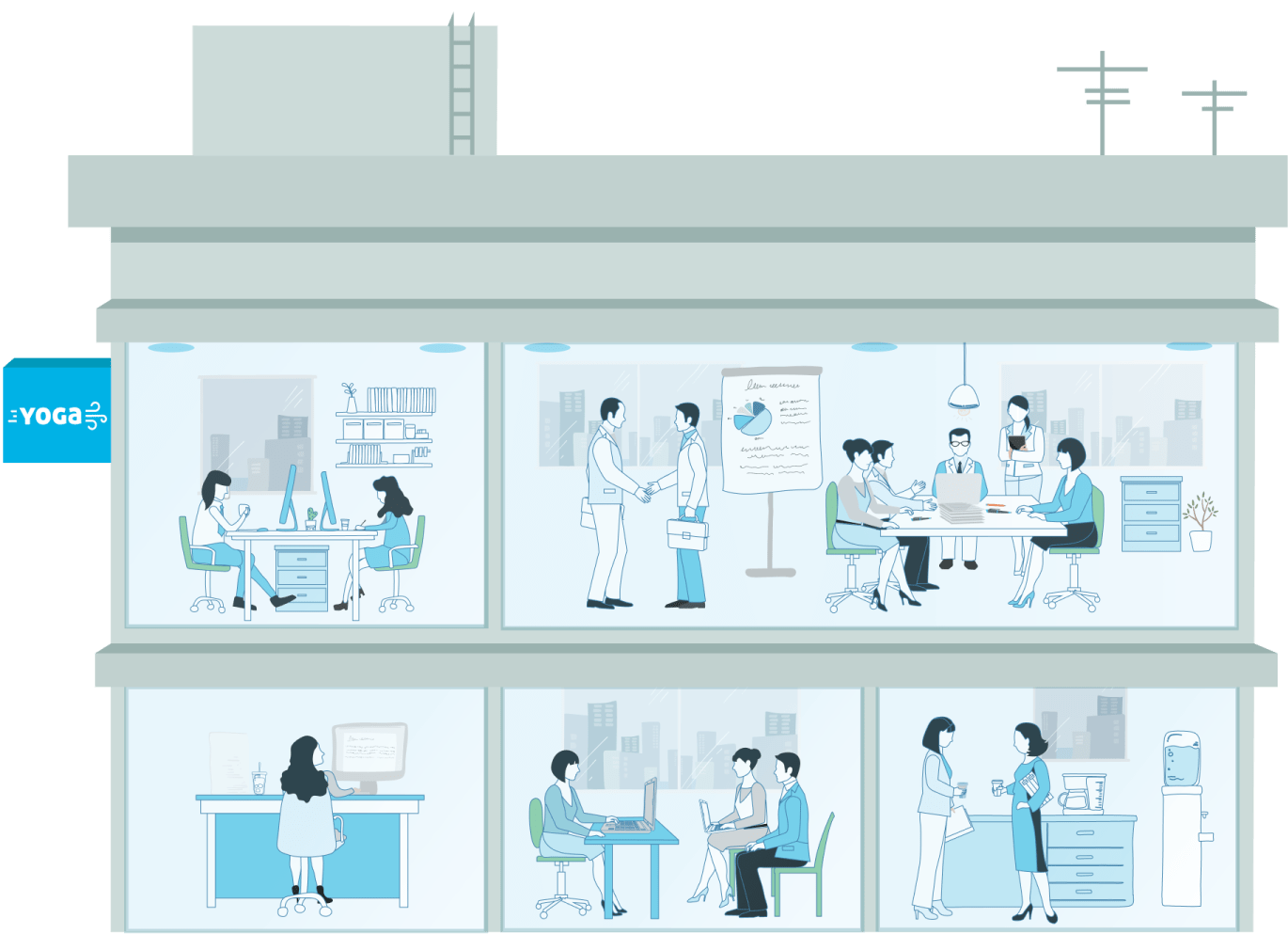
The same principle scales from a bedroom to a building. In offices, the company says low carbon dioxide keeps people productive through the workday. In classrooms, where the company notes carbon dioxide can spike to 5,000 parts per million and leave children drowsy, the Bubble holds it below 1,000. In gyms it brings carbon dioxide down within minutes of a workout, and in hospitals the system is designed to cut airborne infection risk across whole facilities. The company backs its systems with a 365-day clean-air guarantee, 99.99% bubble uptime, and a 24-hour emergency service response, with its own technicians handling filter replacement and maintenance.
The Bubble is already at work far beyond individual homes. The company says its systems serve more than 5,000 families and several hundred institutions — schools, hospitals, offices and gyms — across 11 Indian cities, including Delhi-NCR, Mumbai, Kolkata, Bengaluru and Hyderabad. Its enterprise clients include Zomato, Tata 1mg, Varun Beverages and Cult Fit locations, and its installations include institutional sites such as the Central Pollution Control Board’s facility at the Delhi High Court, the Prime Minister’s Office, Parliament House and industry body FICCI.
Manufacturing is in-house and Indian. YOGa builds its systems at a facility in Greater Noida with capacity of 1,500 to 2,000 units a month, sourcing only a small number of components from outside India, and it is building a new facility targeting annual capacity of around 100,000 devices. The company is also bringing production of HEPA-14 nanofibre — the core filtration material — in-house, giving it end-to-end control over the heart of its system.
More Read

The business has grown on that engineering. In the year to March 2025 the company reported revenue of ₹12.6 crore and a net profit of ₹64.8 lakh, its first profitable year. In August 2026 it raised ₹20 crore in a Series A round led by Info Edge Ventures, with participation from Deepinder Goyal, founder of Zomato’s parent Eternal, and Three Words Capital — its first institutional funding. The company says it will use the capital to deepen its presence in the cities it already serves, expand into more Tier-1 and Tier-2 markets, and take its clean-air systems into new settings including public transport.
YOGa’s bet is a simple one: the cleanest room is not the one with the most purifiers in it, but the one pollution never enters. From a home experiment in Delhi’s smog to thousands of bubbles across eleven cities, the Gurugram startup is turning that idea into the air people actually breathe — one pressurised room at a time.
Keep reading: Before Symptoms Speak: Inside Cent, the Bengaluru Startup Scanning the Whole Body for Disease Early · A Few Drops of Serum, an Answer in Minutes: Inside Inflanova’s Paper-Strip Test for Osteoporosis Risk · More Chemicals, Materials & Life Sciences stories
Like stories like this? Add Exceptional Technology as a preferred source on Google to see more of our reporting in your search results and Discover feed.