After a stroke, getting a hand working again is a test of patience as much as strength. Recovery can take hundreds of repetitions of the same movement, day after day, with a therapist guiding the wrist and fingers through every one. For many patients, the hardest part is not the first session — it is still showing up for the hundredth. PLUTO-H, a hand rehabilitation robot developed by IIT Madras and Christian Medical College (CMC) Vellore, is built to change that equation, by turning those repetitions into games a patient actually wants to keep playing.
The device is commercialised by Thryv Rehab Solutions, which licensed the technology through IIT Madras, and it was showcased this week at the Electronics Corporation of Tamil Nadu (ELCOT) stall at the India Game Developer Conference 2026 at the Chennai Trade Centre — a fitting stage for a medical device that treats play as therapy.
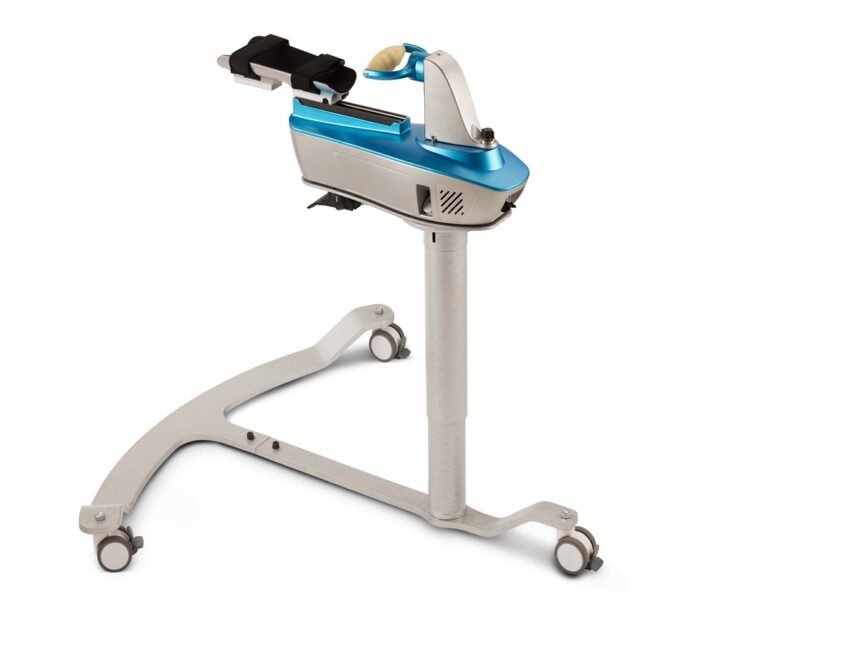
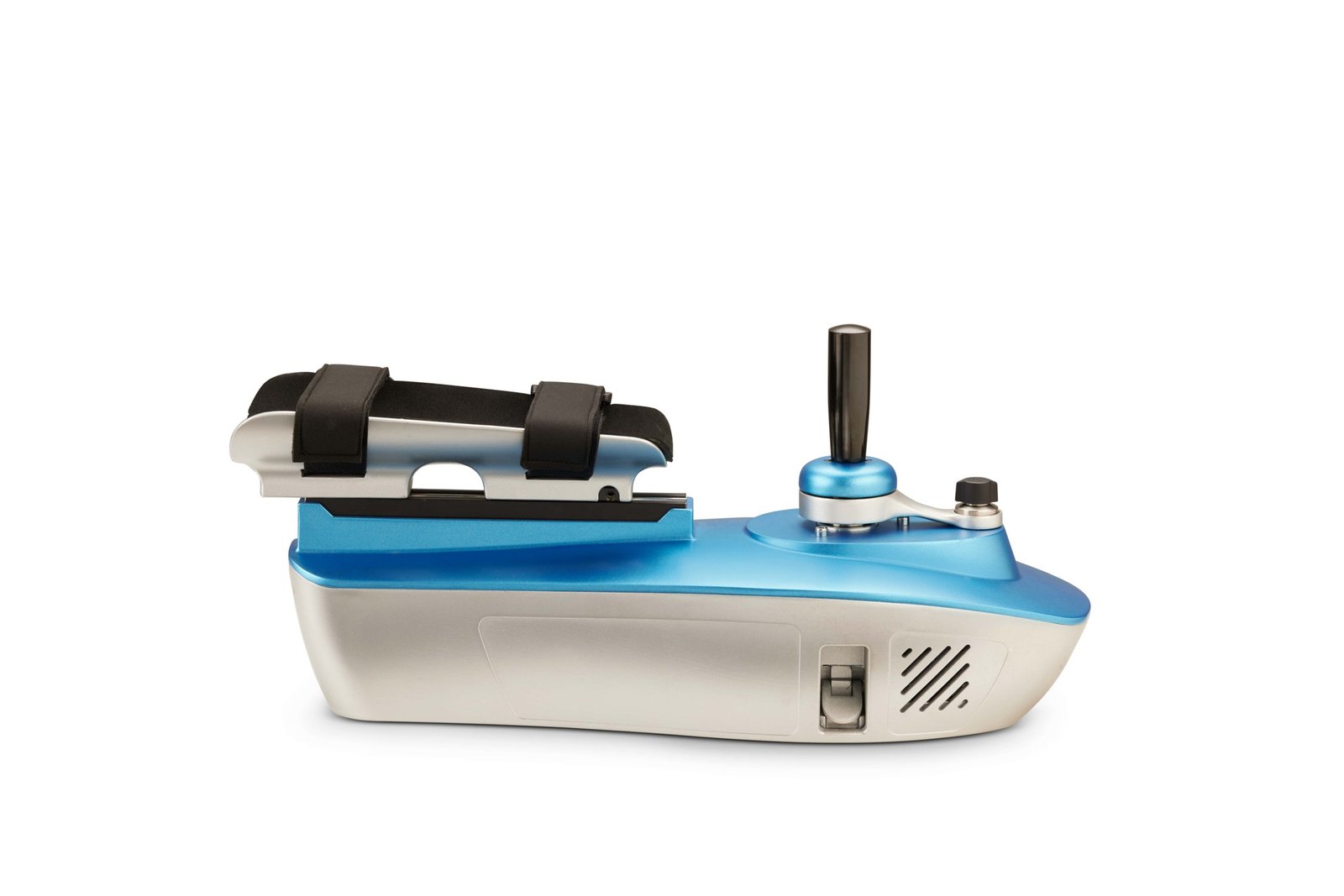 The tabletop PLUTO-H unit with its forearm support and grip handle. (Image: IIT Madras / CMC Vellore)
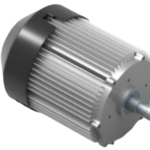
PLUTO-H takes its design idea from something familiar in an Indian kitchen: the mixer grinder, where one motor drives many attachments. The robot uses a single gearless DC motor with a plug-in mechanism, and a set of interchangeable handles trains different hand functions — wrist flexion and extension, forearm pronation and supination, hand opening and closing, and functional gripping. One compact device, the team says, does the work that would otherwise need several single-function machines.
The therapy itself is adaptive. PLUTO-H helps only as much as the hand needs, stepping in when the patient tires and stepping back as strength returns, while its interactive software gives visual feedback and lets exercises be adjusted to each patient’s ability. Hand movements control on-screen games that grow harder as the patient improves, so the session feels like play while the therapist monitors performance and tailors the programme. The therapist assesses the patient, sets up the robot and customises the session — and the device then carries the repetitions.
Portability is the other half of the idea. PLUTO-H is a compact, portable tabletop device that fits into a small suitcase, and it can be used at a hospital bedside, from a wheelchair, in a clinic, or at home. That matters, the developers say, because frequent hospital visits, travel and the sheer time therapy demands are among the biggest reasons rehabilitation stalls. Bringing intense therapy to the patient, rather than asking the patient to keep coming to the therapy, is the point.
More Read
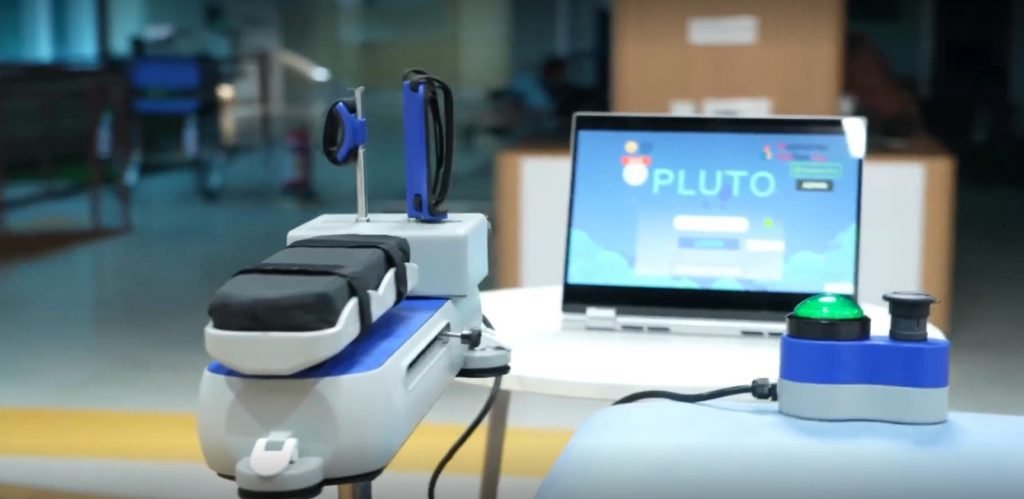 PLUTO-H beside the game screen that turns hand exercises into play. (Image: CMC Vellore)
The device already has a track record in Indian clinics. IIT Madras reported in January 2025 that PLUTO had benefited more than 1,000 patients over four years, that it was in routine clinical use across 11 clinics in India, and that at least 15 patients a week were using it for routine hand therapy at CMC Vellore alone. The team says it was the first indigenous robot of its kind to be tested in Indian homes, including a preliminary four-week study with stroke survivors.
Behind the device are Prof. Sujatha Srinivasan, head of IIT Madras’s TTK Centre for Rehabilitation Research and Device Development, Dr. Aravind Nehrujee, who developed it during his joint PhD with IIT Madras and CMC Vellore, and Prof. Sivakumar Balasubramanian of CMC Vellore’s Department of Bioengineering, working with CMC’s physical medicine and rehabilitation and neurological sciences departments. Initial funding came from the Department of Biotechnology, Government of India, with further support from Tata Elxsi and Tata Boeing Aerospace through their CSR programmes. The innovation holds an Indian patent, with patents pending in the United States and Canada.
Beyond stroke, the team says PLUTO-H is designed for people with hand impairments from spinal cord injury, multiple sclerosis, Parkinson’s disease, arthritis, cerebral palsy and post hand-surgery recovery — anyone for whom regaining a grip, a twist of the wrist or the opening of a hand means regaining a piece of independence.
For India’s rehabilitation wards, where therapists are stretched thin and patients are many, a portable robot that multiplies a therapist’s reach — one setup, hundreds of guided repetitions, at the bedside or at home — is a quietly profound shift. PLUTO-H does not replace the therapist. It gives the therapist’s hands a tireless partner, and the patient’s recovery a reason to keep going.
Keep reading: A Bubble of Clean Air: Inside YOGa, the Gurugram Startup Pressurising Homes Against Pollution · Before Symptoms Speak: Inside Cent, the Bengaluru Startup Scanning the Whole Body for Disease Early · More Chemicals, Materials & Life Sciences stories
Like stories like this? Add Exceptional Technology as a preferred source on Google to see more of our reporting in your search results and Discover feed.