Almost every electric vehicle on Indian roads runs on a motor whose most precious ingredient comes from somewhere else. The magnets inside most EV motors rely on rare earth materials, and the company says that supply chain runs overwhelmingly through China. Viridian Ingni Propulsion, a Chennai startup incubated at IIT Madras Research Park, is building a way out of that dependence — by designing the motor, the controller and the firmware together, in India, as one complete propulsion system.
The idea behind the company is disarmingly simple. India designs very few of its own propulsion systems, the company says, and almost none end to end. Most suppliers build one part of the stack and leave vehicle makers to stitch the rest together. Viridian Ingni builds all three parts as a single validated unit, so an OEM gets a propulsion system that has already been tested as a whole rather than a collection of components that merely hope to work together.
At the heart of the technology is a choice the company makes application by application, rather than forcing one motor design everywhere. For e-rickshaws, two-wheelers, HVAC systems, compressors and solar pumps, Viridian Ingni uses rare-earth-free ferrite permanent-magnet-assisted synchronous reluctance motors — PMa-SynRM motors — built around India-made ferrite magnets. For drones, collaborative robots, automated guided vehicles and marine applications, where power density matters most, it uses permanent magnet synchronous motors. One shared design platform sits underneath both families, which the company says lowers the cost and time needed to adapt the technology to each new application.
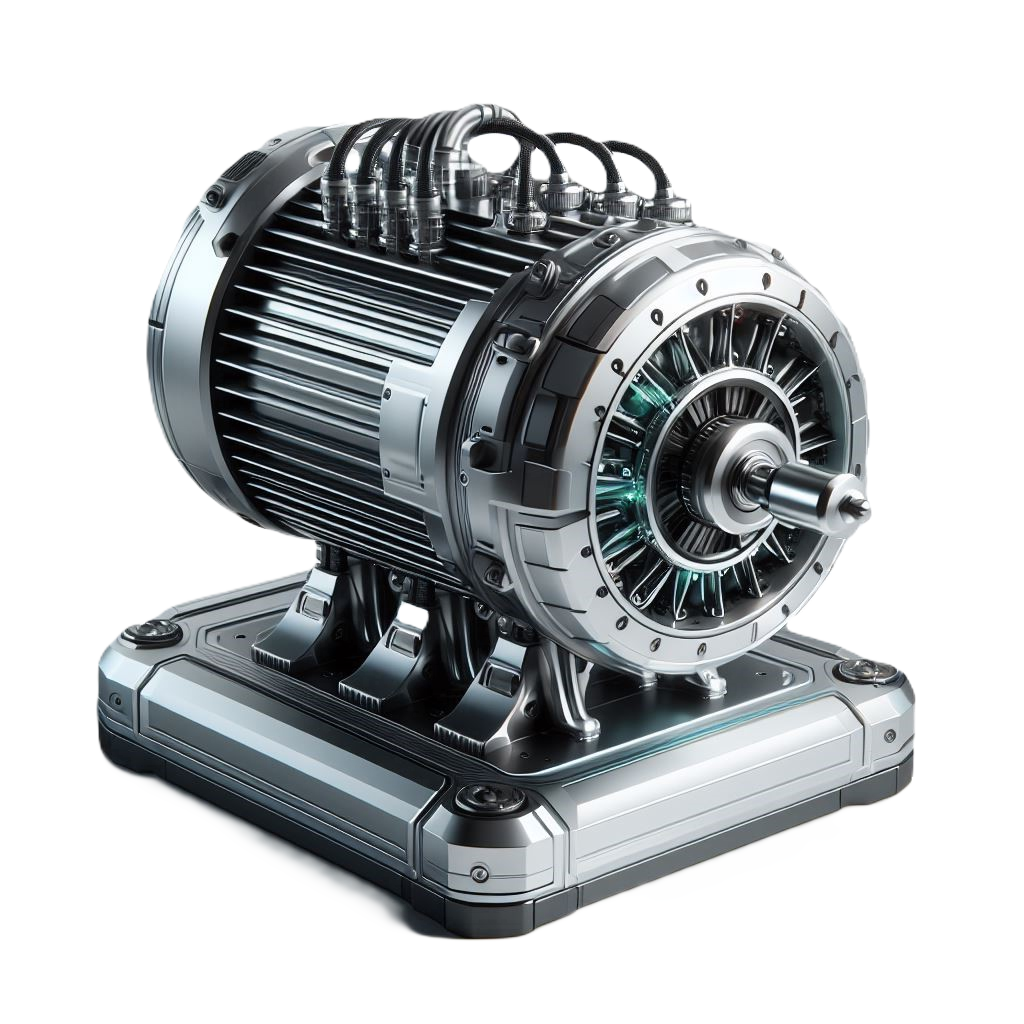 A Viridian Ingni Propulsion motor visual. (Image: Viridian Ingni Propulsion)
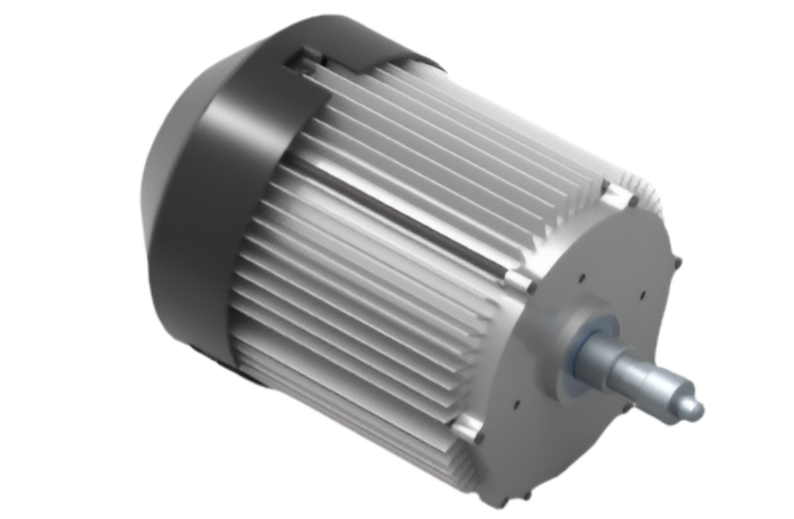
The flagship product tells the story in numbers. The company’s L3 e-rickshaw motor runs at 48 volts, with 1.2 kW of rated power and 2 kW at peak, 4.5 Nm of rated torque rising to 28 Nm at peak, and a peak efficiency of 94%. It weighs just 8 kg, spins up to 6,000 rpm, and supports gear ratios of 10:1, 12:1 and 16:1, so the same motor can be tuned to very different vehicles. An earlier two-wheeler motor from the company, built with ferrite magnets supplied by the Mahindra group’s CIE Automotive, delivered 92% efficiency — and the company says ferrite magnets cost a fraction of rare earth materials, which makes the whole motor dramatically cheaper to build.
The engineering behind it comes from deep inside India’s EV research world. Founder and CEO Sriram G brings close to 14 years of experience in electric vehicle and propulsion systems engineering, including seven years at IIT Madras’s EV research centres, before founding the company in February 2024. The five-member, engineering-led team works out of IIT Madras Research Park, and the company has already drawn support from SIPCOT, the MeitY Startup Hub, NIDHI PRAYAS, the IIT Madras Research Park’s RTBI programme and Cummins CSR.
More Read

That work is now crossing from prototype to production. On 29 October 2026, Viridian Ingni raised Rs 1.47 crore in a pre-seed round led by Inflection Point Ventures, alongside Rs 53.75 lakh in grants, to move from validated prototypes into pilot production. The money will go into motor stamping tooling and dies, a pilot production line and small manufacturing facility, ARAI and ICAT certification and homologation, motor controller firmware validation, and working capital for first customer deliveries. The company already holds letters of intent for 350 motors from two customers, Crop Xplore and Yali Mobility, and is targeting automotive EV, drone, robotics and industrial machinery markets as it scales.
For India’s EV makers, the prize is bigger than one motor. A propulsion system designed, validated and built at home cuts dependence on imported magnets, keeps more of the value chain in India, and gives OEMs a supplier that can adapt the same platform from an e-rickshaw to a drone. Viridian Ingni’s goal, in the founder’s words, is to make Indian-designed propulsion the default choice for EV, drone and industrial OEMs — not the fallback.
Keep reading: The 90-Tonne Giant That Runs on Batteries: Inside Propel Industries, the Coimbatore Company Electrifying India’s Mines · The Guardian in the Windscreen: Inside Cautio, the Bengaluru Startup Putting an AI Watcher in Every Fleet Vehicle · More Automotive & Mobility stories
Like stories like this? Add Exceptional Technology as a preferred source on Google to see more of our reporting in your search results and Discover feed.