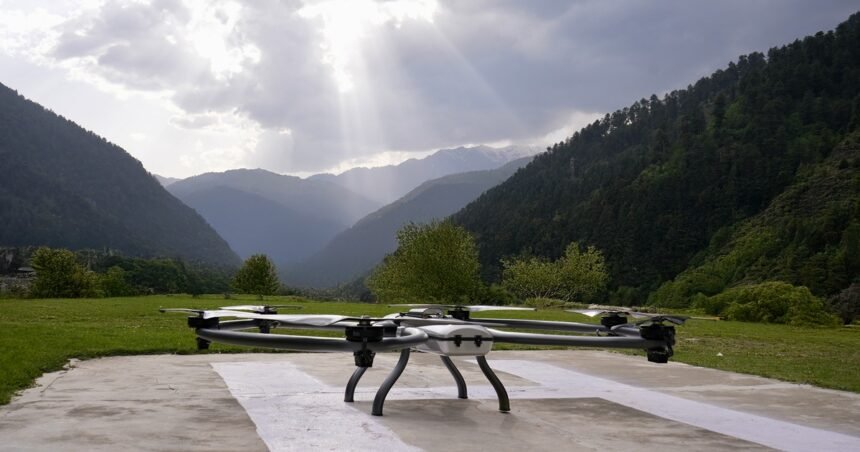
Picture a drone lifting a heavy load off a Himalayan helipad, climbing into thin mountain air where helicopters struggle, and flying on to troops who cannot be reached by road. Now picture the engine, the autopilot, the carbon-fibre airframe and the flight software behind that flight — all designed and built by one company, in Noida, from scratch. That is the story of Raphe mPhibr, and it is one of the most quietly remarkable engineering journeys in Indian aerospace.
Raphe mPhibr was founded in 2017 by brothers Vikash and Vivek Mishra, together with Nitin Katiyar. The brothers were pursuing doctoral research in the United States — Vikash in aerospace engineering and materials, Vivek in robotics and control systems — when a winter-break experiment changed everything. They built an octocopter in a university lab, shared the journey online, and found Indian government agencies reaching out, looking for exactly the kind of indigenous drone technology the brothers were teaching themselves to build. They came home, incorporated the company, and spent the next few years doing something unusual in startup culture: they built technology before they built a business.
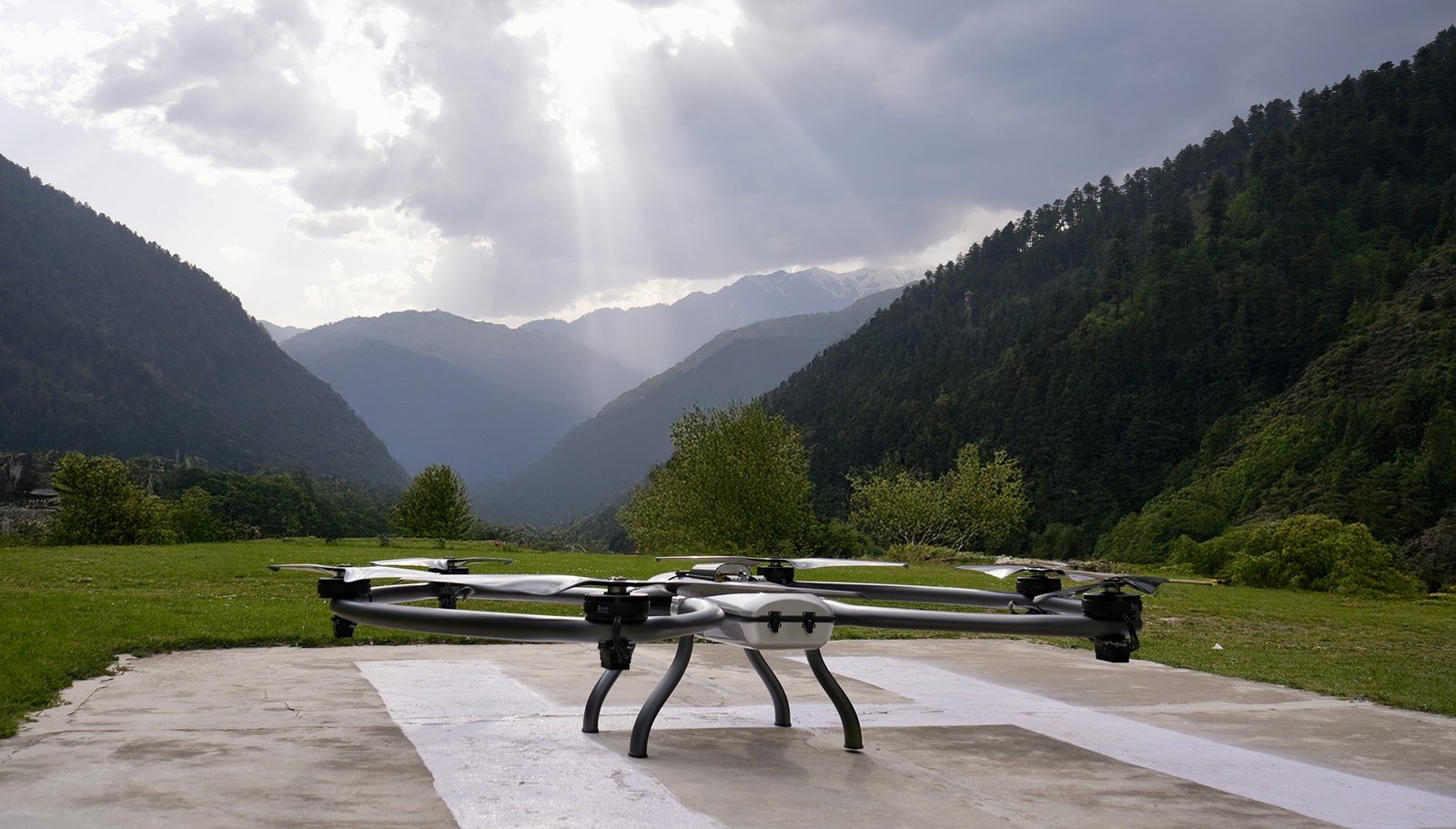
Raphe’s heavy-lift logistics UAV, built for high-altitude resupply. (Image: Raphe mPhibr)
The engine that changed everything
For decades, India’s drone programmes depended on imported engines — most famously the Rotax family — because building a light, powerful, reliable powerplant for unmanned aircraft is genuinely hard. Raphe decided to solve that problem first, and the result is the centrepiece of its engineering story. The company says its indigenous two-stroke internal combustion engines deliver far more power per kilogram than the off-the-shelf units they replace. Dassault Systèmes, whose 3DEXPERIENCE platform Raphe uses for design and simulation, reports that Raphe cut the weight of a 4 kW two-stroke engine to just 600 grams, against a typical 4 to 5 kilograms, and compressed a development cycle that would normally take years into three months of virtual iteration before a single physical prototype.
That engine programme is now scaling up dramatically. Raphe has developed a 250 kW — roughly 335 horsepower — indigenous powerplant for a 1.5-tonne-class medium-altitude long-endurance (MALE) unmanned aircraft, with a wingspan of around 15 metres and a projected endurance beyond 30 hours. The company has put the aircraft forward as a contender for the Indian armed forces’ planned 87-aircraft MALE procurement, where its high indigenous content and home-grown propulsion are exactly the point: an aircraft whose heart does not depend on any foreign supplier. In September 2026 the company also revealed plans for an autonomous unmanned helicopter, the next step in the same propulsion-led roadmap.
More Read
A fleet built from soldiers’ problems
Raphe’s product development starts in the field, not the boardroom. Its teams have travelled to border regions, watched how soldiers actually work, and turned what they saw into engineering requirements. The portfolio that grew out of those trips now covers nine platforms. Bharat, launched in 2017, is a lightweight, man-portable surveillance drone for difficult terrain. The mR10, which arrived in 2020, is described by the company as the world’s first operational drone swarm, coordinating multiple aircraft on a single mission. The mR20, from 2021, is a high-altitude logistics platform that carries supplies to troops in remote forward areas, and the mR10-IC pairs the swarm concept with Raphe’s indigenous internal combustion engine for extended range. The X8 covers maritime patrol and situational awareness at sea.
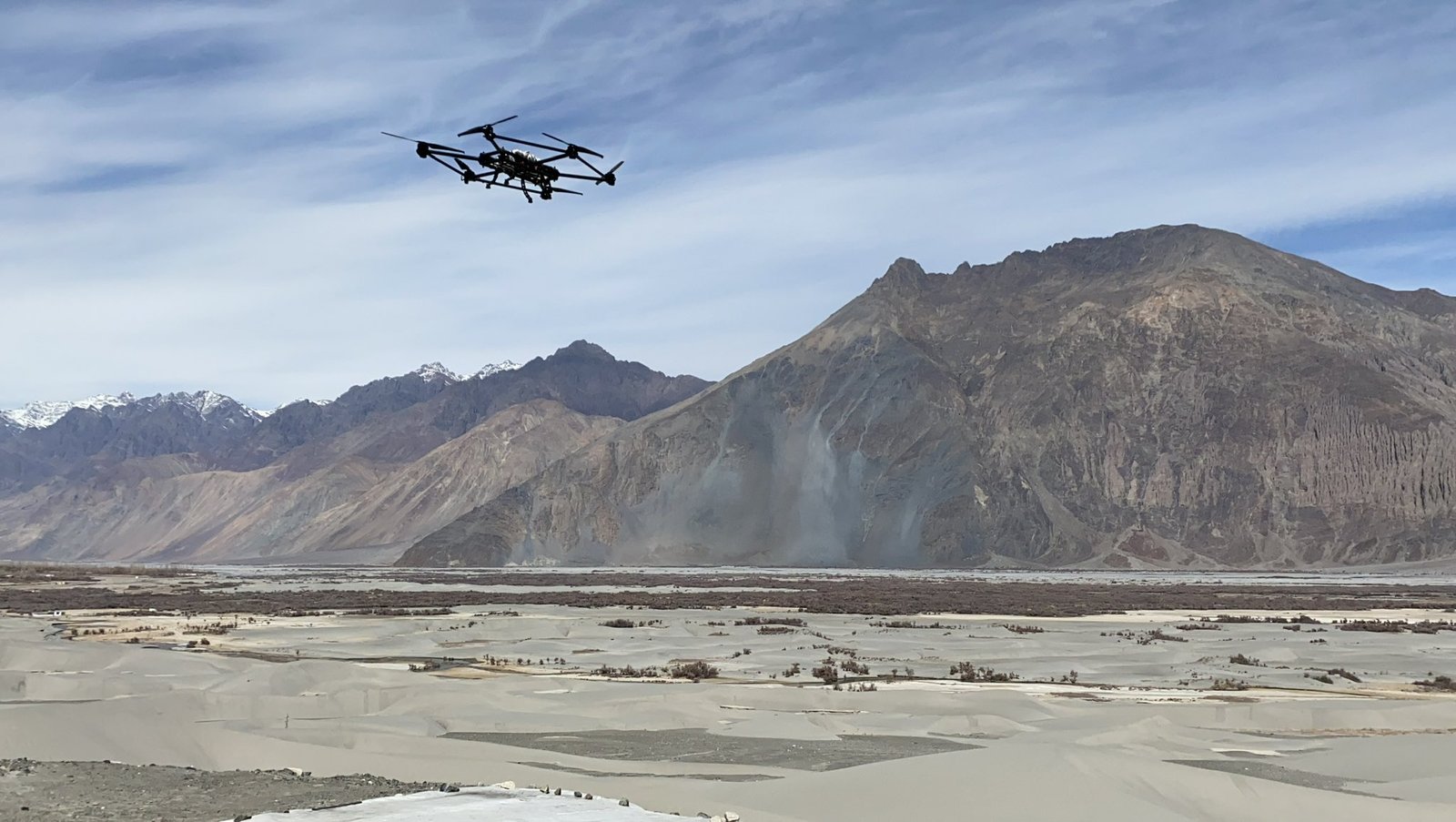
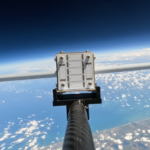
A Raphe aircraft in flight over high-altitude terrain. (Image: Raphe mPhibr)
The numbers behind the fleet show how far the field-first approach has travelled. The company says its aircraft have logged more than one million kilometres of flight across India’s deserts, mountains and coastlines, that it holds more than 100 intellectual-property assets, and that it has supplied more than 300 logistics drones to the Indian Army for high-altitude operations. Its first drone reached a government agency as early as 2018, and its systems were deployed during Operation Sindoor in May 2025. In August 2025, Defence Minister Rajnath Singh inaugurated Raphe’s test and manufacturing facility in Noida, noting that three systems jointly developed by Raphe and the Defence Research and Development Organisation had gone from concept to field deployment in just 14 months.
Everything under one roof
What makes Raphe different is not any single drone — it is the refusal to import the hard parts. The company’s campus in Noida, spread across nearly 700,000 square feet with a team of around 1,000 people, houses metal processing, composite manufacturing, engine design and testing, and military-grade electronics under one roof. Raphe designs and manufactures its own flight controllers, carbon-fibre structures, propulsion systems and autopilots — the company says it developed India’s first indigenous military-grade autopilot — and it works with partners including Dassault Systèmes, HENSOLDT and Safran on sensors and simulation. The company has also secured contracts to develop advanced systems such as a hypersonic ramjet propulsion system for the Indian Navy.
The market has noticed. In June 2025 Raphe raised $100 million in a round led by General Catalyst, with participation from Think Investments, Amal Parikh and family offices — described at the time as the largest private funding round ever raised by an Indian aerospace company — taking its total capital raised to $145 million at a valuation of nearly $900 million. Revenue more than tripled to Rs 260 crore in FY25, according to Inc42, as larger Army orders turned a research-led company into a manufacturing business.
Why building it all matters
Raphe’s next aircraft will stay airborne for more than 26 hours and travel more than 2,000 kilometres, the company says — a leap from tactical drones to strategic, long-endurance platforms that demands every capability the company has spent eight years assembling. That is the larger story here: India is no longer just buying drones, assembling drones, or adapting someone else’s drones. In Noida, two brothers who started with a winter-break octocopter have built the engines, the airframes, the autopilots and the factories — and are now aiming at the biggest, longest-flying unmanned aircraft the country has ever attempted. As Vivek Mishra told Inc42, the ambition has never changed: build technology that works, solve problems that matter, and keep pushing the boundaries of what Indian engineering can achieve.
Keep reading: One Bus, Any Mission: Inside XDLINX Space Labs, the Hyderabad Startup Building India’s Ready-to-Fly Satellites · Mules to Machines: Inside BonV Aero, the Odisha Startup Flying Cargo to 16,500 Feet · More Aerospace & Defense stories
Like stories like this? Add Exceptional Technology as a preferred source on Google to see more of our reporting in your search results and Discover feed.