For decades, India has been one of the world’s biggest users of crop protection chemicals — and almost entirely a buyer of other countries’ chemistry. Every major insecticide sprayed on Indian fields was discovered in a laboratory somewhere else. On 29 October 2026, that story changed. Gurugram-based PI Industries unveiled Pioxaniliprole, the first insecticide molecule ever discovered in India, and announced that it will reach farmers under the brand name Pioxazon, with the first launch on 31 October and sales beginning in November, in time for the rabi season.
The recognition is official, not just claimed. India’s Central Insecticides Board and Registration Committee (CIB&RC), under the Ministry of Agriculture and Farmers Welfare, has formally recognised Pioxaniliprole as the first insecticide active ingredient discovered in India. Registration was granted on 21 September 2026 at the committee’s 476th meeting, covering both the technical material and a 20% suspension concentrate formulation.
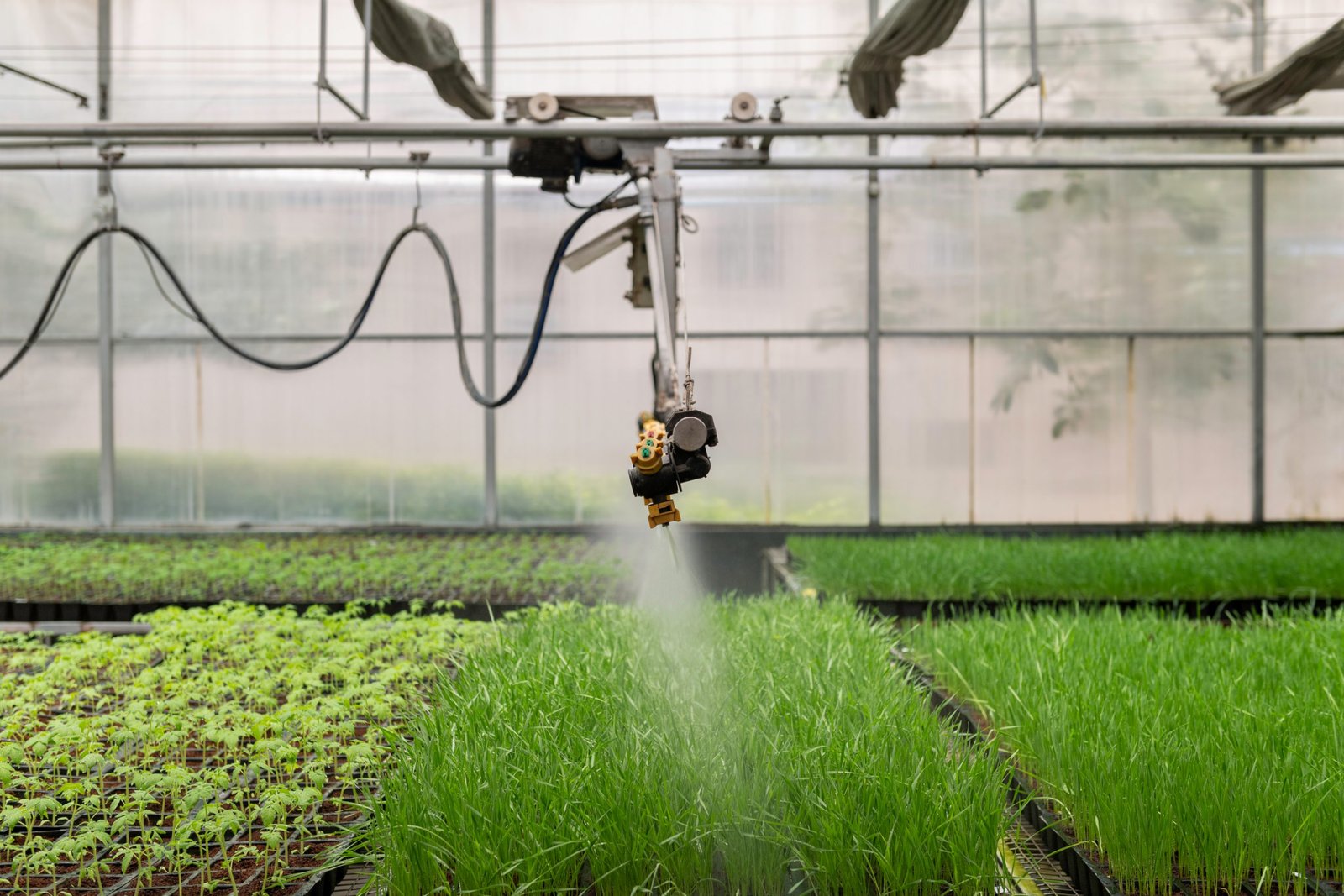
Precision crop protection spraying in a PI Industries greenhouse. (Image: PI Industries)
A decade, 100,000 candidates, one molecule
Pioxaniliprole is the product of more than a decade of original research. PI Industries says its teams screened around 100,000 candidate compounds before landing on this one, with roughly ₹2,000 crore invested in research and development since 2014. The molecule was put through multilocation field trials and regulatory studies under Indian agricultural conditions, with state agricultural universities participating in the evaluation.
“More than a decade ago, we set out to build the capability to discover original crop protection in India. It required the courage to challenge conventional wisdom, substantial long-term investment and the conviction to pursue what had never been achieved before,” said Mayank Singhal, vice-chairperson and managing director of PI Industries. “Today, Pioxaniliprole demonstrates what is possible when our deep understanding of Indian agriculture meets world-class science. It is a proud moment for PI and for Indian agricultural innovation.”
More Read

Behind the molecule is a research engine the company has been building for years: more than 700 scientists, including over 200 PhDs, and a portfolio of more than 260 patents. PI Industries, one of the world’s five largest agrochemical custom synthesis and manufacturing companies, is present in 40 countries — and Pioxaniliprole marks its shift from manufacturing other innovators’ chemistry to originating its own.
How it works — and what it protects
Pioxaniliprole belongs to the anthranilic diamide class of insecticides. Like other diamides, it works by targeting the ryanodine receptors — the calcium release channels — in caterpillar pests. The molecule binds to these receptors and forces the channels open, triggering an uncontrolled release of calcium that stops feeding, causes muscle paralysis and eventually kills the insect.
The registered 20% suspension concentrate formulation is approved for four crops, each with its own target pests. In rice, it is approved against yellow stem borer, leaf folder and fall armyworm; in chilli, against fruit borer and tobacco caterpillar; in tomato, against fruit borer; and in Bengal gram, against pod borer. These are among the most damaging caterpillar pests Indian farmers face — the fall armyworm alone has spread rapidly through maize and other crops in recent years, and stem borers routinely eat into rice yields.

A healthy maize crop under inspection. (Image: PI Industries)
From an Indian laboratory to the world’s fields
PI Industries says Pioxaniliprole is globally patented, and the ambition does not stop at Indian fields. The company plans to take the molecule to the United States and Brazil, working through the partnership model it has used for years with global innovators — licensing and manufacturing partnerships that carry Indian-discovered chemistry into world markets.
PI Industries chairman Narayan K. Seshadri said the molecule would provide a foundation for future discoveries and support the company’s efforts to expand indigenous research capabilities and develop technologies for global agriculture. The significance runs beyond one company: for the first time, India has moved from being a contract manufacturer and formulator of global agrochemicals to an originator of proprietary crop-protection intellectual property.
From a laboratory in India to fields across the country this rabi season — and, in time, to farms around the world — Pioxaniliprole is the moment Indian crop science stopped importing answers and started inventing them.
Keep reading: Sixty Seconds to Stop the Bleeding: Inside Miraqules’ StopBleed, the Powder That Just Won the World · Games, Not Grunt Work: Inside PLUTO-H, the Robot Helping Stroke Survivors Rebuild Their Hands · More Chemicals, Materials & Life Sciences stories
Like stories like this? Add Exceptional Technology as a preferred source on Google to see more of our reporting in your search results and Discover feed.