Sixty seconds. That is all the time Miraqules says its powder needs to stop a bleed that could otherwise take a life. On 29 October 2026, that promise carried the Bengaluru biomedical startup to the top of the world: Miraqules was named grand winner of SLINGSHOT 2026, Singapore’s flagship deep-tech startup competition, beating more than 5,000 startups from around the globe.
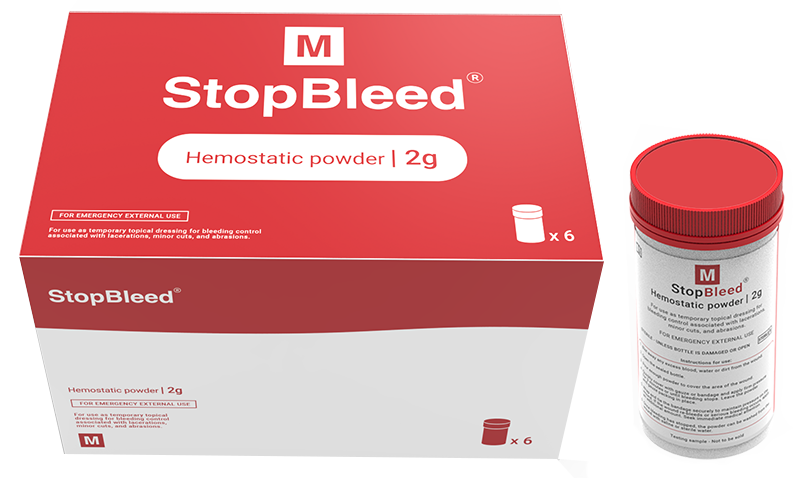
The winning product is StopBleed, a nano-biopolymer powder born in a laboratory at the National Institute of Technology Rourkela and built for the worst moments of ordinary life — a road accident far from a hospital, a factory mishap, a battlefield wound. Uncontrolled bleeding is the most common cause of preventable death after trauma, the company points out, and most of those deaths happen where help is minutes or hours away. StopBleed is designed to close that gap, right at the scene.
A clot, woven from fibres
StopBleed works by imitating the body’s own clotting machinery. Its compounds are made from clinically accepted biopolymers, spun into porous, fibrous structures that closely resemble fibrin — the protein threads the body itself weaves to seal a wound. When the powder meets blood, the company says, it rapidly absorbs plasma while trapping blood cells inside a high-surface-area fibrous mesh, accelerating the body’s natural clotting and forming a strong hydrogel seal over the wound.
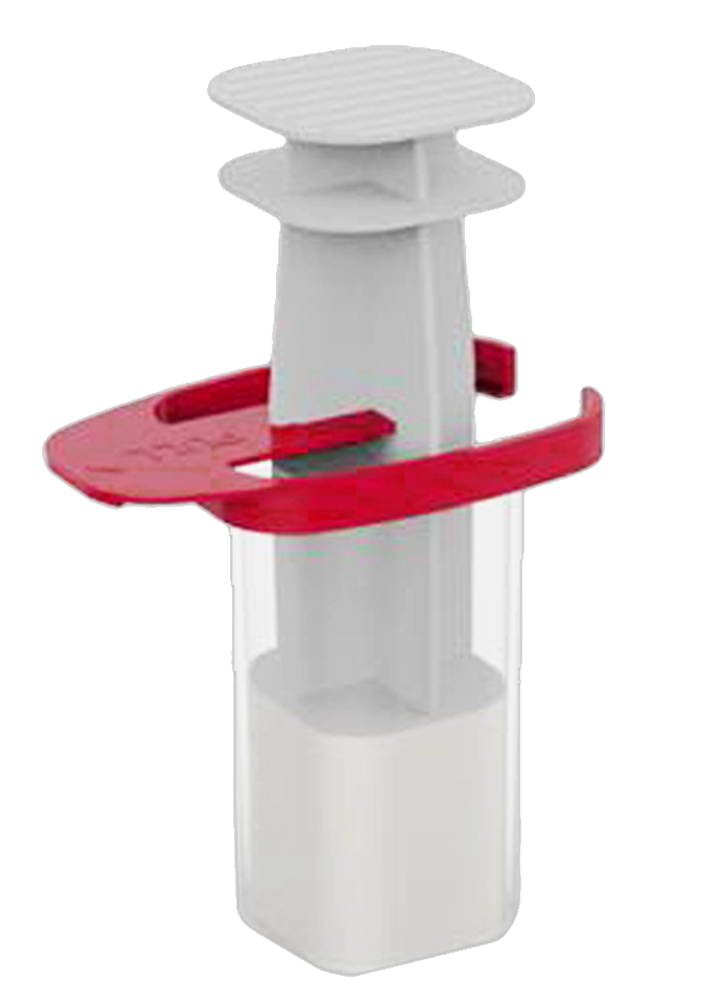
The result is a first-response hemostat that can be poured straight onto a wound, in powder form or as a pellet in a purpose-built applicator. It comes in 2g packs, keeps for three years at room temperature, and can be used by trained medical personnel as well as first-aid responders. The company lists the situations it is built for: road accidents, gunshot wounds, blast injuries, industrial mishaps and deep stab wounds — including the non-compressible torso wounds and neck and groin injuries where a tourniquet cannot help.
From a father’s accident to a company
The story behind StopBleed begins with a personal scare. Founder and CEO Sabir Hossain watched his father bleed from an accident as a young man, when nothing at hand — clothes, gauze, whatever was available — could control the bleeding. His father survived, but the helplessness of that moment stayed with him. Years later, while studying biomedical engineering at NIT Rourkela under Professor Devendra Verma, he developed a cost-effective manual process for producing the porous, fibrous compounds that would become StopBleed.
He was joined by Dr Mubeen Midda, a surgeon who had watched seven people bleed to death on a single night and left his hospital post to build the company. Together they founded Miraqules MedSolutions in 2018, and the technology developed at NIT Rourkela was transferred to the startup for manufacturing, distribution and deployment. The company is backed by national and international organisations, and its journey has collected honours along the way, including the DRDO’s Dare to Dream contest in 2019, a Y Combinator sprint grant in 2020, and a place among the Top 20 finalists at TechCrunch Disrupt’s Startup Battlefield in 2025.
More Read

Approved for the front line
In February 2026, StopBleed crossed the line from promising research to deployable medicine. The Central Drugs Standard Control Organisation (CDSCO) approved it as a Class C medical device, clearing it for commercial manufacturing and clinical deployment in emergency trauma care. Limited deployment has already begun in select clinical settings, the founder says, as the company explores partnerships to scale distribution across India.
That regulatory milestone is what makes the SLINGSHOT win land so well. The competition, run by Enterprise Singapore as part of the Singapore Week of Innovation and Technology, judged its Top 50 global finalists on technical depth, differentiation, team, growth potential and investability — and in the Health and Biomedical domain, Miraqules’ nanofibrous biomaterials stood out for a manufacturing process designed to cut the complexity and cost of conventional nanofibre fabrication. The grand-winner prize is a S$400,000 Startup SG grant, backing the company as it scales.
The ambition now is beautifully simple. Miraqules wants its life-saving powder to be as easy to find as a fire extinguisher — in every ambulance, primary health centre, hospital, pharmacy and first-aid kit. After a win on a world stage, that goal feels a lot closer: a powder made in India, proven in Indian labs, now recognised as one of the finest deep-tech ideas on the planet, ready to buy precious minutes for the people who need them most.
Keep reading: Games, Not Grunt Work: Inside PLUTO-H, the Robot Helping Stroke Survivors Rebuild Their Hands · A Bubble of Clean Air: Inside YOGa, the Gurugram Startup Pressurising Homes Against Pollution · More Chemicals, Materials & Life Sciences stories
Like stories like this? Add Exceptional Technology as a preferred source on Google to see more of our reporting in your search results and Discover feed.