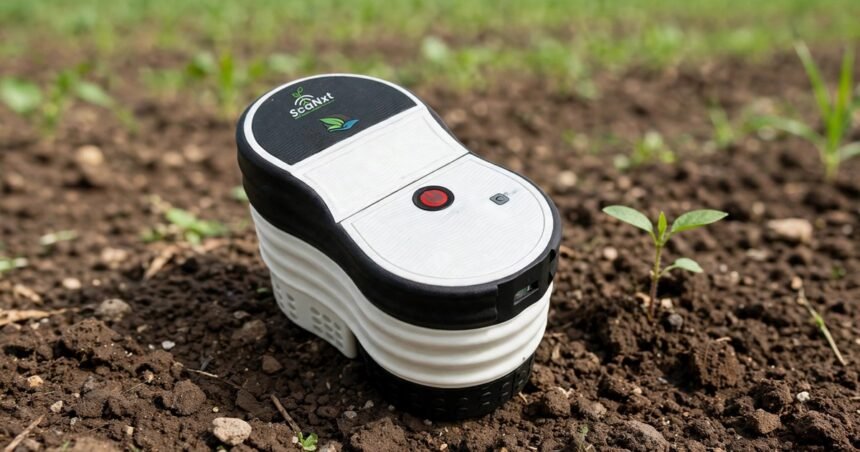
For most Indian farmers, a soil test means a trip to a distant lab, a wait of days or weeks, and a report that arrives long after the sowing decision has already been made. So most farmers simply guess — and guesswork is how fertiliser gets wasted, yields stall, and soil quietly loses its health. A Greater Noida startup asked a simpler question: what if the lab fit in your palm, and answered in ninety seconds?
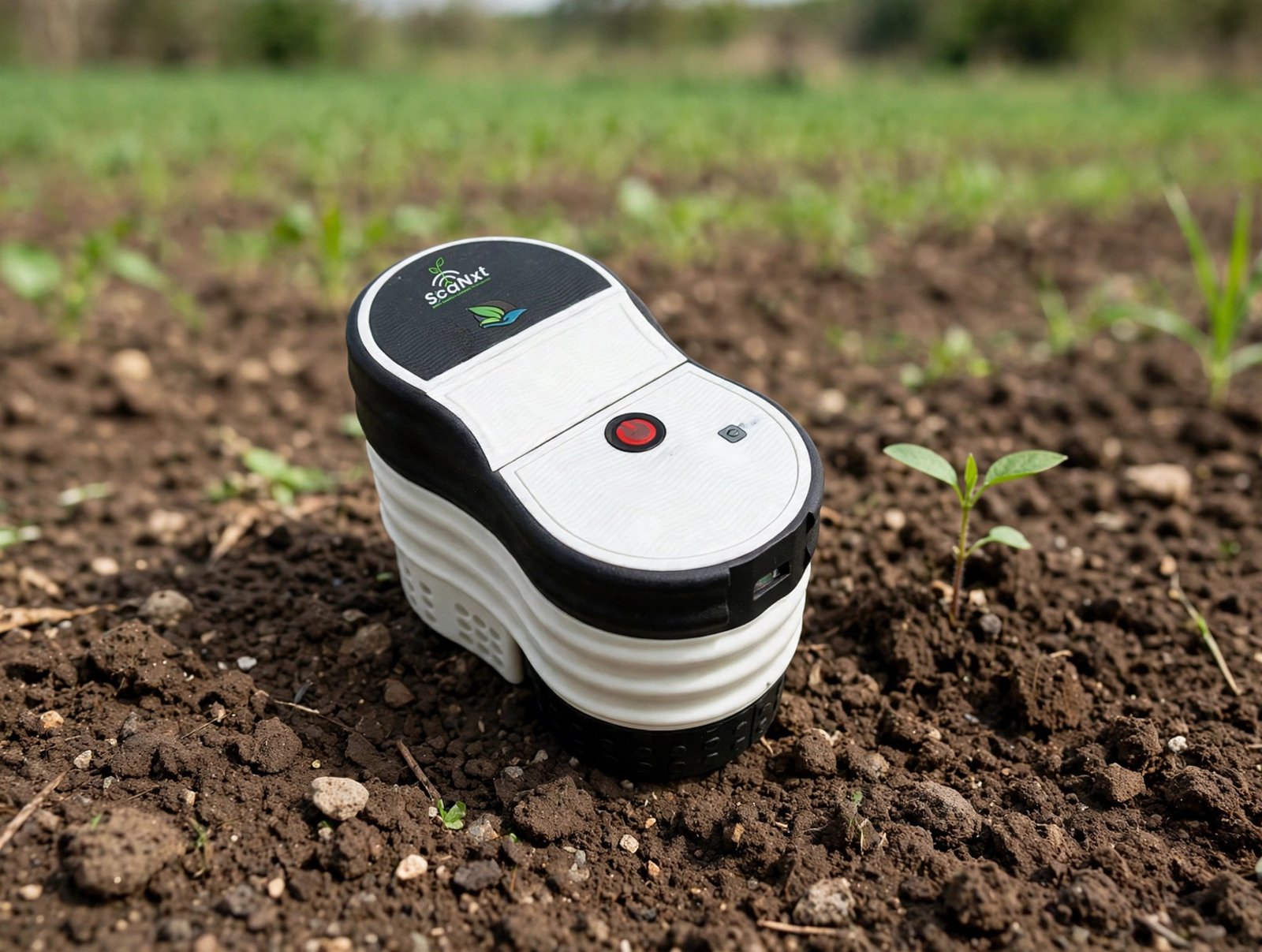
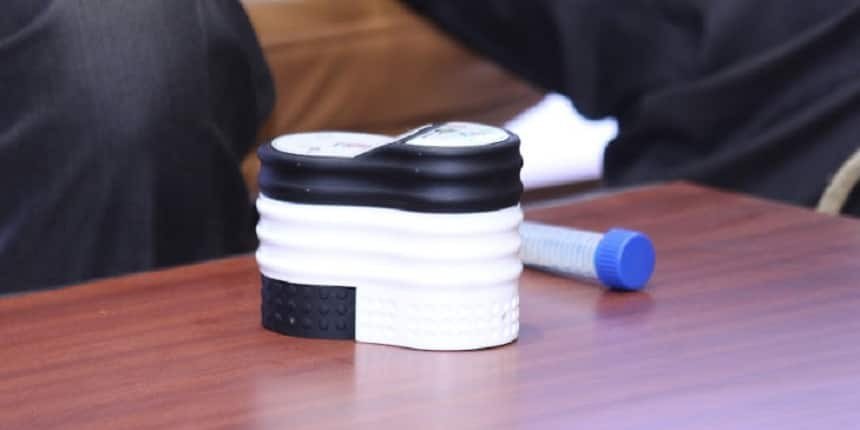
ScaNxt Scientific Technologies Pvt. Ltd., incubated at IIT Kanpur, builds Bhu-Parikshak — Hindi for “soil tester” — a handheld device that reads the health of a field from a pinch of dry soil, with no chemicals, no lab, and no waiting. The company says close to 90,000 farmers are already registered on its platform, with more than 200 business customers across 21 states.
Light, not chemicals
The trick inside Bhu-Parikshak is near-infrared spectroscopy: the device shines invisible light onto a five-gram soil sample and reads how the soil reflects it, then machine learning turns that light signature into numbers. In about 90 seconds it reports six things that matter to a crop — nitrogen, phosphorus and potassium, organic carbon, clay content and cation exchange capacity — straight to a smartphone app over Bluetooth. The app speaks multiple Indian languages, and the results come with crop-wise advice and a dashboard, so a farmer sees not just numbers but what to do about them.
There are no reagents to buy, no samples to ship and nothing to dispose of. A single charge runs up to 250 tests, and the company says the device is built to handle up to one lakh soil samples — the kind of capacity that makes it a tool for whole districts, not just demo plots.
From an IIT lab to 90,000 farms
The science behind the device comes from IIT Kanpur, where Prof. Jayant Kumar Singh and his chemical engineering team built the soil nutrient sensing technology and transferred it to the company. ScaNxt began in 2016 as AgroNxt, an advisory platform for farmers founded by Rajat Vardhan and Ashutosh Tiwari, and the soil device turned that advisory idea into hardware farmers could hold. The first version launched in the market in May 2022; today the company says it works with more than 300 partners alongside its 90,000 registered farmers.
Beyond the soil test
Soil is only the start. ScaNxt’s patented Detect technology and its AgroLens platform watch crops for pests and disease in real time and send advisories before a small problem becomes a lost harvest. The same team is also working on electric farm mechanisation and solar drying, building toward a full stack of tools for the smallholder farmer.
More Read

The backing behind the bet
On 6 November 2026, ScaNxt announced fresh backing from Rainmatter, Zerodha’s climate and deep-tech investment arm, alongside SIDBI and Exim Bank, to accelerate product development, deepen its research and expand its channel network in India and abroad. “We partnered with ScaNxt because they aren’t just building software; they are combining hardware, AI, and engineering to solve tough, physical agricultural problems,” said Abhinav Singh Negi, lead for climate and deep tech at Rainmatter.

India has some of the most farmed land on Earth, and some of the least-tested soil. A device that can read a field in ninety seconds, at a reported Rs 50 a test, turns soil health from a luxury into a habit — and every habit like that is a harvest waiting to happen.
Keep reading: No Fridge, No Chemicals: Inside Sabjikothi, the Bihar Invention Keeping Vegetables Fresh for 30 Days · Cleared for Takeoff Over Indian Fields: Inside Kothari’s KOAIR-10L, the DGCA-Certified Farm Drone · More Food Processing & Agri-Tech stories
Like stories like this? Add Exceptional Technology as a preferred source on Google to see more of our reporting in your search results and Discover feed.