



Every delivery rider in India knows the feeling: the order is dropped off, the app goes quiet, and the next stretch of road is ridden for nothing. Across the country, riders spend as much as half of their time on the road riding empty — burning fuel, wearing out their bikes, and earning nothing for the distance. In Pune, a startup called Dispatch Network looked at those empty kilometres and saw the problem worth solving: not more orders, but the right next order, every single time.
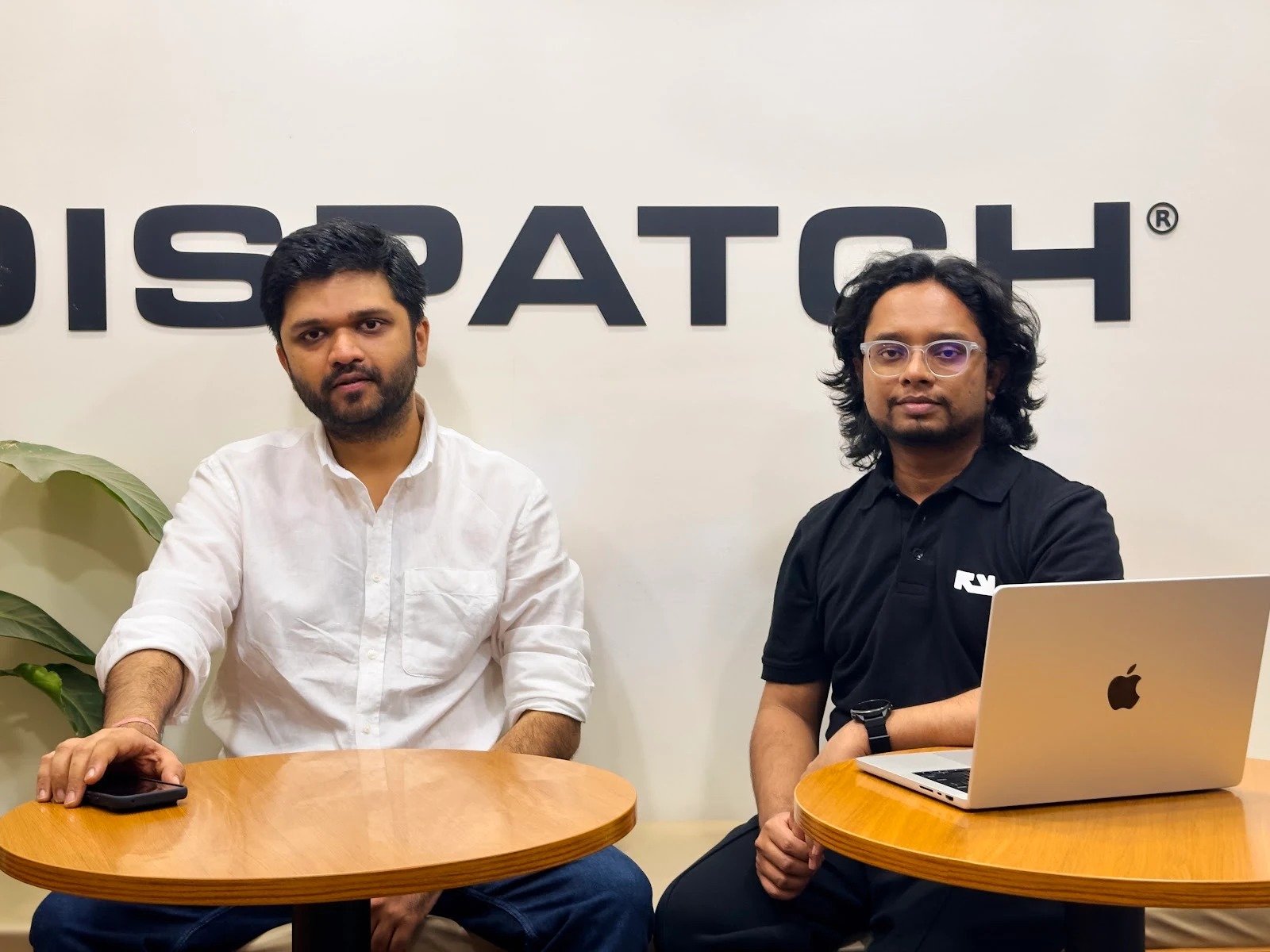
Dispatch Network co-founders Rajit Arya (left) and Navneeth Kannan. (Image: Dispatch Network)
Dispatch Network — operated by Artem Network Private Limited — is a last-mile delivery network built around a single idea: the fleet that can pay its riders the most will win the riders, and the only way to pay more is to make every hour on the road more productive. The company went live in Pune in June 2026, and in less than five months it has completed more than 100,000 deliveries for India’s biggest food and quick-commerce platforms. Its secret is not a bigger fleet or cheaper rates, but a foundation AI model that watches the whole city and decides, minute by minute, where every rider should be next.
The problem: half the ride earns nothing
Every delivery app has its own rush hours and its own quiet spells, and a rider working for one platform is at the mercy of that platform’s demand curve. The result, Dispatch says, is that riders spend up to 50% of their kilometres without an order — riding empty between jobs, waiting at hotspots that have gone cold. The rider pays for every one of those kilometres. Nobody pays the rider. “The last mile ecosystem is fundamentally challenged by design,” says co-founder and CEO Rajit Arya. “On one hand there is immense unmet demand due to rider shortages; on the other, riders ride up to 50% of their time empty, without an order. Every platform fights for supply; no one makes money. It’s absurd.”
LLSTM: a foundation model that watches the city
Dispatch’s answer is the Large Logistics Spatio-Temporal Model — LLSTM — a foundation model built for intracity logistics and mobility. Unlike a language model, LLSTM learns by watching the city every minute, with millions of parameters tuned to how demand, traffic and rider availability move across Pune’s streets. It decides which order each rider should take next and where that rider should wait for the one after, sequencing work across platforms instead of reacting to one order at a time. While other fleets let riders pick their own orders, Dispatch picks each order for every rider — and every decision, and what happened next, becomes training data. “Most of the world’s deliveries still run on rules someone wrote by hand,” says Navneeth Kannan, co-founder for product and AI. “We’re building the decision layer for last-mile delivery: which order, which rider, and where they should be next. Pune is our training ground, and every delivery makes the model sharper.”
More Read

Proof in the numbers
The numbers have moved fast. Monthly volumes rose from 3,014 deliveries in June to 55,000 in October — doubling almost every month — and the network now handles around 3,500 deliveries a day. The company says its sequencing has cut empty miles by two-thirds, and that riders on its network take home about 55% more a month than the industry average, with retention 80% better than the norm. It delivers for Zomato, Swiggy, Zepto, Instamart and BigBasket, and for hundreds of restaurants and stores through direct APIs and the government-backed Open Network for Digital Commerce (ONDC). Rahul, 26, a Dispatch rider in Pune, puts it simply: “There’s no chance of coming back empty-handed. As soon as I come online, an order comes in fast; I don’t have to go around empty looking for hotspots. I earn more because I save more.”
Built by people who know the road
The founders have spent years close to the people who make these deliveries. Rajit Arya has worked in electric mobility since 2009 and with delivery riders for the past five years; Navneeth Kannan is a product architect and engineer with a decade in mobility systems. That rider-first thinking is what drew Antler India to lead the company’s &rupee;5 crore pre-seed round, joined by angel investors Krishi Fagwani, founder of Thrive, Yashin Mahadevia and Parth Modwadhia. “Most of last-mile delivery has been optimised for the platform,” said Nitin Sharma, partner at Antler India. “Rajit and Navneeth started from the rider, and that’s what we backed.” The funds will grow the AI team behind LLSTM, and the network is launching in Mumbai in November, its second city, on the way to a target of 50,000 orders a day across five cities.
India’s delivery riders cover millions of kilometres a day, and until now half of that effort has gone unpaid. Dispatch Network’s bet is that the last mile doesn’t need more riders or more orders — it needs a brain that makes every kilometre count, and a network where the rider’s hour is the most valuable thing in the system.
Keep reading: The Humanoid That Will Direct Traffic: Inside iHub Robotics, the Kochi Startup Building Robots for Factories — and Kerala’s Streets · Every Warehouse in India, On One Map: Inside Hyphen SCS, the Noida Startup Digitising Storage · More Industrial Automation & Technology stories
Like stories like this? Add Exceptional Technology as a preferred source on Google to see more of our reporting in your search results and Discover feed.







