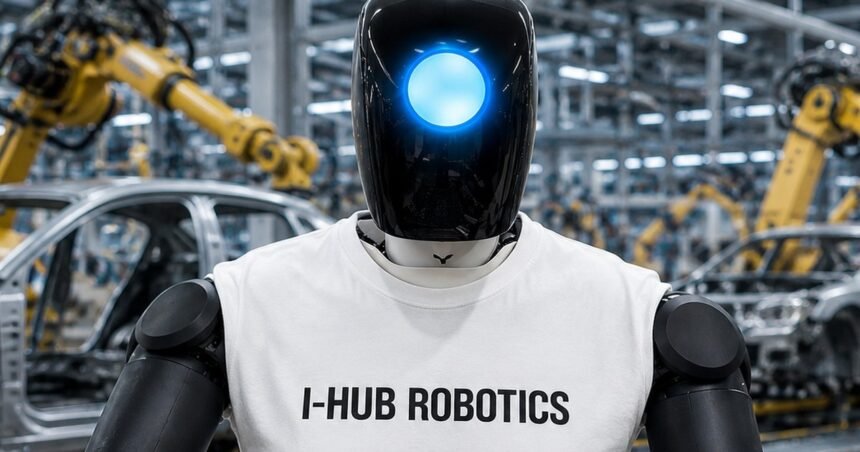
Picture a busy junction in Kochi at rush hour — and standing where a traffic constable would stand, a white humanoid robot, calmly directing cars with programmed hand gestures, its cameras watching for signal jumpers and reading number plates. That scene is closer than it sounds. Kochi startup iHub Robotics has signed an agreement with Kerala Police to trial its Daksha humanoid for traffic management, and the company says it is aiming to hand the robots over within about six months.
iHub Robotics was founded in 2022 in Kochi by three friends — Athil Krishna, Akhil K Haridasan and Sarath S — who had been researching humanoid robots since 2018, when they were mechatronics students in Coimbatore. The company builds its machines almost entirely in-house: the chassis, the embedded systems, the actuators and the AI that drives them, all manufactured at its Gigafactory in Kalamassery, Kochi.
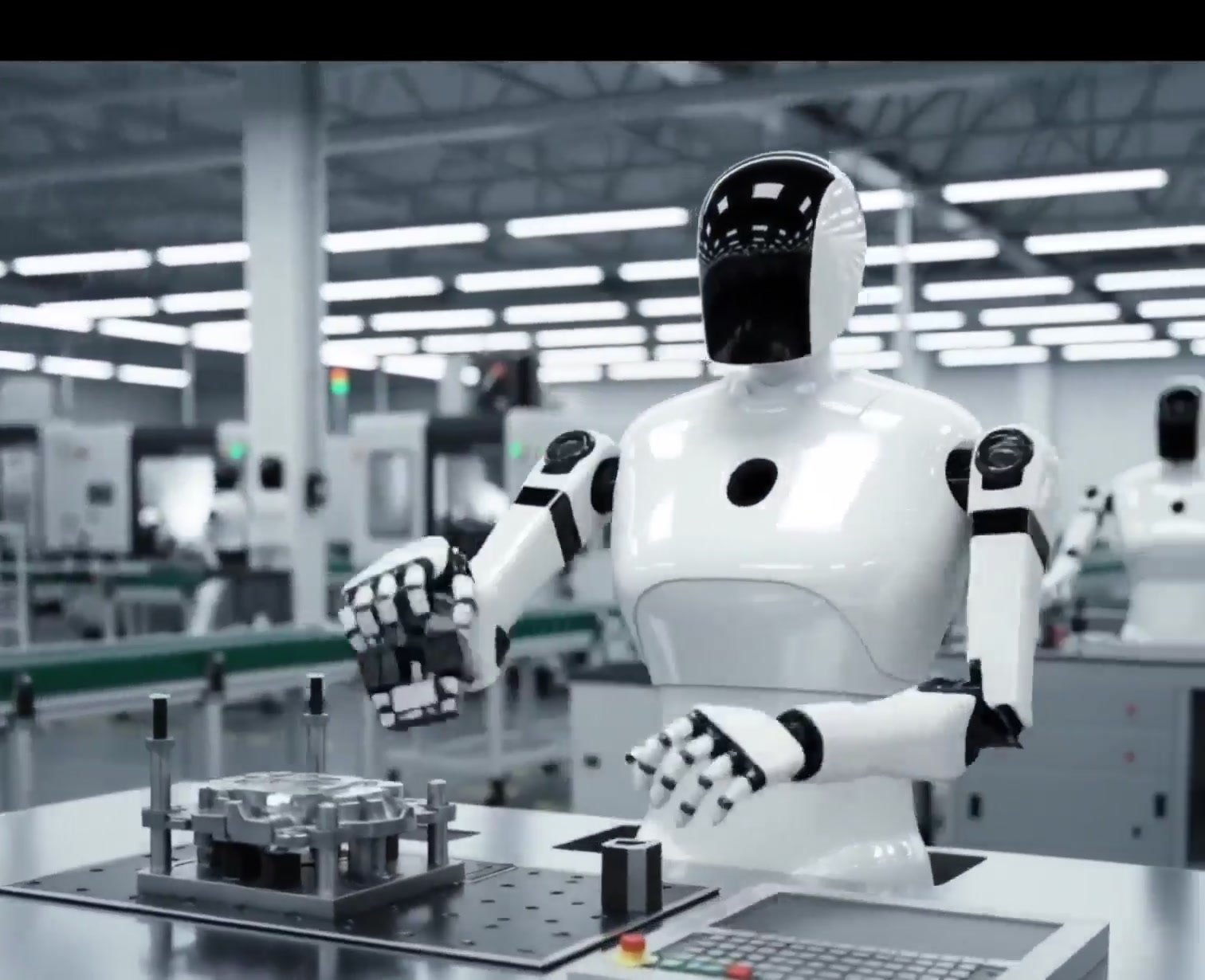
Daksha at work on a factory floor. (Image: iHub Robotics)
Two robots, one brain
The company’s lineup has two machines. Tara, launched in 2024, is a service humanoid that the company says can speak more than 100 languages, recognise faces and gestures, hold contextual conversations and navigate on its own using SLAM — with variants for offices, classrooms and care settings. Daksha is the industrial heavyweight: a general-purpose humanoid that lifts payloads of up to 25 kg and works at heights of eight to 10 feet, built for assembly, machining support, quality inspection and material handling.
Underneath both is what iHub calls physical AI. Rather than a text-in, text-out language model, the robots run on a vision-language-action model the company calls Viveka — a 3.3-billion-parameter model the company says it trained from scratch — which turns what the robot’s cameras see into instructions and then into movement. Daksha Gen-2 pairs that brain with dual six-degrees-of-freedom cobot arms on a mobile base, in a modular platform the company says can be upgraded for new industrial jobs.
More Read

From NVIDIA’s humanoid programme to SAP’s living labs
In January 2025, iHub became the first Indian company selected for NVIDIA’s Humanoid Robotics Program. Two months later it raised Rs 4.3 crore in a pre-seed round from US-based angel investors. Its first industrial client was SAP, which signed an agreement to deploy Daksha robots in its living labs after SAP Labs India’s managing director saw a demonstration at a NASSCOM event in Bengaluru. The company’s earlier Tara robots are already in use with a government organisation in the UAE, and iHub says its first shipment of humanoids to the United States is being prepared.
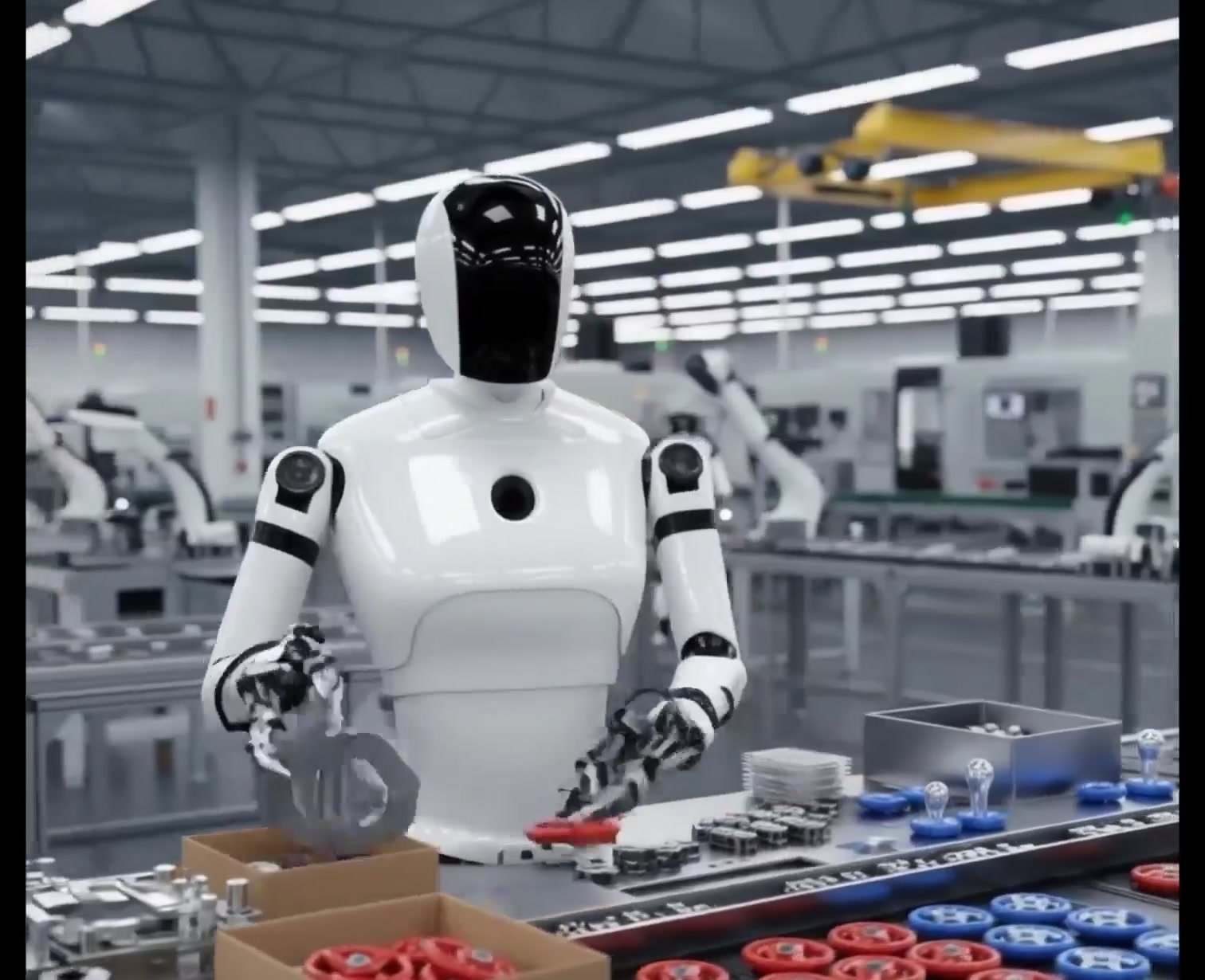
Daksha on an assembly line. (Image: iHub Robotics)
The Kerala Police trial
The newest chapter opened on 9 October 2026, when Kerala Police signed a memorandum of understanding with iHub Robotics at c0c0n 2026, the cybersecurity and policing conference in Kochi. Under the agreement, three of the company’s robots will be trialled with the police: Daksha Generation 2, a vision-based humanoid designed to regulate traffic at intersections; Thara Gen 1, a citizen-assistant robot; and Daksha Guardian, for emergency response. Alongside them, Kavach — a 500-kg tracked unmanned ground vehicle — is being prepared for surveillance, patrolling and disaster relief. The robots were unveiled at the conference in the presence of Home Minister Ramesh Chennithala and state police chief Ravada Chandrasekhar.
According to the company, Daksha’s traffic version will direct vehicles with hand gestures, identify drivers who break signals, capture number plates and images, and send alerts to the Kerala Police Cyberdome control room — work that today keeps officers standing for hours at busy junctions in extreme weather. The police say trials will begin shortly, with field integration targeted within about six months, and the company is also developing Karna, a bipedal humanoid intended for defence applications.
iHub Robotics’ Daksha humanoid in action. (Video: iHub Robotics)
What makes the Kochi story stand out is how much of the stack is homegrown: a 65-member team, a 24,000 sq ft corridor at Kalamassery where the robots learn tasks by repetition, and a machine that goes from greeting visitors in a lobby to welding on a factory floor to, soon, directing traffic at a junction. Kerala could become the first state in India where a robot waves you through a green light — and the robot waving will have been built a few kilometres away.
Keep reading: Every Warehouse in India, On One Map: Inside Hyphen SCS, the Noida Startup Digitising Storage · The Chip That Rewires Itself: Inside Morphing Machines’ MuDRA, Two Decades of IISc Research in Silicon · More Industrial Automation & Technology stories
Like stories like this? Add Exceptional Technology as a preferred source on Google to see more of our reporting in your search results and Discover feed.