It takes about ten minutes to finish a packet of chips. The packet itself is built to last far longer. Three to five layers of plastic, aluminium and paper are fused into a single crinkly sheet that keeps the crisps fresh and the moisture out — and once it is empty, almost nothing in the world knows what to do with it. Less than 1% of this multi-layer plastic is recycled anywhere on Earth. In Pune, a startup called Without looked at that packet and saw something else entirely: not waste, but raw material.
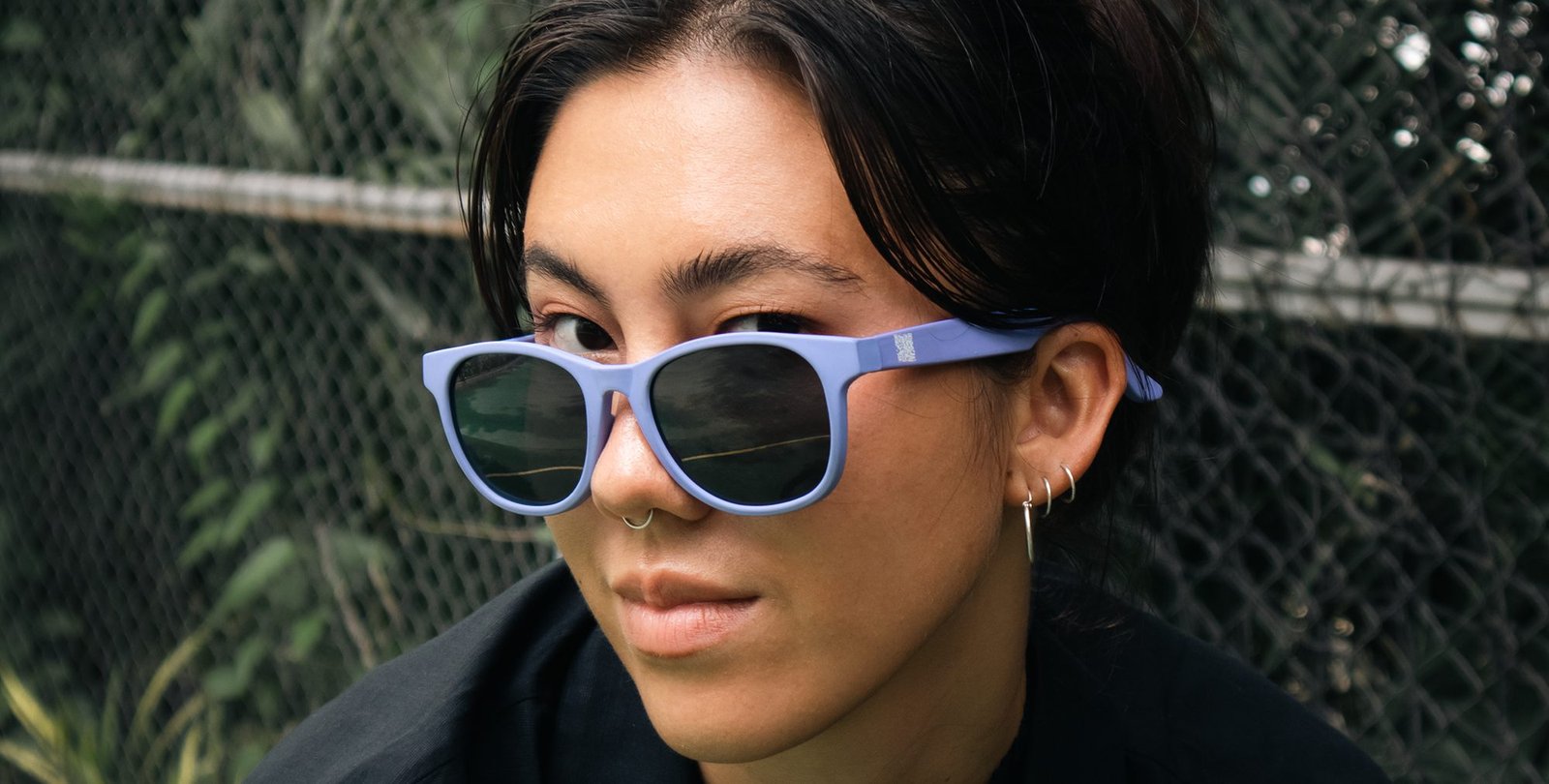
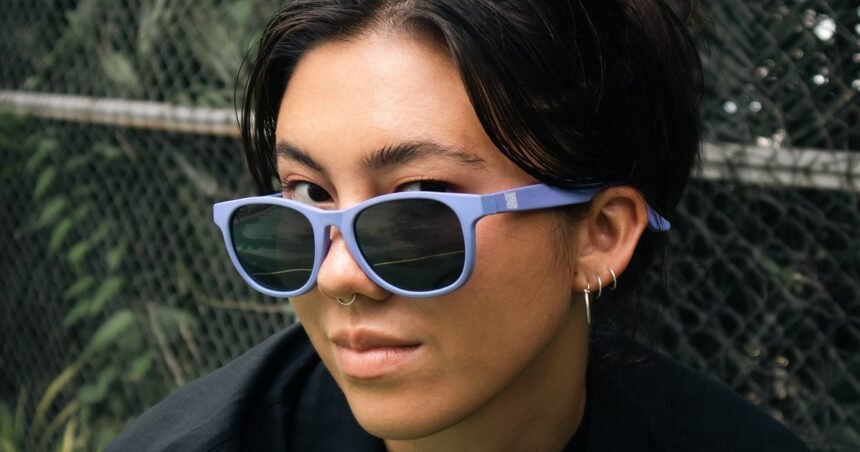
A model wears Without’s lavender sunglasses — frames made from packets of chips. (Image: Without®)
Without® — which began life as Ashaya — was founded by Anish Malpani, who spent twelve years working across finance, operations and social impact in the United States, Guatemala, Kenya, Dubai and India before standing beside a landfill in Pune and deciding the hardest waste was the most interesting problem to solve. The company’s answer is VerdiCycle, a patented chemo-mechanical process that takes the packaging nobody else can recycle and turns it into engineering-grade material as good as new.
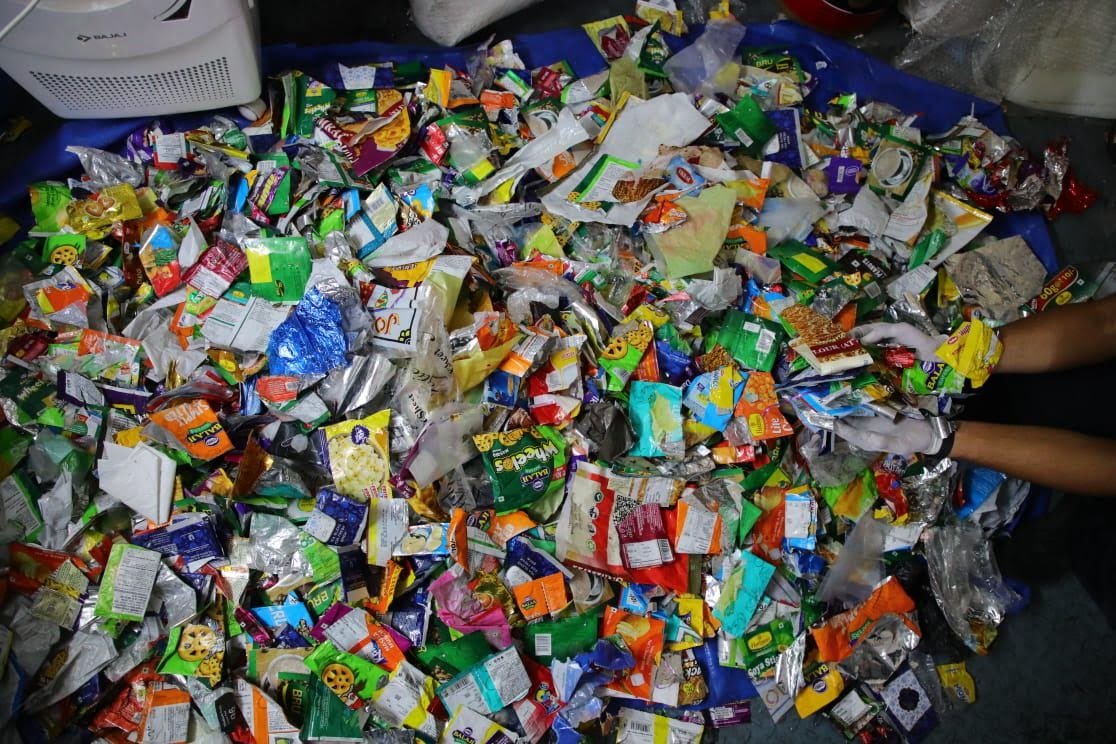
Collected chip packets, sachets and wrappers — the multi-layer plastic almost nobody recycles, and the feedstock for VerdiCycle. (Image: Without®)
More Read

The process: chemistry, not burning
VerdiCycle works by separating the layers of multi-layer packaging and recovering the polymers in water at around 120°C, with no organic solvents and no burning. That matters because the usual way of dealing with this waste is pyrolysis, which heats it to 500°C and destroys the material to make fuel. Without’s process keeps the material intact, so it can become a product again — and again. What comes out the other end are three materials: VerdiFLX, an engineering-grade recycled polyolefin; VerdiPTA, terephthalic acid recovered from the PET layers; and VerdiMIX, which turns whatever is left into construction composites. The company holds three granted patents and five more pending, covering the process, the formulations, the compositions and the reactor design.
Proof in a pair of sunglasses
The first proof came in February 2023, in the form of sunglasses. Without says they were the world’s first sunglasses made entirely from thrown-away chip packets, and the first batch sold out within a week, covered by more than a hundred publications around the world. The frames are now a serious material in their own right. The current grade, VerdiFLX B65I, carries 65% recycled content, polarised UV400 lenses, 100% elongation at break and a tensile modulus of 1500–1800 MPa — numbers the company puts head to head with virgin Grilamid TR90, at cost parity. The material has passed REACH SVHC testing, 224 out of 224 clear, and RoHS, both independently tested, and the company says it can be recycled ten times over, against two to three cycles for standard recycled plastic.
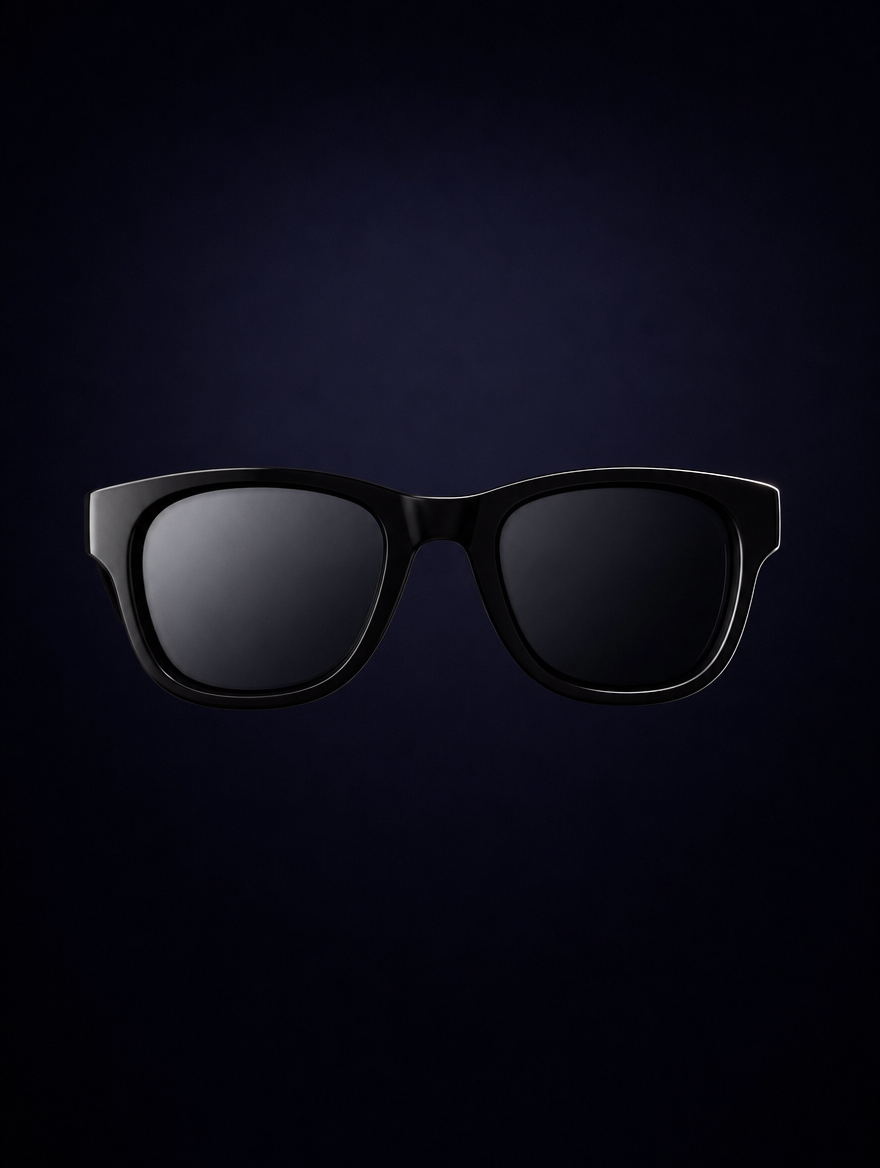
The Wayfarer frame in VerdiFLX B65I: 65% recycled content, polarised UV400 lenses, made from packets of chips. (Image: Without®)
The sunglasses were the proof of concept, not the destination. The same material now goes into bottles, signage, buttons, planter pots and car interior trim — more than 60,000 products are in the market, the company says — and the technology has kept collecting firsts. Without made the world’s first 100% recycled sachet bottle, a Unilever TRANSFORM winner, and ran a paid proof-of-value with Volvo on auto-grade material replacement. VerdiPET rebuilds recycled PET from the monomers up to match virgin quality, and VerdiFLO spins into yarn for activewear, T-shirts, socks and fleece on standard polyester equipment.
The Cradle: from lab bench to plant floor
In October 2025 the work moved from the lab to a factory floor of its own. Without opened its first-of-a-kind demonstration plant, called The Cradle, in MIDC Pune — a 1,030-square-metre facility with an in-house chemical lab that takes the whole workflow under one roof, from material intake and separation through chemical transformation and purification to finished products. In the lab the team processed 5 to 10 kilograms of waste a day; the plant handles around 200 kilograms a day, up to five tonnes a month. The next step is a first commercial plant, sized at three to ten tonnes a day. The company says it had recycled 1.87 million packets — 7.48 tonnes — by December 2025, and raised $1.9 million to fund the scale-up.
The people who picked the waste
The most distinctive part of the story is who supplies the waste. Without buys its packets from the Kashtachi Kamai scrap shop in Pune, owned and run by twelve to fourteen women from the KKPKP waste-picker collective — at three times the price the material would otherwise fetch, because nobody else buys it at all. Twenty former waste-pickers have graduated into formal jobs at the plant, the company says, with employment contracts, ESOPs and health insurance, and more than ninety lives have changed along the way, with incomes rising two to three times. Ten per cent of sales goes towards keeping waste-pickers’ children in school, and the company became a Certified B Corporation in 2025.
From sunglasses to “intel inside”
In 2026 Without stepped back from selling sunglasses directly to focus on what it calls the bigger opportunity: becoming the material inside other brands’ products, with fast-turn prototypes, white-label frames and QR-linked traceability that lets a customer follow a batch from waste-picker to wearer. The recognition has followed the same arc — a UN Circular Design Challenge win in 2023, a L’Oréal Big Bang Beauty Tech win in 2025, a Shark Tank India appearance that ended in a deal, and a place among the finalists of Kering’s Generation Award in India in October 2026. Founder Anish Malpani was named a Yale Emerging Climate Leader Fellow for 2026.
India throws away mountains of packaging that the recycling system simply cannot touch, and burns or buries most of it. Without’s bet is that the packet you tore open at lunch is not the end of a supply chain but the beginning of one — and that the people who have always collected India’s waste should be the ones who profit when it finally becomes worth something.
Keep reading: Hunting Mosquitoes From the Sky: Inside Prime UAV’s AI Drones Taking On Malaria and Dengue · Twenty Seconds to an Answer: Inside Qure.ai, the Mumbai AI Reading Chest X-Rays in 100 Countries · More Chemicals, Materials & Life Sciences stories
Like stories like this? Add Exceptional Technology as a preferred source on Google to see more of our reporting in your search results and Discover feed.