Open the case of a pair of AirPods next to an Android phone and almost nothing happens. The buds connect as plain Bluetooth earphones — no battery popup, no noise-control switch, no ear detection, no head gestures. Apple keeps all of that behind a private conversation between the AirPods and the iPhone, and for years that conversation stayed locked. Then a school student from Gurugram sat down, listened in on it, and taught Android to speak it fluently.
The project is called LibrePods, and it does exactly what its name promises: AirPods, liberated from Apple’s ecosystem. Built by Kavish Devar, it is a free, open-source app for Android and Linux that recreates Apple’s private AirPods protocol — the hidden language the earbuds use to talk to an iPhone — so the features Apple reserves for its own devices work on any phone or computer. The project, which began in September 2024, now carries more than 30,000 stars on GitHub, and it has been praised by The Verge, Moneycontrol and Digit as a rare piece of reverse engineering.
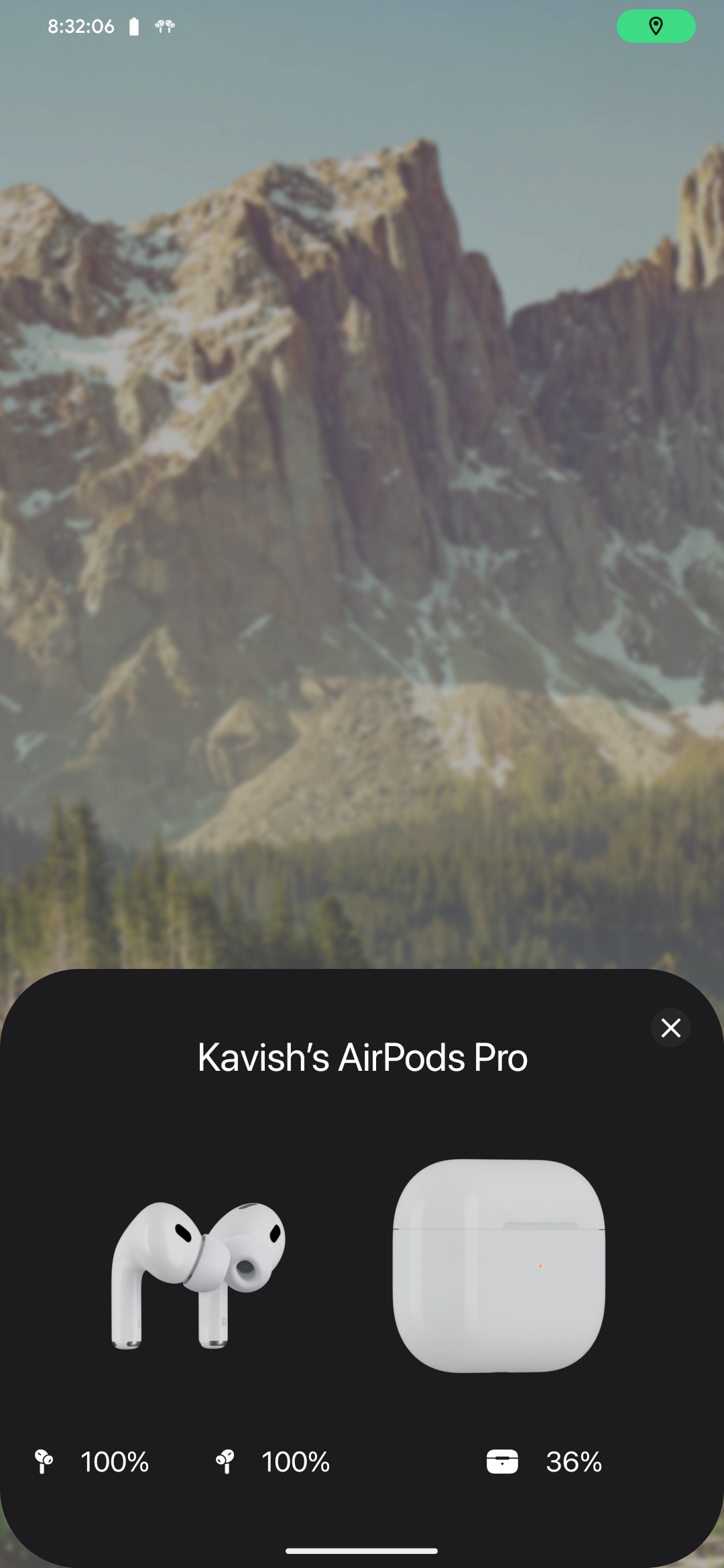
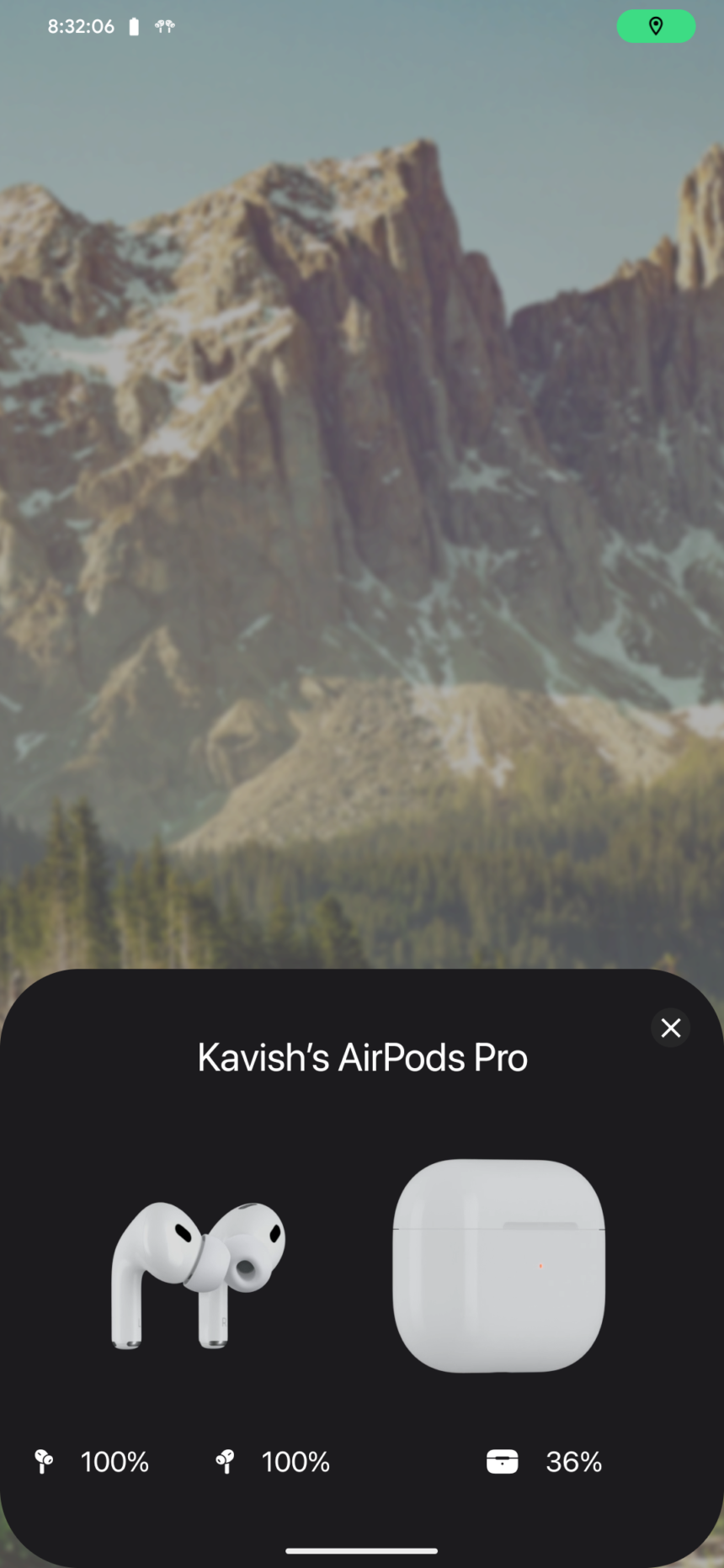
LibrePods’ connection popup on Android: per-bud and case battery, just like on an iPhone. (Image: LibrePods)
The locked door Apple built
AirPods are, at heart, Bluetooth earphones, and they will play music from any phone. But everything that makes them feel magical — the popup that shows each bud’s battery, the switch between noise cancellation and transparency, the pause when a bud leaves your ear, the nod of the head to answer a call — runs over a proprietary protocol Apple has never documented. On an iPhone it all works silently. Everywhere else, it simply does not exist.
That is the door LibrePods picked. Kavish reverse-engineered the protocol — known as AACP, the Apple Accessory Control Protocol — largely by himself, analysing the Bluetooth traffic between AirPods and Apple devices until he could reproduce the exchange. The project’s own documentation notes that he had worked out the protocol before a public Wireshark dissector for it even existed. He did much of this while preparing for his board exams, in which, Moneycontrol reports, he scored 98%. He was 15 when the project first went viral in late 2025.
More Read

Everything the iPhone gets, Android gets
Once LibrePods is running, an Android phone starts behaving like an iPhone where AirPods are concerned. The app brings switching between noise cancellation, transparency and adaptive modes, fast ear detection with auto play and pause, accurate battery status for each bud and the case, head gestures, conversational awareness, and the ability to rename the AirPods. It also opens up the deeper settings Apple hides in its accessibility menus: custom transparency amplification, balance and tone, loud-sound reduction, and full hearing-aid configuration, including loading an audiogram result. AirPods Pro (2nd and 3rd generation) and AirPods Max get the fullest treatment, while older models gain the basics like battery status and ear detection.
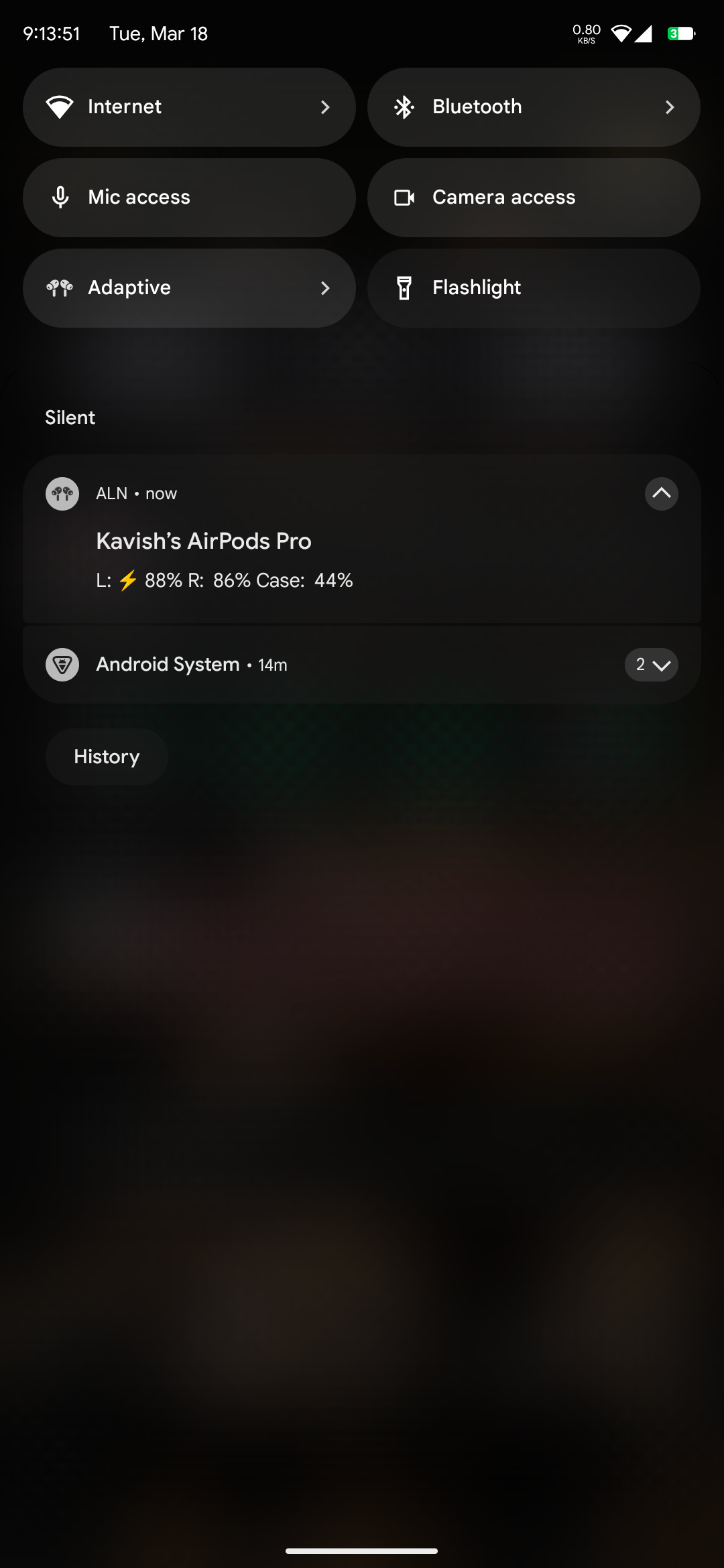
The LibrePods quick-settings tile and notification bring AirPods controls into Android’s own menus. (Image: LibrePods)
The cleverest trick may be the one users never see. AirPods will only reveal some of their features to a device that identifies itself as Apple hardware, so LibrePods can present the phone’s Bluetooth identity as Apple’s — a step the project calls VendorID spoofing. With that, two devices can even stay connected to the same AirPods at once, and the familiar “Move to iPhone” handoff appears on the Apple device when the Android phone takes over. Most of the headline features work straight after pairing; the deepest ones ask for that spoofing step, which on some phones needs a rooted setup, while newer Pixel phones running Android 16 handle most of it without root.
Not just Android
LibrePods is not an Android-only story. The project ships a Linux app too, and a full rewrite of it in Rust is under way, with heart-rate monitoring already landing in the app’s rewrite branch. The roadmap the project publishes is refreshingly honest about what is done, what is experimental and what is still to come — Find My support, for instance, is listed as planned, pending further work on the protocol. Everything is released under the GPL-3.0 licence, free to download from GitHub and the Google Play Store, with the code open for anyone to read, audit or improve. By mid-November 2026 the repository counted 676 commits and 41 releases, built with the help of 56 contributors.
What makes LibrePods land so well is not just the engineering — it is the spirit of it. One teenager in Gurugram, armed with curiosity and a Bluetooth sniffer, took on one of the world’s most tightly guarded product ecosystems and won, then gave the result away for free. No company, no funding round, no permission asked. Just a protocol, patiently decoded, and a community of thousands who wanted their earbuds to work properly on the phone they actually own. Apple built a wall around its best headphone features; a 16-year-old from India found the door, opened it, and left it open for everyone.
Keep reading: The Robot That Pulls 4,600 kg: Inside Ati Robotics, the Bengaluru Startup Automating the World’s Factories · The Nose in Every Chimney: Inside Adage Automation, the Goa Company Reading India’s Industrial Gases · More Industrial Automation & Technology stories
Like stories like this? Add Exceptional Technology as a preferred source on Google to see more of our reporting in your search results and Discover feed.