Every year, infections that no antibiotic can touch kill millions of people. Drug-resistant bacteria caused 4.95 million deaths in 2019, and researchers estimate that toll could reach 10 million lives a year by 2050 if nothing changes. Yet since the fluoroquinolones arrived in the 1980s, no entirely new broad-spectrum antibiotic class has reached patients. That is the gap a Bengaluru company called Bugworks Research set out to close — and its lead molecule, BWC0977, is now being tested in people.
Bugworks was founded in 2014 and incubated at C-CAMP in Bengaluru by four drug-discovery scientists — Drs. Bala Subramanian, Anand Anandkumar, Santanu Datta and Shahul Hameed. The core scientific team brings more than 200 years of combined drug-discovery experience, and the company has built its work on a single idea: India can invent the medicines the world has stopped inventing. Its drug-discovery engine, called GYROX, hunts for entirely new chemical classes rather than new versions of old drugs, and BWC0977 is its flagship result.
A new way to break the bacteria
BWC0977 belongs to a class called novel bacterial topoisomerase inhibitors, or NBTIs. It attacks two bacterial enzymes at once — DNA gyrase and topoisomerase IV — the twin machines bacteria use to copy their DNA. Because it binds to sites on those enzymes that are different from the ones fluoroquinolones use, bacteria that have learned to resist the old drugs have no ready defence against it.
The molecule was found the hard way. Bugworks screened around 3,000 compounds against E. coli, then refined the early hit through structure-guided medicinal chemistry led by chief product officer Dr. Shahul Hameed, synthesising fewer than a hundred compounds along the way to the clinical candidate. A 2025 structural study published in Communications Biology mapped BWC0977 bound to the topoisomerase IV of Klebsiella pneumoniae at 3.05 Ångström resolution, showing exactly how the molecule grips its target.
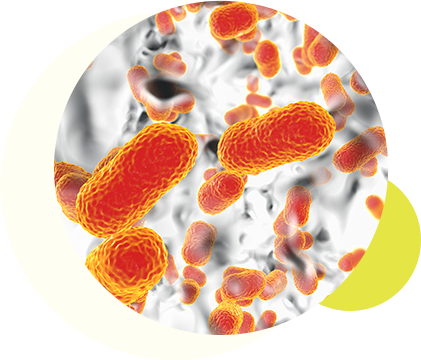
Drug-resistant bacteria, the target of Bugworks’ BWC0977. (Image: Bugworks Research)
More Read

The numbers behind the molecule
In laboratory testing reported in Nature Communications in 2024, BWC0977 stopped a global panel of 2,945 multidrug-resistant clinical isolates at remarkably low concentrations — the concentration needed to halt 90% of strains ranged from 0.03 to 2 micrograms per millilitre, including 1 microgram per millilitre against carbapenem-resistant Acinetobacter baumannii and Pseudomonas aeruginosa, 0.5 against E. coli, and 0.03 against MRSA. The established drugs it was compared with — ciprofloxacin, meropenem, cefiderocol and tobramycin among them — needed considerably higher concentrations against the same strains.
The molecule also held its power against the pathogens the world fears most: the biothreat organisms Bacillus anthracis, Yersinia pestis, Burkholderia mallei and Francisella tularensis, and the WHO critical-priority superbugs carbapenem-resistant A. baumannii and K. pneumoniae, which together account for more than a fifth of deaths linked to antimicrobial resistance. In resistance tests, bacteria exposed to four times the effective dose developed resistance at a frequency below one in a billion, and none of the resistant colonies that did emerge were cross-resistant to other antibiotics. In animal models of thigh and lung infection, the drug cleared multidrug-resistant Pseudomonas, Acinetobacter, Klebsiella and E. coli with clear dose-response.
From the lab bench to people
BWC0977 moved from discovery to human testing with unusual speed for a new antibiotic. The first human dose was given in November 2021 in Adelaide, Australia, in a randomised, double-blind, placebo-controlled Phase 1 trial of single and multiple ascending doses, run after a positive pre-IND meeting with the US FDA. The results, published in Nature Communications, showed the tested doses were well tolerated with dose-proportional exposure in healthy volunteers, and the intravenous formulation’s Phase 1 trial continues.
The world’s antibiotic partnerships have lined up behind it. CARB-X, the global non-profit accelerator for antibacterial research, has supported the programme since 2017 with US$12.47 million in funding, from lead optimisation through the first-in-human study. In June 2024 the Global Antibiotic Research & Development Partnership (GARDP) signed on to co-develop BWC0977 with up to US$20 million in technical and financial support, and in July 2025 the partnership expanded to develop an oral formulation alongside the intravenous one — an IV-to-oral step-down that would let patients start treatment in intensive care and finish it at home, a vital option for last-mile settings. Under the agreement, Bugworks will commercialise the drug in the European Union, the United States, Japan, China, Australia and India, while GARDP holds manufacturing and commercialisation rights across 146 countries, almost all of them low- and middle-income nations where the superbug burden is heaviest.
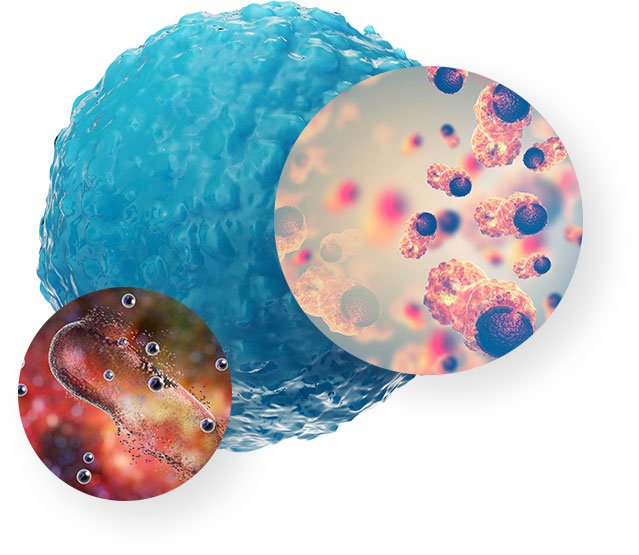
Bugworks’ research spans antibacterial and oncology programmes. (Image: Bugworks Research)
A second front: cancer
Bugworks is not a one-molecule company. Its second platform, DARE, is building next-generation small-molecule cancer therapeutics, led by an adenosine immuno-oncology asset in late pre-clinical development that the company says can be used alone or alongside immune checkpoint therapies. The science is being done with partners across continents — the Walter Reed Army Institute of Research in the United States, the University of Liverpool, the University of Texas Medical Branch and Indian collaborators — and the team presented eight posters on BWC0977 at the ECCMID 2023 congress in Copenhagen.
The backing matches the ambition. In February 2022 Bugworks raised a US$18 million Series B1 round led by Lightrock India, with investors including the University of Tokyo Edge Capital, Global Brain of Japan and 3one4 Capital — and with Lord Jim O’Neill, author of the landmark 2016 Review on Antimicrobial Resistance, and Dr. Kiran Mazumdar-Shaw of Biocon joining as investors. In April 2026 the BBC World Service featured Bugworks in its coverage of the global fight against antimicrobial resistance.
From a Bengaluru incubator to a molecule in human trials, backed by the world’s biggest antibiotic partnerships and published in the world’s leading journals, Bugworks has done what the global pharmaceutical industry largely gave up on: invented a genuinely new antibiotic. As BWC0977 advances through its trials and its oral version takes shape, the next broad-spectrum antibiotic the world reaches for may well carry an Indian name.
Keep reading: From Smoke to Skincare: Inside Intrinsic Foundries, the Jharkhand Startup Turning Factory Carbon Into Beauty Ingredients · The ICU That Follows You Home: Inside iLive Connect, the Gurugram Startup Keeping a Doctor on Watch Around the Clock · More Chemicals, Materials & Life Sciences stories
Like stories like this? Add Exceptional Technology as a preferred source on Google to see more of our reporting in your search results and Discover feed.