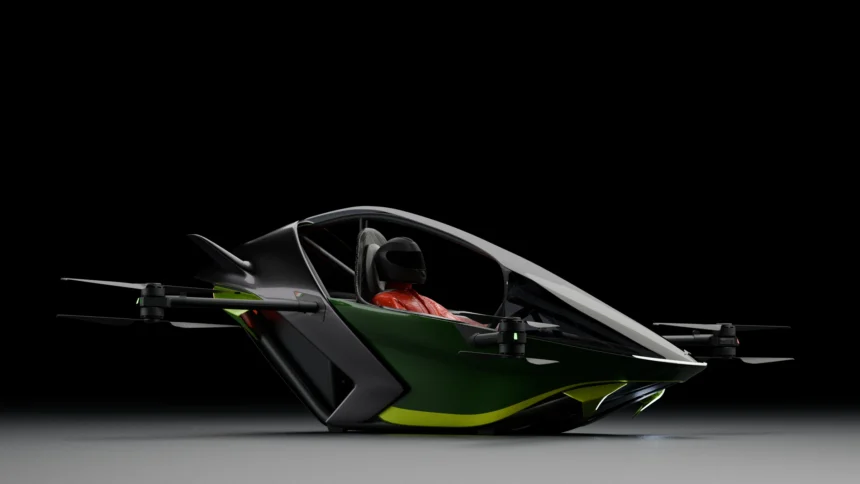
Most flying-taxi programmes start with the fleet: multi-seat air taxis, vertiport networks, airline-style operations. A startup in Bengaluru started at the opposite end of the problem — one seat, one pilot, and an aircraft small enough to treat flight as a personal experience. Its single-seat electric vertical take-off and landing aircraft, Aer Genesis, has completed multiple uncrewed test flights, noted by Aviation Week in March 2026 — and the company says a structured campaign of hundreds of controlled test flights has followed.
The company is Aexo Aerospace, founded by Sourav Samantara, a former Merchant Navy officer turned serial entrepreneur. The Aer platform is designed, engineered and manufactured in India. Aer Genesis is the flight-validation foundation of the programme: a single-seat machine whose job is to prove the control philosophy and hardware in real flight testing. Aer Sport is the performance-oriented development direction that carries those learnings into a more integrated design, and Vyura Neo — a two-seat programme — is next on the horizon. The company describes Aer Genesis as India’s first indigenously developed single-seater eVTOL.
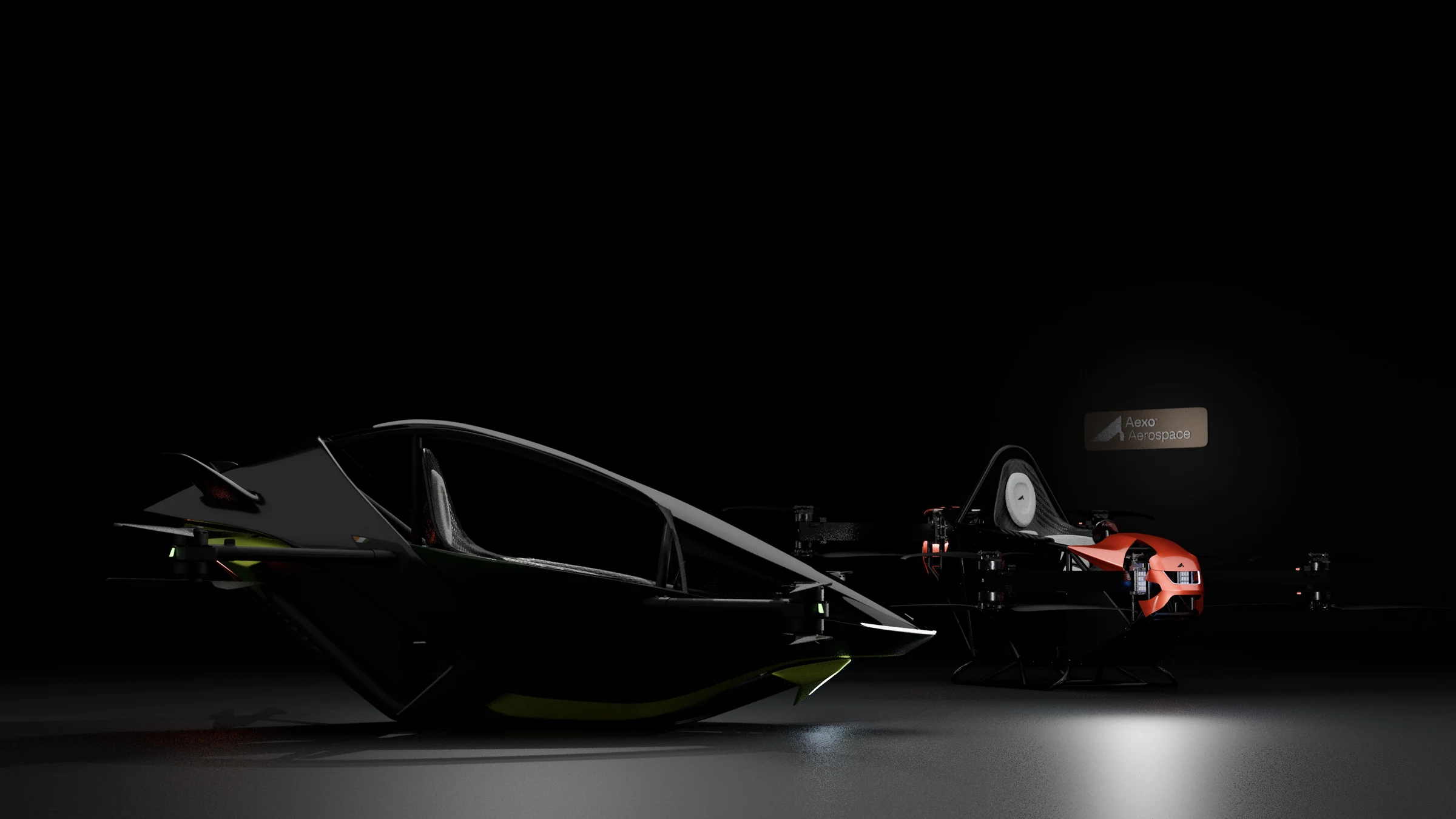
The engineering sits in the propulsion layout. Genesis uses distributed electric propulsion: eight electric motors arranged at four coaxial positions around the airframe, with the flight-control system coordinating their thrust to manage movement and stability. Aexo’s control philosophy separates pilot intent from the machine’s continuous corrections — the pilot asks for direction, climb, descent or a manoeuvre, the controller fuses sensor information with those inputs into coordinated motor commands, and distributed thrust does the rest. Compared with a conventional helicopter’s single large rotor, the multi-motor layout brings redundancy, lower mechanical complexity and markedly less noise and vibration — the qualities that make the concept plausible for urban and sensitive environments.
Safety is treated as layers to be validated, not slogans. The company lists propulsion and control monitoring with defined fault response, battery-condition and power-delivery monitoring, operational protections — training, pre-flight checks, weather limits, defined operating areas and ground support — and a ballistic recovery system whose deployment envelope, it says, must still be established through testing. The published numbers are refreshingly honest about what is still unknown: Genesis measures 2.7 metres long, 2.2 metres wide and 1.3 metres tall, while cruise speed, range and flight time are left blank on the company’s spec sheet as indicative figures that vary with configuration, payload and conditions.
What the aircraft is for is deliberately broad. Aexo names personal flight first, then aerial motorsport as a testbed for pushing the engineering limits of electric flight, plus medical logistics, specialist utility, defence missions and low-altitude tourism. The regulatory road — certification, training regimes and operating permissions — is still ahead, and the headline claims (hundreds of test flights, first of its kind in India) are the company’s, with no independent flight-test data published yet. But the direction of travel is what makes Aexo worth watching: Genesis lays the foundation in flight testing, Sport explores what a personal aircraft can become — and the bet is that the sky, like the road before it, eventually belongs to everyone.