Every intensive-care unit in India once depended on a machine the country barely made itself. Before the pandemic, India imported 85–90% of the ventilators used in its hospitals — big, expensive, imported boxes that cost ₹5 lakh to ₹12 lakh each. A Noida company decided that a country of India’s scale should be able to build its own, and to build it better: smaller, cheaper, and simple enough to take home. That company is AgVa Healthcare, and its ventilator is about the size of a toaster.
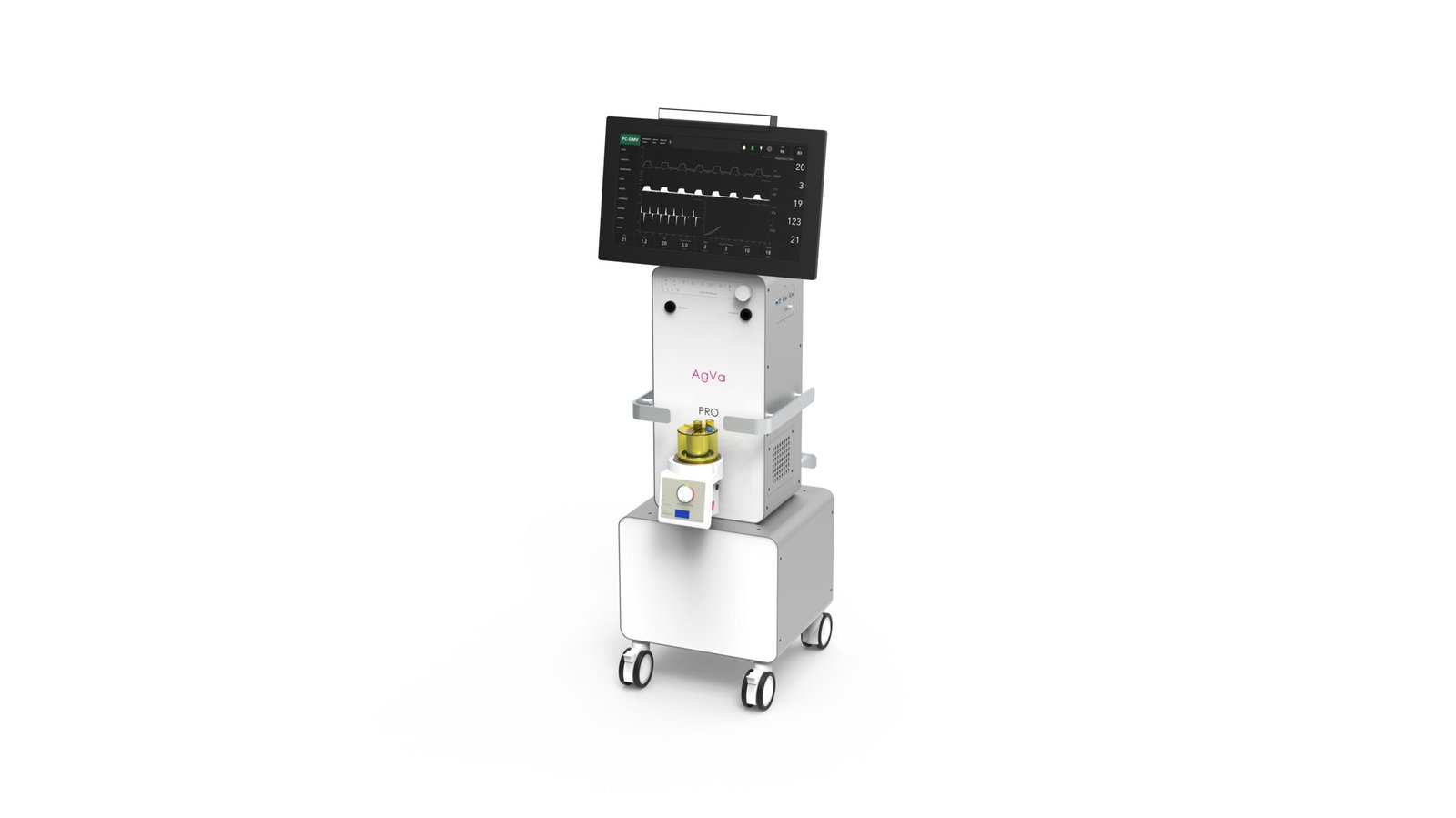
A ventilator the size of a toaster
AgVa Healthcare was founded by robotics scientist Prof Diwakar Vaish and AIIMS neurosurgeon Dr Deepak Agrawal — the name itself joins the two founders, AG from Agarwal and VA from Vaish. Dr Agrawal had watched families struggle with the cost of keeping loved ones on ventilator support, and the pair set out to build a machine that put breathing support within reach. The ventilator took close to four years to develop from the ground up, the co-inventor wrote in 2020, with eight patents filed along the way.
The result is a machine less than a foot tall that weighs only a few kilos and runs on room air, with no need for compressed medical air. Its controls live on a familiar Android tablet interface, and the company says built-in machine-learning algorithms adjust to each patient’s own breathing pattern. Inside are disposable solenoid valves the team designed in-house, so the machine does not depend on imported parts that can run short in a crisis. The home version costs about ₹50,000, and the hospital version about ₹1.5 lakh — a fraction of the price of an imported ventilator.
From a hundred a month to a national order
When Covid-19 arrived, the little ventilator was suddenly the machine the country needed most. The government ordered 10,000 AgVa ventilators under the PM CARES programme, part of a 50,000-unit push for Made-in-India machines. Maruti Suzuki stepped in as manufacturing partner, bringing its suppliers and quality systems to the effort, while HP’s 3D printing supplied more than 1.2 lakh parts for the build. Production leapt from about 100 units a month to 500 a day. The emergency scale-up was not smooth — some hospitals reported problems with the rushed first batches, and the company maintained the machines met the procurement specifications.
The machines kept spreading. Lenovo tablets now power the AgVa interface in 15,000 portable respirators deployed to hospitals across India, with remote support for the tablets at more than 800 hospitals. What began as a device for families who could not afford a conventional ventilator had become part of the country’s critical-care infrastructure.
The AgVa Pro: a full ICU ventilator, made in India
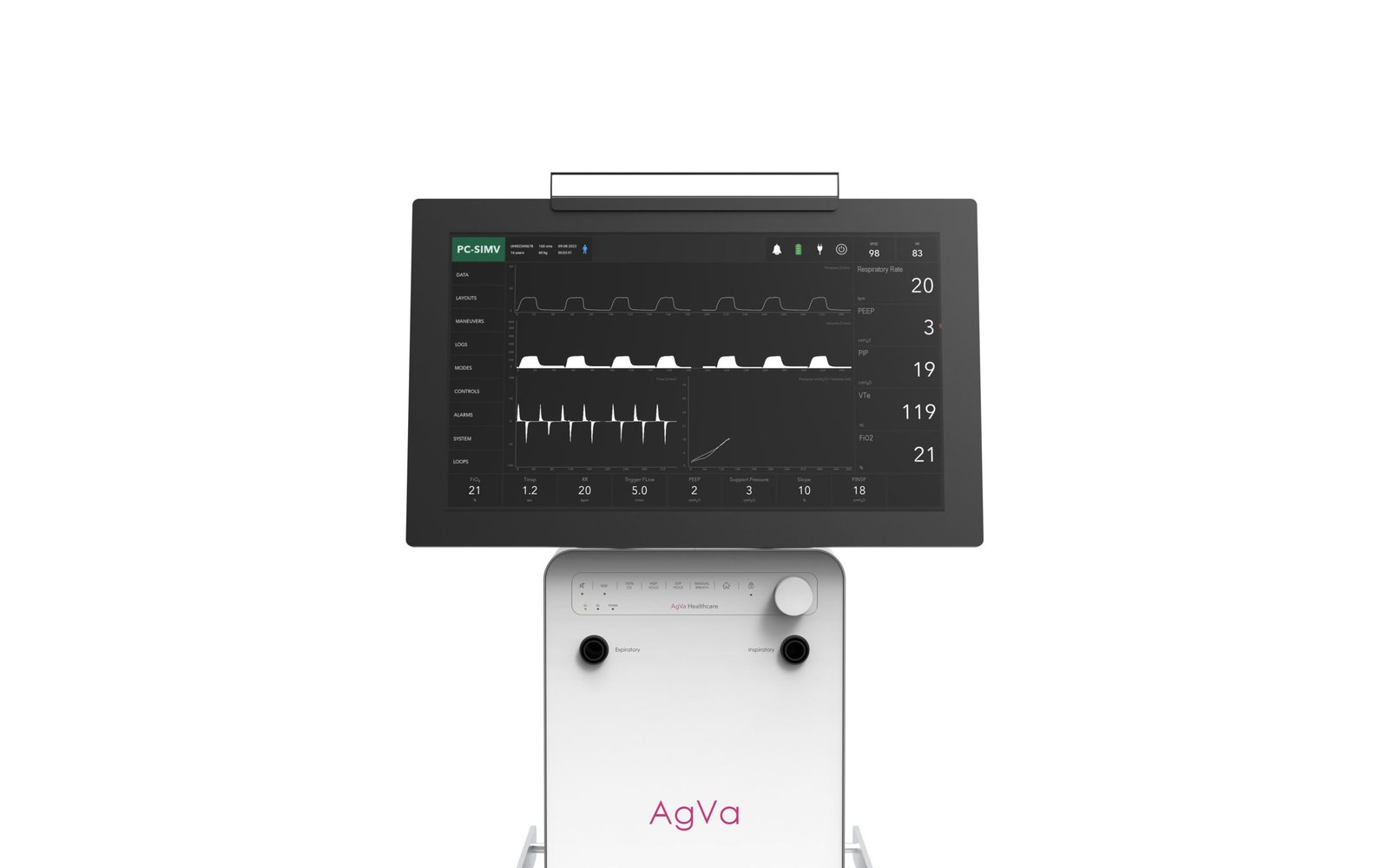
Today the company — now D&D Healthcare, trading as AgVa Healthcare — builds the AgVa Pro, a universal ICU ventilator designed to serve everyone from newborns to adults. Its redesigned turbine carries a lifetime guarantee, and a side-stream cooling system keeps gases at room temperature. A proximal flow sensor sits close to the patient with less than 1 ml of dead space and can detect flows as low as 0.01 litres per minute, so the machine can ventilate even the tiniest neonatal patients. A 24-inch multi-touch display shows every waveform and loop, closed-loop oxygen control adjusts FiO2 from a standard SpO2 probe, and a built-in nebulizer, a lifetime oxygen sensor and an H13 HEPA filter round out a machine built from rustproof aluminium with a service life of over 20 years.
More Read

Prof Vaish, who has filed for over 20 patents and previously built India’s first fully indigenous humanoid robot, works from a half-acre research and development facility in Noida’s Sector 83. The AgVa story is a reminder of what Indian engineering does best: take a machine the world sells at a premium, rebuild it from first principles, and put it within reach of the people who need it most.
Keep reading: Written in Indian Genes: Inside 4baseCare, the Bengaluru Startup Making Cancer Treatment Personal · Calm Without a Pill: Inside Sputnik Brain, the Bengaluru Startup Building a Non-Surgical Brain Interface · More Chemicals, Materials & Life Sciences stories
Like stories like this? Add Exceptional Technology as a preferred source on Google to see more of our reporting in your search results and Discover feed.