On the evening of 23 August 2023, India became the first country to land near the Moon’s south pole — and when the Pragyan rover rolled out of the Vikram lander onto the grey, cratered surface, it did so with eyes built in Noida. The software that let the little rover see, map and steer its way across the lunar terrain came from Omnipresent Robot Technologies, a deep-tech company that had been working with ISRO since the very first Chandrayaan mission.
The rover that sees with two eyes
Pragyan carried just two navigation cameras, and that was all Omnipresent’s software needed. The company’s Perception Navigation Software stitches the images from those two cameras into three-dimensional maps of the lunar surface, processed on board the rover itself, so Pragyan could pick its way around craters and boulders on the Moon’s south pole. “The Pragyaan rover will find its way around the moon with these two eyes,” Aakash Sinha, the company’s CEO, told PTI as the landing approached.
The software was originally built for Chandrayaan-2. When that mission’s rover never got its drive, the same code flew on Chandrayaan-3 — and worked. The association goes back further still: Omnipresent’s team built orientation modules for the Chandrayaan-1 orbiter, and the company says its perception and navigation modules flew on both the Chandrayaan-2 and Chandrayaan-3 Pragyan rovers, enabling 3D lunar mapping and autonomous rover mobility.

From bomb disposal to the Moon
Omnipresent was founded in 2010 by Aakash Sinha and Jyoti Sinha, who had spent more than a decade building robots in the United States before coming home. Aakash, who holds a Master’s in Robotics from Carnegie Mellon University, led technical teams at Lockheed Martin and iRobot, working on the DARPA Driverless Car Challenge and the PackBot robots used by the US Army; his work earned him MIT’s TR35 award for the world’s top innovators under 35. Jyoti, who holds a Master’s in Electrical and Communication Engineering from UC Berkeley, was named among the Top 20 Women in Computer Science by the US National Science Foundation. Turing Award winner Dr Raj Reddy, the founding director of Carnegie Mellon’s Robotics Institute, mentors the company.
The company’s first work in India was close to the ground: explosive ordnance disposal robots for DRDO, built into bomb disposal units that handle explosives from a safe distance. From there it built autonomous river cleaners, social robots and tactical robots, and today works from a 15,000 sq ft research and manufacturing facility in Noida. The same perception and navigation brain that steers a rover on the Moon now steers drones and ground robots here on Earth.
Mapping 10,000 villages, then the sky
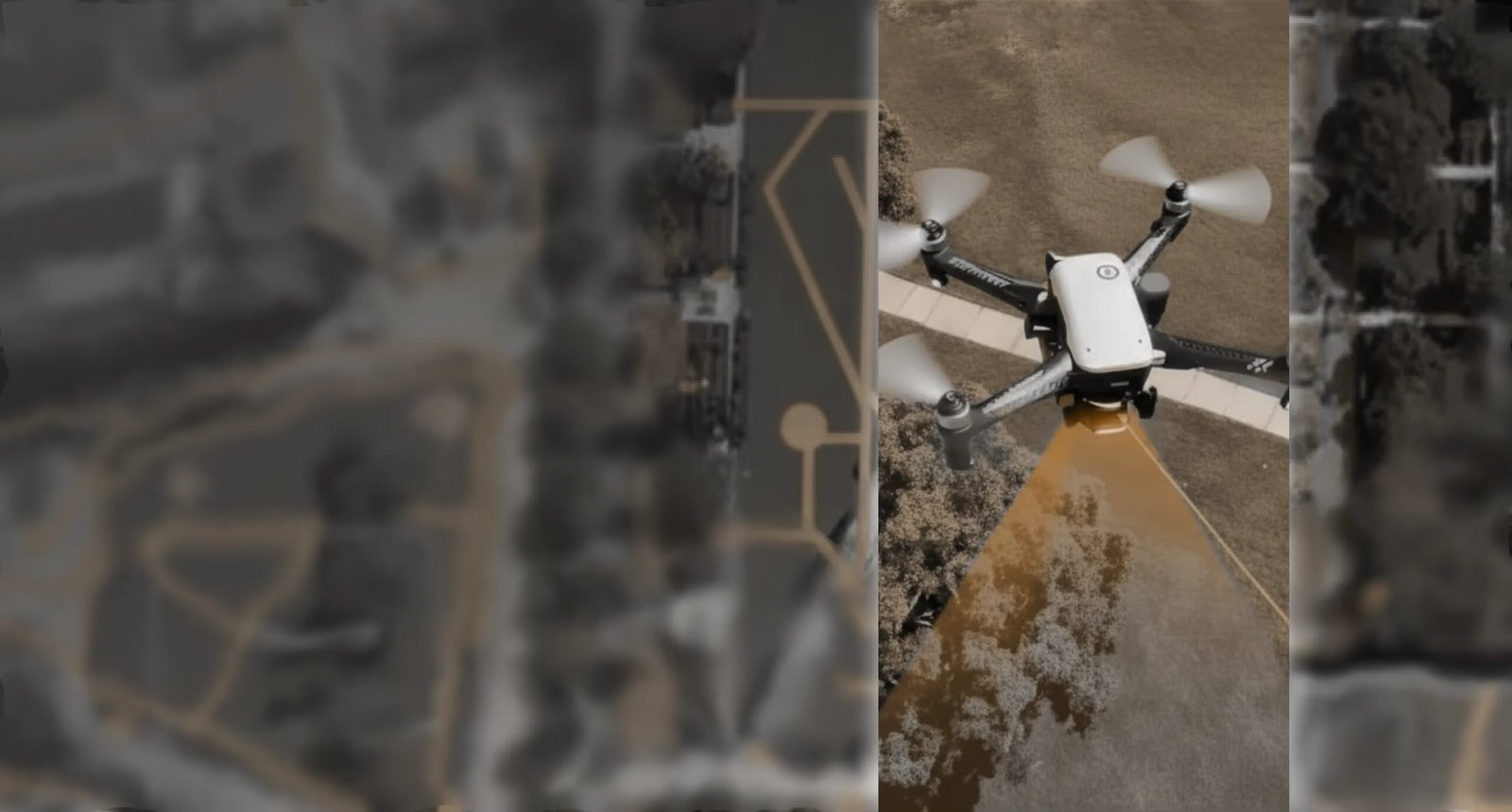
Omnipresent’s in-house drone fleet has mapped more than 10,000 villages under the government’s SVAMITVA scheme, recording rural land boundaries with sub-5 cm precision. In 2020, the company says, it became the first drone company in India to receive full Ministry of Home Affairs clearance for long-range beyond-visual-line-of-sight trials, and it is among the startups selected for incentives under the government’s drone production-linked incentive scheme.
More Read

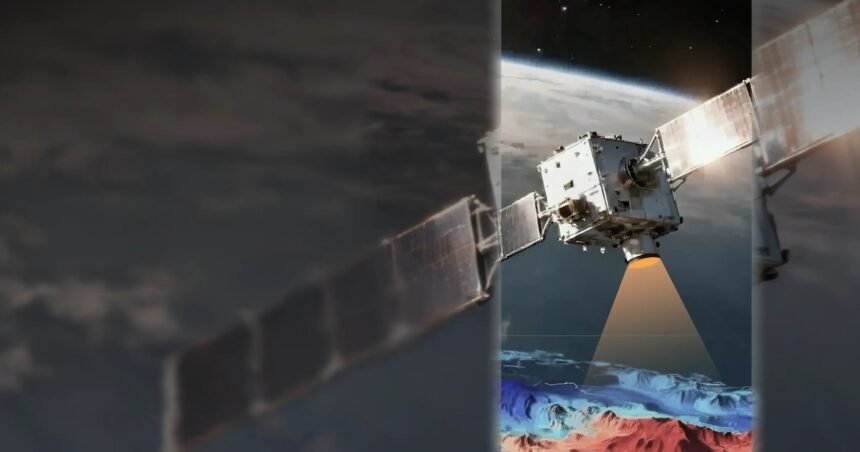
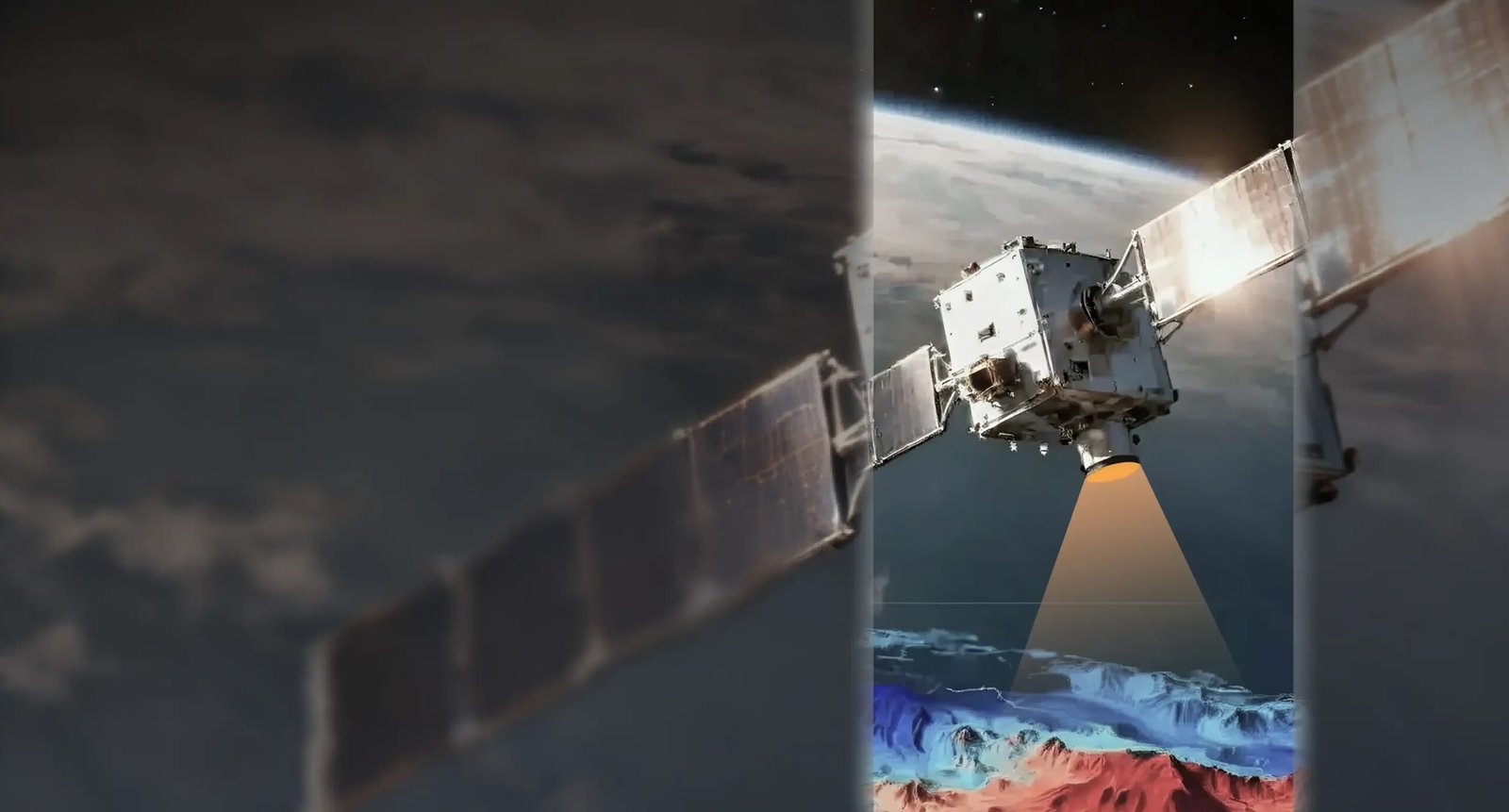
The company has won five awards under the Ministry of Defence’s iDEX ADITI programme, each for a system built for the Military Survey: OmniSAR3D, an interferometry-based radar satellite that generates ultra-high-resolution 3D elevation maps even in mountainous terrain; OmniEye, an on-board satellite edge computer that fuses optical, multispectral, radar and hyperspectral data into actionable intelligence; OmniAgent, a decision-support system that scores threats in near real time; OmniBirdX, a bird-strike prediction system for air bases that is now in beta testing at one air base; and OmniNavX, navigation that lets drones fly on without GPS, immune to jamming and spoofing.
Its own satellite is next: the company expects its satellite, carrying its radar payload, to launch by the fourth quarter of 2027, co-founder and CTO Jyoti Sinha said at the Rising Bharat Summit in Lucknow. The company is backed by Gruhas, the investment firm founded by Nikhil Kamath and Abhijeet Pai.
From robots that keep soldiers safe at a distance, to software that drives a rover on the Moon, to a satellite that will map India’s mountains in three dimensions — Omnipresent’s throughline is a single idea, pursued for fifteen years: machines that see clearly where humans cannot go.
Keep reading: Built in 60 Days: Inside HoverIt’s Indigenous RATO System and the Divyastra Loitering Munition · The Shield for the Mach 5 Sky: Inside Kristellar Aerospace’s Hypersonic Countermeasure · More Aerospace & Defense stories
Like stories like this? Add Exceptional Technology as a preferred source on Google to see more of our reporting in your search results and Discover feed.