


Every aircraft that touches down leaves a little of itself behind. Each tyre sheds rubber onto the runway in the touchdown zone, and flight after flight, that rubber builds into a smooth, polished layer that fills the runway’s drainage grooves and steals grip. In wet weather, the difference between a clean runway and a rubber-glazed one is braking distance — and braking distance is passenger safety. It is the kind of invisible, safety-critical work that rarely makes headlines, and at Noida International Airport, it is now done by a machine built in India.
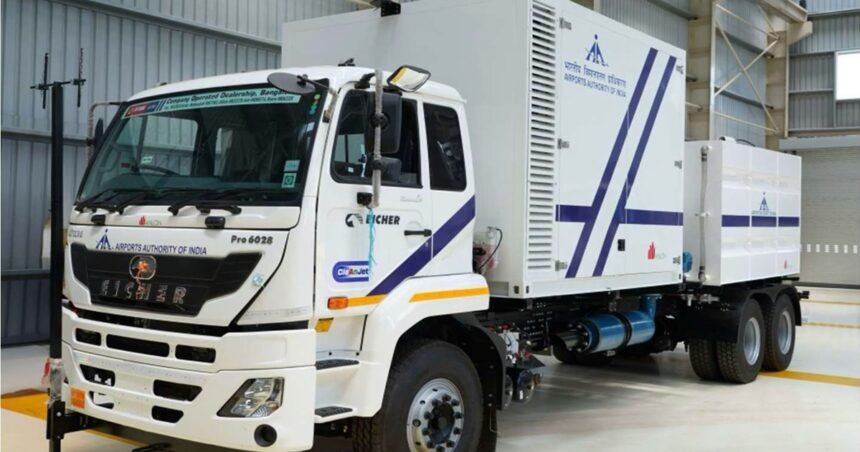
The company is Anlon Technology Solutions, a Bengaluru engineering firm, and the machine is the Cleanjet runway rubber removal machine (RRM) — which Noida International Airport describes as India’s first indigenously built runway rubber removal machine. The airport partnered with Anlon, an Indian MSME, to deploy the machine, replacing equipment that Indian airports previously had to import.
The Cleanjet works with water alone. Ultra-high-pressure water jets strip rubber deposits, paint markings and oil spills from runways, taxiways and aprons, and the process is 100 per cent chemical-free, so nothing harmful is left on the pavement or washed into the surroundings. An intelligent suction system collects all the wastewater, rubber particles, paint flakes and oil directly at the nozzle, leaving the surface dry and ready for aircraft immediately — no second cleanup pass, no waiting.
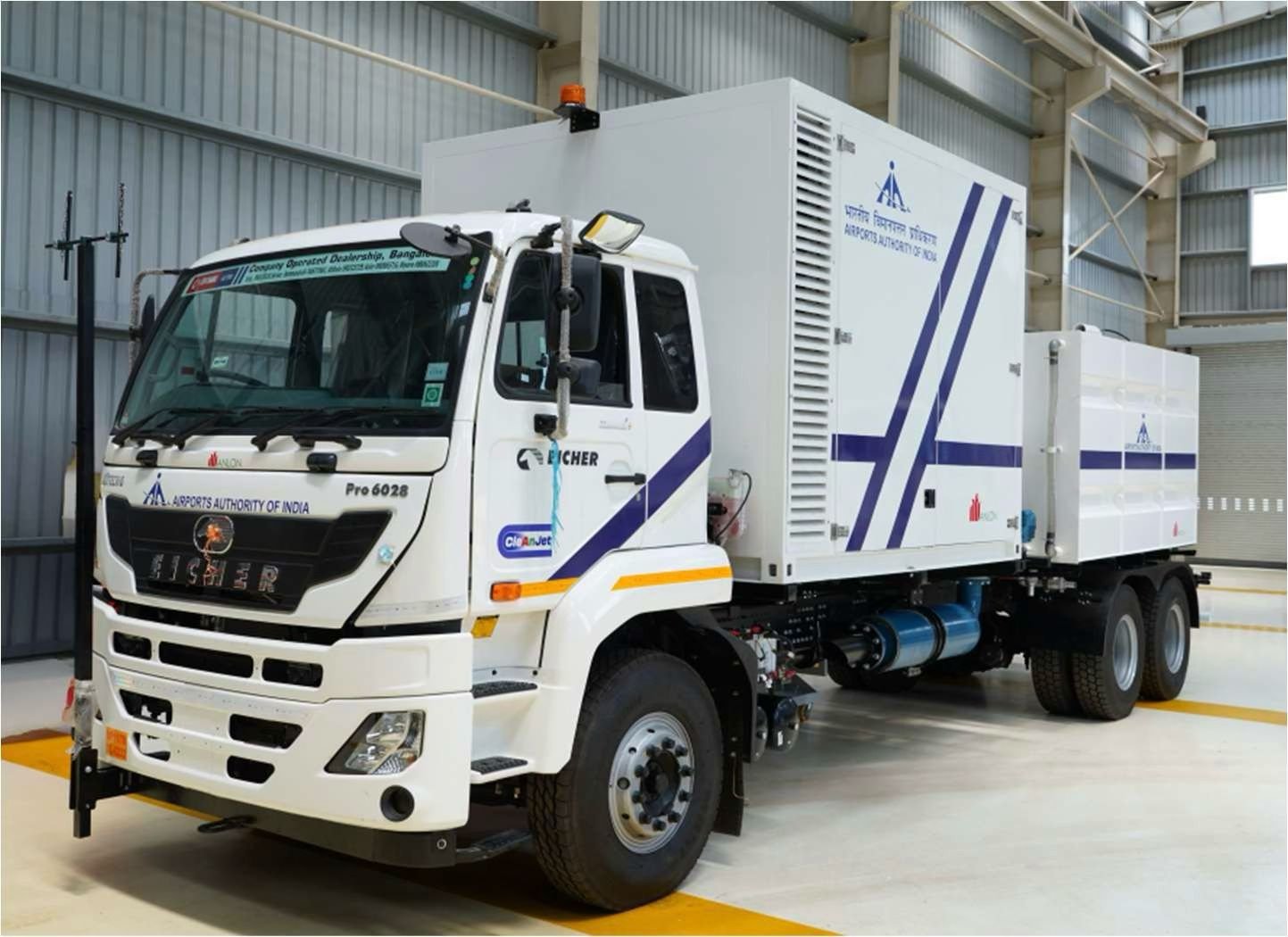
The machine is built for the realities of a working airport. It is constructed on a robust Eicher Pro 6028 chassis, powered by a Bharat Stage-VI compliant diesel engine, with an auxiliary CAT C9.3B engine and a Hammelmann high-pressure pump delivering precise, damage-free cleaning. The airport says it clears 800 to 1,100 square metres per hour, and with 8,000-litre tanks for fresh water and debris, it can operate continuously for over four hours — long enough to cover a runway maintenance window without stopping to refill or empty. Multiple cameras and a 12-inch display give the operator a live view of the cleaning head, with footage recorded for up to a month. Its modular cleaning head can be quickly raised, lowered or detached, so the machine can be cleared from the runway fast in an emergency without being dismantled.
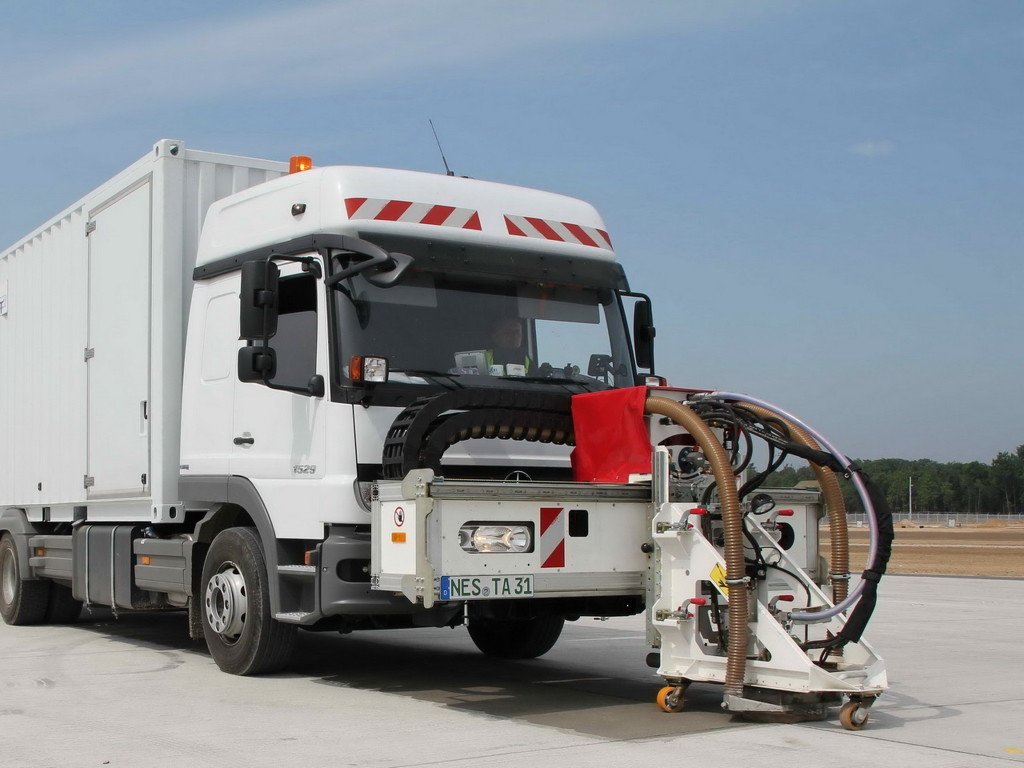
The Cleanjet’s journey from factory to runway moved quickly. Anlon launched the CleAnJet brand segment in 2025 as the country’s first Make in India runway rubber and paint removal machine, and Noida International Airport announced its partnership with the company in June 2025. The machines were co-developed in collaboration with Switzerland-based Bucher Municipal and assembled at Anlon’s facility in Adinarayanahosahalli, near Doddaballapur in Karnataka. In January 2026, Karnataka’s Minister for Large and Medium Industries, M. B. Patil, formally handed over the keys of two of the vehicles to Noida International Airport — a handover the minister’s office marked as the delivery of India’s first indigenously manufactured runway cleaning machines. The minister described companies like Anlon as the backbone of the industrial supply chain and urged the firm to take its machines to export markets.
The story did not stop at Noida. In February 2026, Cochin International Airport inducted a CleanJet of its own, with the airport noting that the machine’s high-pressure jets, operating at around 2,500 bar with specially angled rotating discs, dislodge embedded rubber that is immediately suctioned away — the same chemical-free approach, now keeping another of India’s busiest runways at full grip.
More Read
Anlon itself is a company built around machines most passengers never see. Incorporated in 2015 and based in Bengaluru, it engineers airport rescue and firefighting vehicles, runway sweepers, friction testing systems and disabled-aircraft recovery kits, alongside its runway cleaning range. The company is listed on the NSE’s SME platform, and in its FY26 business update it reported revenue of Rs 105.14 crore, more than double the previous year’s Rs 50.23 crore, with an order book of around Rs 110.15 crore — and runway rubber removal machines accounting for about 31 per cent of its manufacturing and assembly revenue. The company says it emerged as the sole qualified bidder for in-house runway cleaning solutions for the Airports Authority of India, offering roughly a 30 per cent cost advantage over imported alternatives — the kind of import substitution that turns a maintenance contract into a manufacturing story.
That is the quiet brilliance of the Cleanjet: it takes one of aviation’s most unglamorous jobs — scrubbing rubber off concrete — and turns it into proof that India can now build the safety-critical machines its own airports run on. Every landing that follows leaves the runway exactly as it should be: clean, textured, and ready for the next aircraft.
Keep reading: Printed, Not Built: Inside Tvasta, the Chennai Startup Teaching Robots to Print Houses · Sixty Tonnes, Zero Diesel: Inside BEML’s BH60-EV, India’s First Electric Mining Truck · More Manufacturing & Engineering stories
Like stories like this? Add Exceptional Technology as a preferred source on Google to see more of our reporting in your search results and Discover feed.







